The First 72 Hours of Alcohol Detox: What Happens Medically (And Why It Can Be Life-Threatening)
Alcohol detox first 72 hours: the medical timeline hour by hour, the seizure window, and why stopping at home without supervision can turn dangerous.
The First 72 Hours of Alcohol Detox: What Happens Medically (And Why It Can Be Life-Threatening)
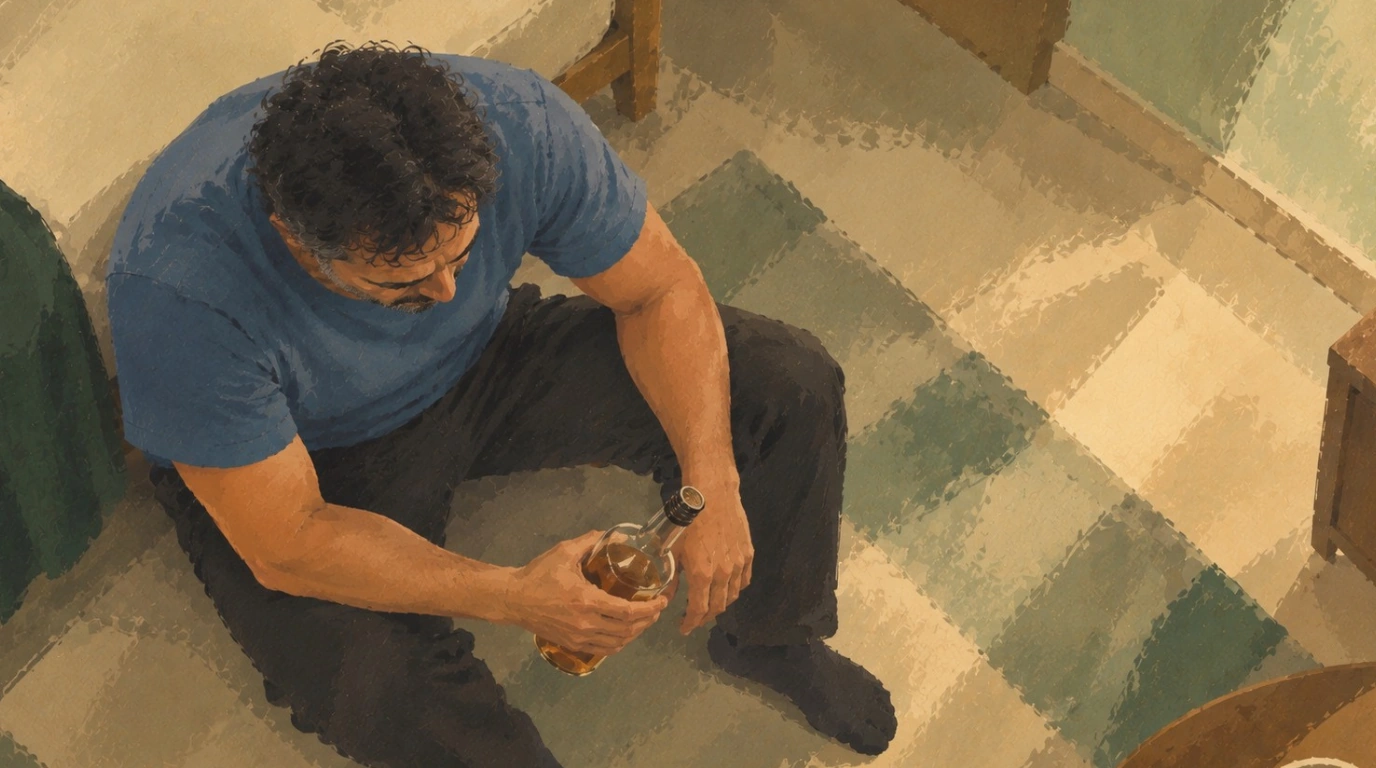
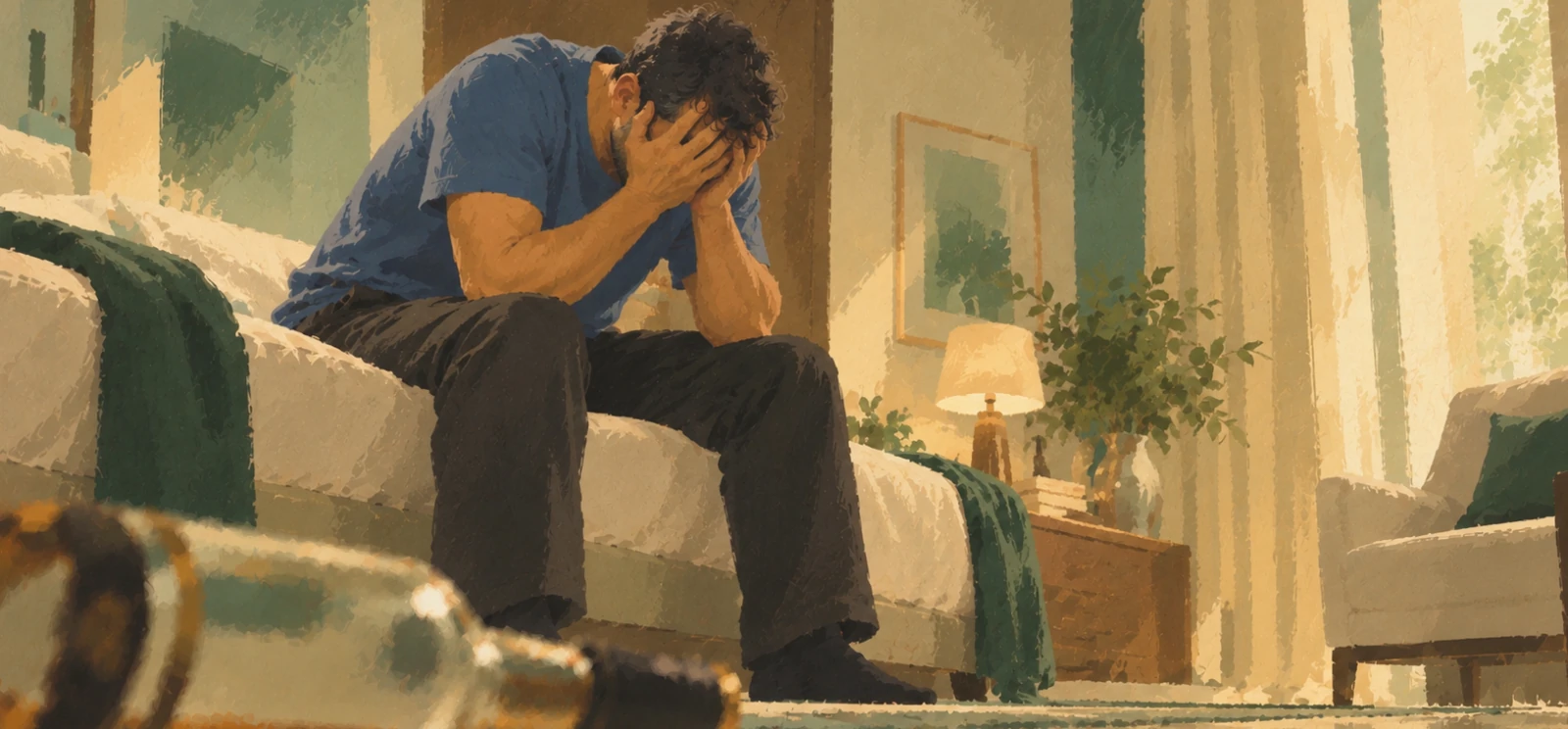
Most people picture detox as a bad flu. Sweating, shaking, a few rough days.
For heavy long-term drinkers, that picture is wrong in a way that matters.
Alcohol withdrawal is not simply unpleasant. In its severe form it is a medical emergency.
It follows a timetable that doctors can predict almost to the hour.
The alcohol detox first 72 hours period is where almost all the danger sits.
This guide walks through it hour by hour.
We cover what happens in the body, and why.
We cover the seizure window, and when it opens.
We cover delirium tremens, what it looks like, and how often it proves fatal.
We cover who is most at risk, which is not always who you would guess.
And we cover what proper medical detox involves.
One thing to be clear about first.
This is not a guide to doing it yourself. It is the opposite.
It is here so you can spot the danger and get help in time.
If someone is confused, seizing, or seeing things, call a doctor now.
Do not wait for morning. Do not wait to be sure.
The cost of a wasted trip is small.
The cost of the other choice is not.
One more thing before we start.
None of this is meant to scare you off stopping.
Stopping is the right goal. It just needs a plan.
Most people get through this week safely. The ones who do had help.
Read this once. Then make a plan.
The plan is short. Who to call. Where to go. Who stays up.
Why Stopping Suddenly Can Be Dangerous
The reason lies in what alcohol does to the brain over time.
Alcohol is a depressant. It dampens brain activity.
With heavy daily drinking, the brain pushes back. It turns up its own excitatory systems to stay balanced.
That adaptation takes weeks or months to build.
Now remove the alcohol overnight.
The dampening stops instantly. The counter-adjustment stays.
The result is a brain running hot with nothing holding it down.
Doctors call this brain hyperexcitability, because receptors once inhibited by alcohol are no longer inhibited (Source: American Family Physician, 2004 — aafp.org).
Clinically that shows up as anxiety, irritability, agitation and tremor (Source: American Family Physician, 2004 — aafp.org).
In severe cases it shows up as seizures and delirium tremens (Source: American Family Physician, 2004 — aafp.org).
There is one more idea worth knowing, because it changes the risk picture.
It is called kindling. Repeated cycles of stopping and starting cause lasting changes in neurons (Source: American Family Physician, 2004 — aafp.org).
The practical meaning is blunt. Each unsupervised attempt can make the next withdrawal worse.
So a person on their fifth attempt may face a harder withdrawal than on their first.
That is the opposite of what most families assume.
Most people think the body gets used to it.
It does the reverse. Each round leaves a mark.
So the fifth time can be the worst one.
This is why past tries matter so much.
Tell the doctor about each one.
Even the ones that went fine. Especially those.
A quiet first try tells a doctor a lot.
So does a rough one.
Both change what they do next.
Q: Why is alcohol withdrawal dangerous when stopping other habits is not?
A: Heavy drinking makes the brain turn up its own excitatory systems to stay balanced. Removing alcohol suddenly leaves nothing holding that down. The result can include seizures.
Hours 0 to 12: The First Signs
The clock starts at the last drink, not at bedtime.
Early symptoms begin within roughly 6 to 12 hours.
What appears first:
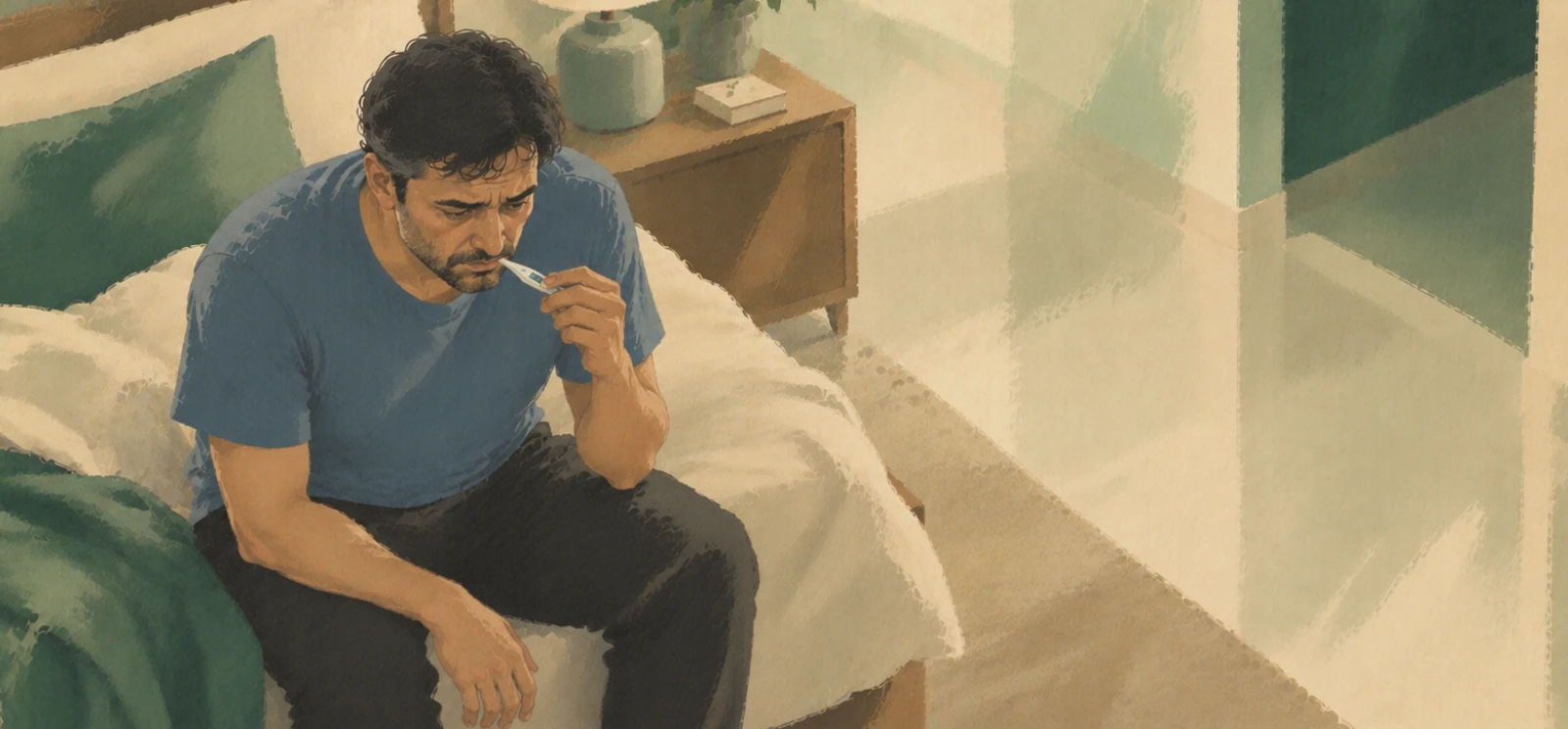
Tremor. Usually the hands. Worse when reaching for something.
Sweating. Often heavy, and often at night.
Anxiety. A restless, wired feeling rather than ordinary worry.
Insomnia. Sleep becomes broken or does not arrive at all.
Nausea. Sometimes vomiting, usually worst in the morning.
Headache. Often with raised heart rate and raised blood pressure.
Craving. Strong, specific, and hard to think past.
None of this is dangerous on its own.
It is a signal, not a threat.
The point is what it tells you about what may come.
Think of day one as a weather report.
It does not stop the storm.
It does tell you to get ready.
This stage is where most people decide whether to continue.
It is also where many take a drink to settle the symptoms, which resets the clock.
Two practical points matter here.
First, symptoms this early do not predict what comes later.
A mild first evening does not mean a mild second night.
Second, this is the right window to reach a doctor.
A check now is far easier than a rescue at hour fifty.
So make the call on day one.
Say how long they have been drinking. Say when they stopped.
Ask one question. Does this need watching at home or in a bed.
If you are supporting someone, write down the time of their last drink.
That single detail shapes every clinical decision that follows.
Write the time down on paper. Not in your head.
Also note how much they drank each day, and for how long.
And list every other tablet in the house.
A doctor will ask all three. Having them ready saves an hour.
Q: How soon does alcohol withdrawal start after the last drink?
A: Early symptoms usually begin within 6 to 12 hours. Tremor, sweating, anxiety and broken sleep come first. Mild early symptoms do not predict what the next two days will bring.
Hours 12 to 24: Seeing Things, Still Aware
This stage confuses families more than any other.
Alcoholic hallucinosis can appear between 12 and 24 hours after the last drink (Source: American Family Physician, 2004 — aafp.org).
Here is the part that matters.
The person may see or hear things that are not there. But they are still oriented.
They know who they are. They know where they are. They know what day it is.
Some even recognise that what they are seeing is not real.
That clarity is why families often decide it is not serious.
It is also why the more dangerous stage catches them unprepared.
These symptoms generally settle within about 48 hours (Source: American Family Physician, 2004 — aafp.org).
So hallucinations here are not the same as delirium tremens.
The difference is confusion. In delirium tremens, orientation goes.
That single distinction is the one to hold on to.
Test it with two simple questions.
Ask what day it is. Ask where they are.
If the answers are right, note the time and keep watching.
If they are wrong, call for help.
Meanwhile the earlier symptoms usually continue. Tremor, sweating and racing heart do not stop.
This is a stage to observe closely and to report to a clinician.
Do not argue about whether what they see is real.
Keep the room lit, calm and quiet. Then get medical advice.
A lit room helps more than you would think.
Shadows feed what they are seeing.
Keep the TV off. Keep visitors few. Keep your own voice low.
And stay with them. Do not leave them alone to sleep it off.
Q: Are hallucinations during alcohol withdrawal the same as delirium tremens?
A: No. In alcoholic hallucinosis, usually seen 12 to 24 hours in, the person stays oriented. In delirium tremens they become confused and disoriented. That difference matters clinically.
Hours 24 to 48: The Seizure Window
This is the stage that turns withdrawal into an emergency.
Generalised tonic-clonic seizures typically occur 24 to 48 hours after the last drink (Source: American Family Physician, 2004 — aafp.org).
They have been reported as early as two hours after stopping (Source: American Family Physician, 2004 — aafp.org).
Read that second line again if you are planning a home detox.
A few things make this stage dangerous beyond the seizure itself.
Falls cause head injuries. Kitchens, bathrooms and stairs are where most damage happens.
Seizures can come in clusters. One does not mean it is over.
And a seizure can be the first warning sign for some people. Nothing milder came before it.
There is also a clinical warning worth knowing.
Late seizures need other causes checked (Source: American Family Physician, 2004 — aafp.org).
That applies past 48 hours, or where there is fever or injury.
That is doctor territory, not family territory.
If a seizure happens at home, the basics are simple.
Clear the space around them. Do not put anything in the mouth.
Turn them on their side once the movements stop.
Then call for help at once.
Time the seizure if you can. Clinicians will ask.
Note the time it started. Note how long it lasted.
Note whether they came round straight after.
Those three facts guide what happens next.
If a second one starts, treat it as an emergency.
Do not try to drive them yourself after a fit.
Call an ambulance if you can.
If you must drive, take a second adult with you.
Q: When are alcohol withdrawal seizures most likely?
A: Most often 24 to 48 hours after the last drink, though they have been reported as early as two hours. Seizures can come in clusters, and can be the first symptom.
Hours 48 to 72: Delirium Tremens
This is the most severe form of alcohol withdrawal, and it usually arrives late.
Alcohol withdrawal delirium, or delirium tremens, typically begins 48 to 72 hours after the last drink (Source: American Family Physician, 2004 — aafp.org).
The picture includes confusion, hallucinations that are mainly visual, and disorientation (Source: American Family Physician, 2004 — aafp.org).
It also includes fast heart rate, raised blood pressure, low-grade fever, agitation and heavy sweating (Source: American Family Physician, 2004 — aafp.org).
Symptoms peak around day five (Source: American Family Physician, 2004 — aafp.org).Symptoms peak around day five (Source: American Family Physician, 2004 — aafp.org).
So the worst day is not day one.
So keep watch past hour forty-eight.
Day three needs the same care as day one.
That catches families out. They relax too early.
Now the number that answers the question in the title.
Episodes of delirium tremens carry a mortality rate of 1 to 5 percent (Source: American Family Physician, 2004 — aafp.org).
That figure is with treatment. Untreated, the risk is far higher.
One in twenty is not a small risk.
And this was a risk anyone could have seen coming.
What families notice first is usually the change in awareness.
The person cannot follow a conversation. They may not recognise the room.
They may become frightened, or try to leave, or fight care.
The agitation is the illness, not the person.
Hold on to that when it is hard.
Do not argue. Do not restrain them alone.
Keep them safe and get help moving.
If this is happening, it is a hospital matter. Not a clinic appointment tomorrow.
Call for emergency help and say the words alcohol withdrawal delirium.
That phrase changes how quickly the case is handled.
Also tell them when the last drink was.
And tell them if there has been a fit.
Those two lines move a case to the front of a queue.
Take the tablet strips with you. All of them.
Take any recent blood test too.
It saves time when time is short.
Quick Facts: The First 72 Hours of Alcohol Detox
Withdrawal hallucinations typically appear 12 to 24 hours after the last drink — (Source: American Family Physician, 2004 — aafp.org).
Generalised tonic-clonic seizures typically occur 24 to 48 hours in — (Source: American Family Physician, 2004 — aafp.org).
Delirium tremens usually begins 48 to 72 hours after the last drink — (Source: American Family Physician, 2004 — aafp.org).
Episodes of delirium tremens carry a mortality rate of 1 to 5 percent — (Source: American Family Physician, 2004 — aafp.org).
Alcohol use disorder affects 4.6% of Indian adults, and 9.1% of men — (Source: National Mental Health Survey, NIMHANS, 2016 — indianmhs.nimhans.ac.in).
The treatment gap for alcohol use disorders in India is 86% — (Source: National Mental Health Survey, NIMHANS, 2016 — indianmhs.nimhans.ac.in).
Who Is Most at Risk
Severity does not track neatly with how much someone drinks. Several factors matter more.
Known risk factors for withdrawal delirium include a few clear items (Source: American Family Physician, 2004 — aafp.org).
Being ill at the same time. An infection or injury alongside withdrawal raises risk.
Daily heavy drinking. Continuous use matters more than occasional binges.
A history of delirium tremens or withdrawal seizures. Past episodes strongly predict future ones.
Older age. The body copes less well with the physical strain.
Abnormal liver function. The liver clears both alcohol and medicines.
Worse early symptoms. How someone looks on day one guides how they are treated.
Three more things raise practical risk, even if they are not on that list.
Poor nutrition is common in long-term drinking. Thiamine stores run low.
And living alone means nobody sees the change in awareness.
That last one matters more than it sounds.
The person will not notice their own confusion.
Someone else has to. That is the whole job.
Here is the honest summary of this section.
You cannot reliably predict your own withdrawal from how you felt last time.
Kindling means it can get worse with each attempt, not better.
So the question is not whether you feel strong enough.
It is whether anyone qualified has assessed you.
That takes one visit. Often less than an hour.
You may be told home care is fine.
That is a good outcome. It is just not a guess you should make yourself.
And ask what to watch for at home.
Ask what would mean coming back in.
Write the answers down before you leave.
Ask for a number you can ring at night.
Most units will give one.
Having it on the fridge is worth a lot at two in the morning.
Q: Who needs medically supervised alcohol detox?
A: Anyone with past withdrawal seizures or delirium tremens, daily heavy drinking, liver problems, older age, or another current illness. Living alone is also a reason for supervision.
How Medical Detox Works
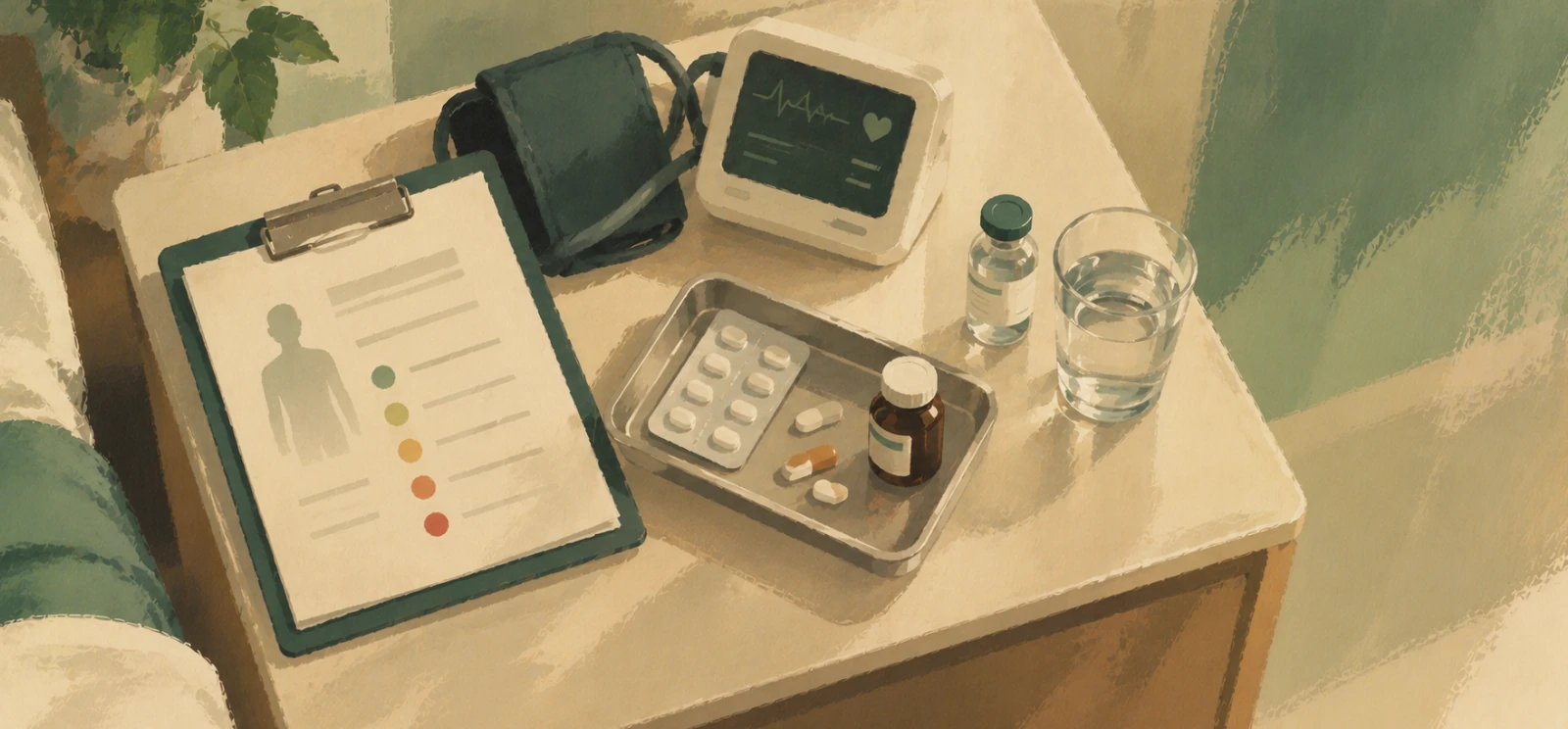
Detox is not one thing. It is assessment, medication, monitoring and nutrition together.
The check comes first. A doctor takes a drinking history and the time of the last drink.
They check for physical illness, liver function and other substances used.
Scoring the withdrawal. Most units use a structured scale.
The CIWA-Ar is a validated ten-item tool used to measure withdrawal severity (Source: American Family Physician, 2004 — aafp.org).
Scores of 8 or fewer mean mild withdrawal. Scores of 9 to 15 mean moderate (Source: American Family Physician, 2004 — aafp.org).
Scores above 15 mean severe withdrawal, with raised risk of seizures and delirium tremens (Source: American Family Physician, 2004 — aafp.org).
That score is repeated through the day. Medicine is then matched to the score.
Medication. Benzodiazepines are the mainstay of treatment.
They can be given on a fixed schedule or triggered by the withdrawal score (Source: American Family Physician, 2004 — aafp.org).
The aim is to replace the brake that alcohol was providing, then taper it away safely.
That is the simple version of it.
Put the brake back. Then ease off it slowly.
Done well, the worst hours pass quietly.
Thiamine. This part is quietly critical.
Thiamine and multivitamins should be given during treatment for alcohol withdrawal (Source: American Family Physician, 2004 — aafp.org).
If intravenous fluids are used, thiamine must be given before glucose. This prevents Wernicke's encephalopathy (Source: American Family Physician, 2004 — aafp.org).
That ordering is a real clinical rule, and it is one home detox cannot follow.
Now the balanced point, because it matters.
Most patients undergoing alcohol withdrawal can be treated safely as outpatients (Source: American Family Physician, 2004 — aafp.org).
So watched does not always mean a bed. It means checked, scored, dosed and reviewed.
What home detox usually misses is not willpower. It is the scoring, the thiamine order, and the rescue plan.
Those three things are not hard to do.
They are just hard to do at home, alone, at three in the morning.
A: A clinician assesses history and physical risk, scores withdrawal severity regularly, and gives benzodiazepines matched to that score. Thiamine is given to protect the brain, before any glucose.
The Indian Picture
Scale first, because this is not a small problem here.
Alcohol use disorder affects 4.6% of Indian adults, according to the National Mental Health Survey (Source: National Mental Health Survey, NIMHANS, 2016 — indianmhs.nimhans.ac.in).
The gender split is stark. It affects 9.1% of men and 0.5% of women (Source: National Mental Health Survey, NIMHANS, 2016 — indianmhs.nimhans.ac.in).
Substance use disorders overall, including tobacco, reached 22.4% of adults (Source: National Mental Health Survey, NIMHANS, 2016 — indianmhs.nimhans.ac.in).
Now the figure that shapes everything else.
The treatment gap for alcohol use disorders was 86%, the highest of any condition surveyed (Source: National Mental Health Survey, NIMHANS, 2016 — indianmhs.nimhans.ac.in).
So nearly nine in ten people who need help are not getting it.
That gap has a direct link to the risks in this article.
When care is hard to reach, people stop on their own. Often several times.
Each unsupervised attempt raises the risk of the next one, through kindling.
There are other Indian patterns worth naming plainly.
Stopping is often attempted around a festival, a family event, or a health scare.
Those are good motives with bad timing, because nobody is watching for hour forty-eight.
Pick a week when someone can stay with them.
Pick a week with a doctor in reach.
Good timing is not a small thing here.
Local pharmacies sometimes supply sedatives without review. That is not detox.
If you are reading this for someone who works, earns and provides, take it just as seriously.
Liver and brain do not check the job title.
A good job is not a shield.
It often just means the problem was funded for longer.
And it means fewer people asked.
Nobody worries about the one who pays the bills.
So it runs on, quietly, for years.
If that is your house, say it out loud this week.
One plain sentence. No blame in it.
That is where most of these stories turn.
Q: How common is alcohol use disorder in India?
A: It affects 4.6% of adults, rising to 9.1% among men. The treatment gap was 86%, the highest of any condition the National Mental Health Survey measured.
How Ganaa Runs Alcohol Detox
Ganaa has worked in mental health care in India since 2012. We treat psychiatric conditions and substance use across age groups (Source: Ganaa, 2026 — ganaa.in).
Detox is handled as a medical process, not as a test of character.
The first step is a full check. Drinking history, last drink, physical health, other drugs used.
Withdrawal is then scored regularly, and medication is matched to that score.
Nursing cover runs through the night, because that is when the risky hours land.
Support runs 24 hours a day.
Our Gurugram centre is an acute care premium facility, which matters for severe withdrawal (Source: Ganaa, 2026 — ganaa.in).
Live-in centres are in Delhi, Gurugram, Greater Noida, and South Goa (Source: Ganaa, 2026 — ganaa.in).
Published facilities include round-the-clock staff support and emergency ambulance services (Source: Ganaa FAQ, 2026 — ganaa.in).
Detox alone is rarely enough, so it is only the first stage.
Care blends psychiatric treatment with psychology sessions, family counselling and holistic therapy (Source: Ganaa, 2026 — ganaa.in).
Treatment is tailored to the person, not run off a template.
If someone you love is planning to stop drinking this week, call before they start.
Speak to a Ganaa counsellor on +91 8750075006, or write to info@ganaa.in. You can also book a consultation at ganaa.in/booking.
Conclusion: Plan the First Three Days Before You Stop
Alcohol withdrawal runs to a schedule, and that schedule is the useful part.
Tremor, sweating and anxiety arrive first, within about 6 to 12 hours.
Hallucinations can appear at 12 to 24 hours, usually with the person still oriented.
Seizures cluster at 24 to 48 hours, and have been reported far earlier.
Delirium tremens typically starts at 48 to 72 hours, and peaks around day five.
Even with treatment, episodes of delirium tremens carry a mortality rate of 1 to 5 percent.
Because the timetable is known, the danger is largely preventable.
Assessment, a withdrawal score, the right medicine and thiamine change the outcome.
Most people can be managed as outpatients, but a doctor decides that, not a family meeting.
If there has been a past seizure or past delirium, treat supervision as compulsory.
And remember kindling. Each unsupervised attempt can make the next one worse.
Deciding to stop drinking is the hard part, and it deserves better odds than luck.
Make one call before the last drink, not after hour forty-eight.
One call. That is the whole ask.
It may end with you being told to carry on at home.
It may also be the call that changes how this week ends.
You do not need the right words.
Just say how much, how long, and when they stopped.
The rest is their job, not yours.
You are not the doctor here.
You are the one who made the call.
That is enough, and it is a lot.
FAQ
Q: What happens in the first 72 hours of alcohol detox?
A: Tremor, sweating and anxiety usually start within 6 to 12 hours. Hallucinations can appear at 12 to 24 hours. Seizures cluster at 24 to 48 hours. Delirium tremens typically begins at 48 to 72 hours.
Q: Can alcohol withdrawal kill you?
A: Yes, though it is uncommon with proper care. Episodes of delirium tremens carry a mortality rate of 1 to 5 percent even when treated. Seizures also carry risk of injury.
Q: When is the seizure risk highest during alcohol withdrawal?
A: Generalised tonic-clonic seizures most often appear 24 to 48 hours after the last drink. They have been reported as early as two hours after stopping. This is why unsupervised stopping is risky.
Q: What is delirium tremens?
A: It is the most severe form of alcohol withdrawal. Features include confusion, visual hallucinations, fast heart rate, raised blood pressure, fever and heavy sweating. It usually starts 48 to 72 hours after the last drink.
Q: Is it safe to detox from alcohol at home?
A: Many people with mild withdrawal are treated safely as outpatients, but that decision belongs to a doctor. Anyone with past seizures, past delirium tremens, or heavy daily drinking needs supervised care.
Q: What medicines are used in alcohol detox?
A: Benzodiazepines are the mainstay of treatment. Thiamine is given to prevent Wernicke's encephalopathy, and must be given before any glucose. Dosing is guided by a structured withdrawal score.
Q: How common is alcohol use disorder in India?
A: The National Mental Health Survey found alcohol use disorder in 4.6% of adults, with 9.1% of men affected. The treatment gap for alcohol use disorders was 86%, the highest of any condition surveyed.
Online therapy matches in-person results for most conditions. Here is what the trials found, where each format wins, and how to choose for your own situation.
Mindfulness-based therapy cuts depression relapse risk in recurrent cases. Here is what MBCT is, what the trials found, and how the eight weeks actually run.
Eating disorders in India hide behind praise for discipline and thinness. Learn the early warning signs, what to say, and how treatment actually works.