Eating Disorders in India: The Warning Signs Families Dismiss
Eating disorders in India hide behind praise for discipline and thinness. Learn the early warning signs, what to say, and how treatment actually works.
Eating Disorders in India: The Warning Signs Families Dismiss
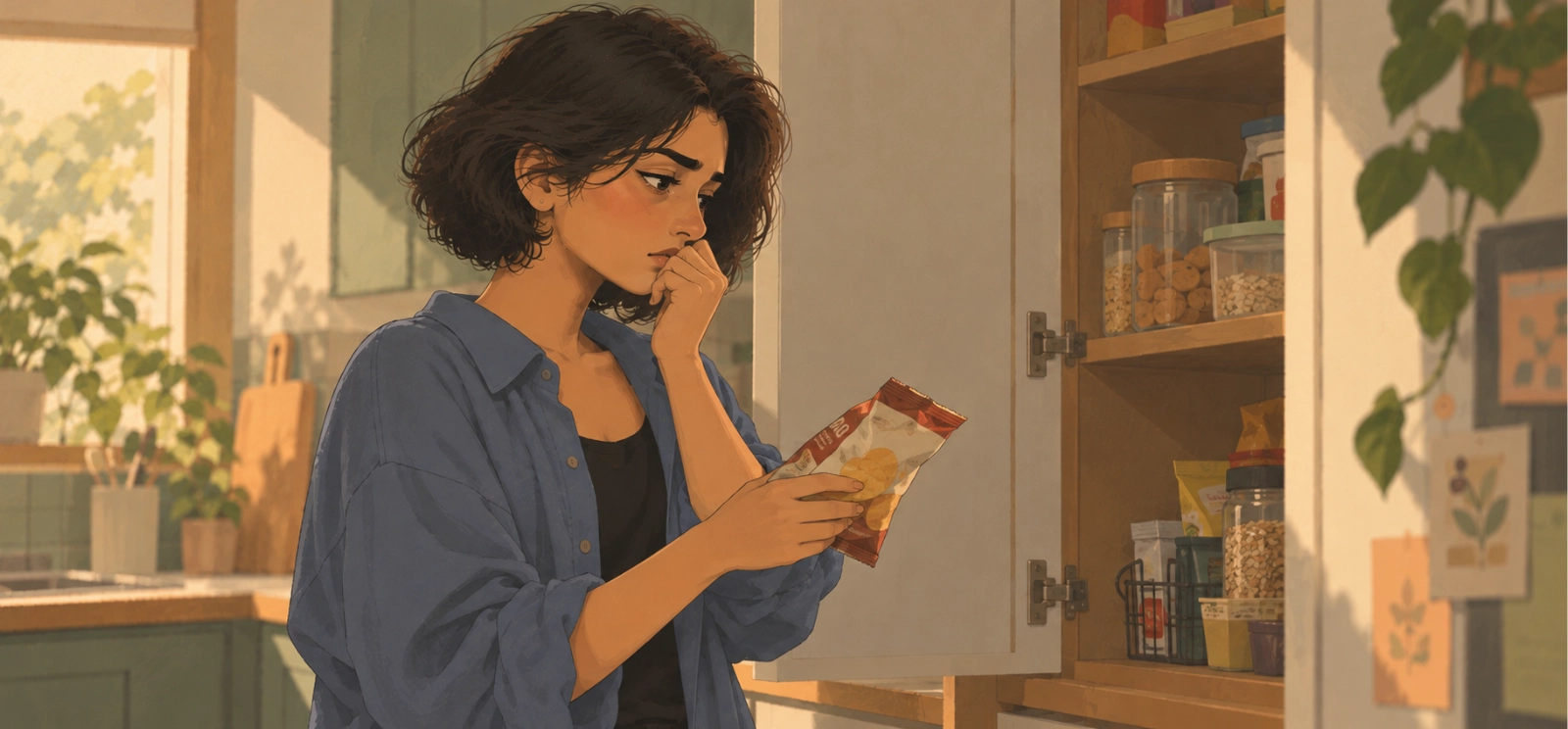
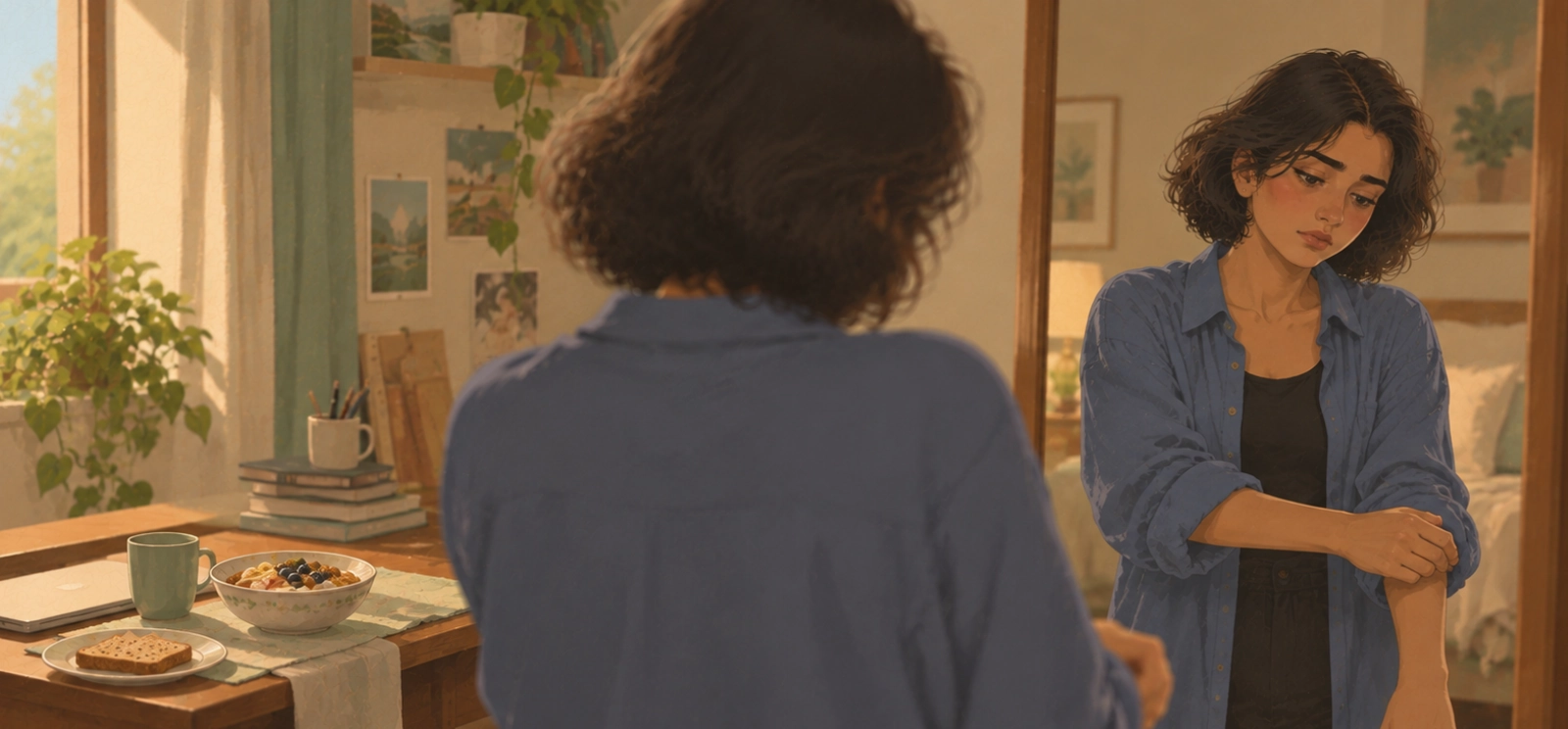
She started skipping breakfast. Then she took up running.
The family called it discipline. Relatives said she looked well.
By the time anyone worried, it had been eighteen months.
This is the ordinary shape of it. Not a dramatic collapse.
Eating disorders begin as habits that look like virtue.
Control. Restraint. Getting fit. Being good.
In Indian homes those words carry praise, not concern.
So the early signs get applauded instead of questioned.
This guide is written for families. It covers what the early signs actually look like.
It covers the three patterns you are most likely to meet.
It covers what Indian research shows about how common this is.
It covers the sentences that help, and the ones that make things worse.
And it covers what real treatment involves.
One note first. This is general guidance, not a diagnosis.
If you are worried about someone, a doctor is the next step, not an internet checklist.
But do read on. Knowing what to look for is most of the work.
And knowing what to say next is the rest of it.
Why Indian Families Miss the Early Signs
Several beliefs sit in the way. Each one is common and each one costs time.
The health-conscious excuse. New rules about food get read as maturity.
The boys-do-not-get-this myth. Boys and men get eating disorders too.
They are diagnosed later and less often, partly because nobody looks.
The not-thin-enough test. This is the costliest belief of all.
Most people with an eating disorder are not underweight. The illness is in the behaviour, not the body.
The it-is-just-a-phase line. Some food fussiness is normal in teenagers. Rules that keep tightening are not.
The she-eats-with-us defence. Eating in front of family proves very little.
Many people eat normally at the table and compensate afterwards in private.
The not-in-India belief. Eating disorders are often framed as a Western problem. They are not.
Then there is the Indian food context itself, which hides a lot.
Fasting is normal and often religious. Skipping meals passes without comment.
Food refusal can be read as devotion. Restriction can look like a festival routine.
And in many homes, commenting on a girl's weight is simply how relatives make conversation.
That running commentary is a risk factor, not a joke.
It lands harder than adults think.
A child hears it at every family event, for years.
By the teens, it has become a voice in their own head.
You can stop that at your own table.
Make one rule for the house. No talk about bodies.
Not theirs. Not yours. Not the cousin who lost weight.
It is a small rule. It does a lot of work.
Q: Why do families miss the early signs of an eating disorder?
A: Because the first signs look like discipline. Cutting food, exercising more, and eating less get praised. Families usually worry only once weight changes, which is far too late.
What Counts as an Eating Disorder
An eating disorder is a mental illness, not a diet gone wrong.
It has two parts. Disturbed eating behaviour, and a mind gripped by food, weight, or shape.
The grip is the key part. It takes up hours a day and does not switch off.
Three patterns cover most cases in practice.
Anorexia nervosa. Severe restriction of food, driven by fear of weight gain.
Bulimia nervosa. Cycles of eating a large amount, then trying to undo it.
Binge eating disorder. Repeated episodes of eating large amounts with a sense of lost control, without the undoing.
There is a fourth group that matters. Many people have serious disordered eating that fits none of these neatly.
They are not less ill. They just do not tick every box.
Doctors treat what is in front of them, not the label.
Two things drive all three patterns.
The first is distress. Food becomes a way to manage feelings that have nowhere else to go.
The second is control. When life feels unmanageable, eating is one thing that answers.
That is why exam years, moves, family conflict, and loss so often sit at the start.
It is also why telling someone to just eat does not work.
You are asking them to give up the only tool that currently works for them.
That is why patience beats pressure here.
The tool has to be replaced, not just removed.
That swap is what treatment does, and it takes time.
So drop the word just from your side of it.
Just eat. Just stop. Just try harder.
None of those land. All of them sting.
Q: What is the difference between dieting and an eating disorder?
A: A diet is a choice you can stop. An eating disorder takes over thinking, follows rigid rules, and causes distress when broken. The mental grip matters more than the food itself.
Anorexia: The Signs That Are Not About Weight
Weight change is a late sign. These come first.
Rules multiply. Foods move from allowed to banned, and the banned list keeps growing.
Eating becomes solitary. Meals get skipped at home, with a claim of having eaten elsewhere.
Rituals appear. Cutting food very small. Arranging it. Eating in a fixed order. Eating very slowly.
Cooking for others. Real interest in feeding the family, without eating any of it.
Exercise turns rigid. It must happen, at a set time, whatever else is going on.
Layers of clothing. Partly to hide the body. Partly because they feel cold constantly.
Withdrawal from social eating. Excuses for every gathering that involves food.
Mood shifts. Irritability, low mood, and difficulty concentrating.
Then the body signs, which appear as things progress.
Feeling cold all the time. Dizziness on standing. Hair thinning on the head.
Fine soft hair on the arms and face. Periods becoming irregular or stopping.
Constipation. Slow healing. Constant tiredness.
Here is the part families need to hear clearly.
The medical risk is serious and it is not proportional to how someone looks.
A 2025 meta-analysis of 22 studies found death rates about five times those of the general population (Source: International Journal of Eating Disorders, 2025 — pmc.ncbi.nlm.nih.gov).
Suicide accounted for 21% of deaths and heart problems for 19% (Source: International Journal of Eating Disorders, 2025 — pmc.ncbi.nlm.nih.gov).
That review pooled 30 studies covering 33,176 patients (Source: International Journal of Eating Disorders, 2025 — pmc.ncbi.nlm.nih.gov).
Note the first cause. This is not only a nutrition problem.
The mental distress is as dangerous as the physical effects.
So do not wait for a scale to prove it.
If the behaviour is there, the risk is there.
A doctor can check the body. Only a doctor should.
Do not weigh them at home.
Do not make a chart on the wall.
That hands the illness a new tool. Leave it to the clinic.
Q: What are the early anorexia symptoms before weight loss?
A: Growing food rules, eating alone, rituals at the table, and rigid exercise. Cooking for others without eating is a classic sign. Feeling cold and withdrawing socially come next.
Bulimia: The One That Hides Best
Bulimia is often invisible because weight frequently stays in a normal range.
The cycle has two halves. A period of eating a large amount, then an attempt to undo it.
Both halves are hidden, and shame keeps them hidden.
What families may notice instead:
Disappearing after meals. Regular, prompt bathroom visits once eating ends.
Running taps or music. Sounds used to cover what is happening.
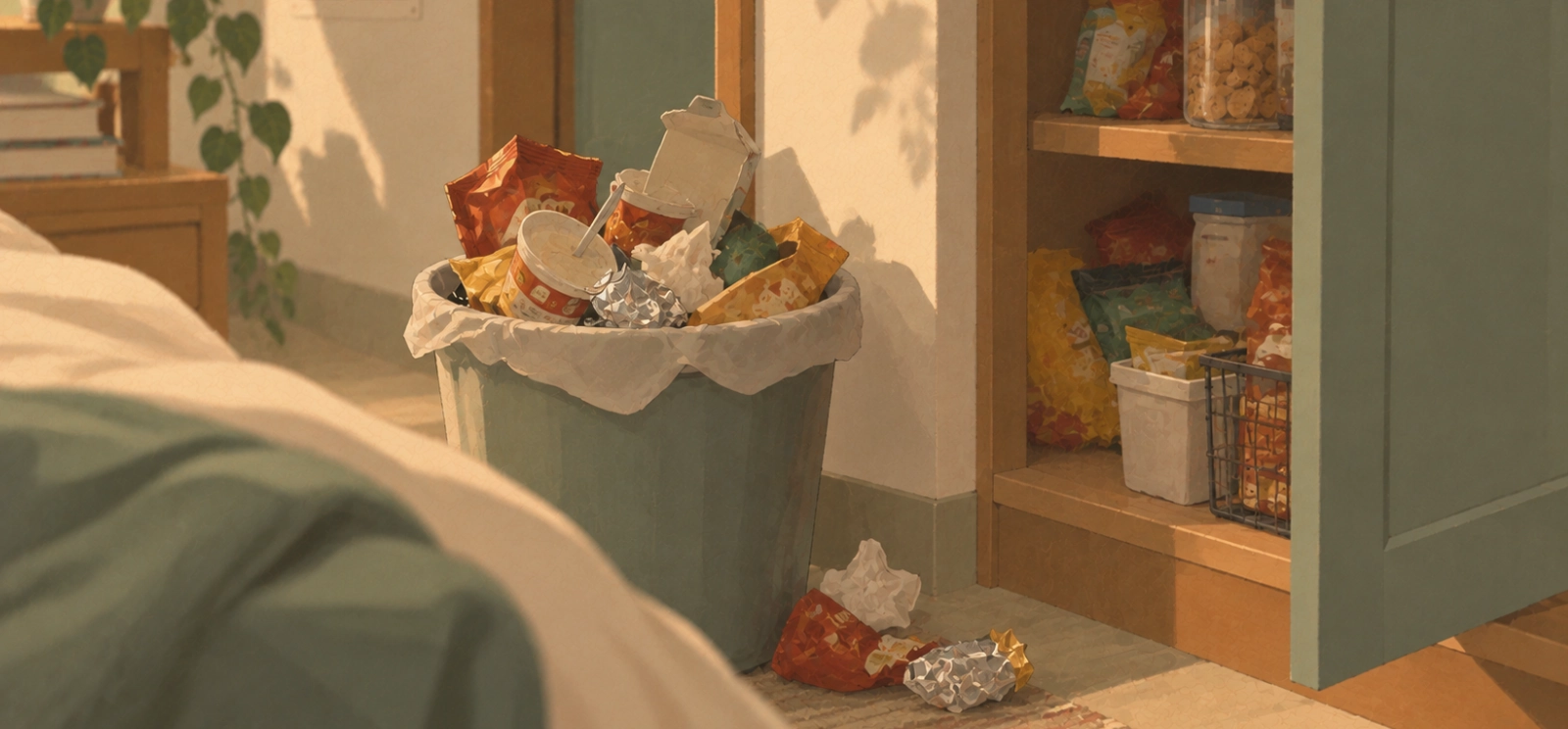
Food going missing. Larger amounts than expected, often at night.
Wrappers or packaging. Found in bins, bags, or a bedroom.
Swollen cheeks or jaw. A puffiness along the jawline that comes and goes.
Dental problems. Sensitivity, or a dentist commenting on enamel wear.
Knuckle marks. Small calluses or scars on the back of the hand.
Mood tied to eating. Sharp self-criticism and low mood after meals.
Strict rules that collapse. Days of rigid control followed by loss of control, then guilt.
The last one is the pattern to understand.
Restriction causes the loss of control. It is a biological response, not weak will.
So blaming someone for the binge misses the cause entirely.
It also makes the next one more likely.
Shame drives secrecy. Secrecy drives more of the same.
Breaking that loop starts with how the family responds.
Keep food in the house. Do not lock it away.
Eat meals together where you can.
A calm table does more than any lecture.
The health risks here are real and often underestimated.
Repeated purging disturbs the body's salt balance, which affects the heart rhythm.
Teeth, throat, and the gut all take damage over time.
If this pattern is happening, a medical check is needed. Not next month. Soon.
Q: How can you tell if someone has bulimia?
A: Look for bathroom visits straight after eating, missing food, swollen cheeks, and dental problems. Weight often stays normal, so behaviour is the better guide than appearance.
Binge Eating Disorder: Common and Rarely Named
This is the most common eating disorder, and the one least often diagnosed in India.
It involves repeated episodes of eating a large amount, with a real sense of losing control.
There is no undoing afterwards. That is what separates it from bulimia.
Signs to look for:
Eating rapidly. Much faster than usual, often without tasting much.
Eating without hunger. Continuing past full, to real discomfort.
Secrecy. Eating alone because of embarrassment about the amount.
Distress afterwards. Disgust, guilt, and low mood following an episode.
Frequent dieting. A cycle of strict plans that fail and restart.
Weight changes. These may or may not happen, and they are not the diagnosis.
In India this is routinely mistaken for a willpower problem.
People are told to eat less and move more. That advice makes it worse.
Restriction is a trigger for bingeing, so tighter dieting feeds the cycle.
Distress often sits underneath. Anxiety and low mood are common companions.
There is also a practical trap worth naming.
Weight-focused advice makes people avoid doctors entirely. Shame closes the door.
If eating feels out of control, that is worth a conversation regardless of body size.
Ask for a doctor who will talk about eating, not weight.
That is a fair thing to ask for.
Good care here starts with control, not kilos.
If a doctor only talks about the scale, see another one.
You are allowed to do that.
The right fit matters here more than most fields.
Q: Is binge eating disorder a real illness or just overeating?
A: It is a recognised illness. The defining feature is loss of control during episodes, plus real distress afterwards. Dieting advice usually makes it worse, because restriction triggers bingeing.
What the Indian Data Shows
For years the assumption was that this did not happen here. Research says otherwise.
A 2025 study surveyed 860 adolescents aged 10 to 19 in Chennai (Source: Cureus, 2025 — pubmed.ncbi.nlm.nih.gov).
Roughly one in ten screened positive for high eating disorder risk (Source: Cureus, 2025 — pubmed.ncbi.nlm.nih.gov).
Younger adolescents aged 10 to 15 scored slightly higher than older teenagers (Source: Cureus, 2025 — pubmed.ncbi.nlm.nih.gov).
That detail matters. Parents tend to start watching at 16, and the risk is already there at 11.
Girls scored higher than boys, matching global patterns (Source: Cureus, 2025 — pubmed.ncbi.nlm.nih.gov).
Two risk factors stood out.
Social media use was strongly linked to body dissatisfaction, which in turn raised risk (Source: Cureus, 2025 — pubmed.ncbi.nlm.nih.gov).
High perceived stress was also a clear predictor of symptoms (Source: Cureus, 2025 — pubmed.ncbi.nlm.nih.gov).
Now place that beside the wider system.
India's treatment gap across mental disorders runs from 28% to 83% (Source: National Mental Health Survey, NIMHANS, 2016 — indianmhs.nimhans.ac.in).
So a common problem meets a system most people never reach.
That is the gap this article is trying to close.
There is one more thing worth saying about the data.
These are screening figures, not diagnoses.
Not every teen who screens positive is ill. But most who are ill never get screened at all.
That is the real gap.
Not too many labels. Too few doctors asked.
Quick Facts: Eating Disorders in India
About one in ten Chennai adolescents screened positive for high eating disorder risk — (Source: Cureus, 2025 — pubmed.ncbi.nlm.nih.gov).
That study surveyed 860 adolescents aged 10 to 19 years — (Source: Cureus, 2025 — pubmed.ncbi.nlm.nih.gov).
Social media use was strongly linked to body dissatisfaction in the same study — (Source: Cureus, 2025 — pubmed.ncbi.nlm.nih.gov).
Anorexia carries death rates about five times those of the general population — (Source: International Journal of Eating Disorders, 2025 — pmc.ncbi.nlm.nih.gov).
Suicide caused 21% of those deaths, and heart problems 19% — (Source: International Journal of Eating Disorders, 2025 — pmc.ncbi.nlm.nih.gov).
India's treatment gap across mental disorders runs from 28% to 83% — (Source: National Mental Health Survey, NIMHANS, 2016 — indianmhs.nimhans.ac.in).
What to Say, and What Not to Say
How you open this conversation shapes what happens next.
Start with what you have seen, not with food or weight.
Say this:
Start with the fact. "I've noticed you've been skipping dinner." Then say you are worried.
Offer to go together. "I'd like us to see a doctor about this." Keep it as a request.
Remove the fear of blame. "Nobody is in trouble here." Say that plainly and early.
Ask rather than tell. "You seem stressed lately." Then stop talking and listen.
Avoid this:
Never praise thinness. "You look so thin now." Even as praise, it feeds the illness.
Never remark on gain. "You've put on weight." Weight comments harm in both directions.
Never demand the symptom stop. "Just eat properly." That asks for the result, not the cause.
Never use guilt. "Do you know what this is doing to us?" Guilt increases secrecy.
Never issue ultimatums. "If you don't eat, you're not going out." That starts a power struggle.
Notice what the good lines share. They are short.
They describe. They do not diagnose.
And none of them mention food, weight, or shape.
Say less than you want to.
Then wait. The pause is the useful part.
Most people fill a silence if you give them one.
Some practical guidance for the days after.
Expect denial. It is part of the illness, not proof you are wrong.
Do not make mealtimes a battlefield. One calm adult, one conversation, repeated.
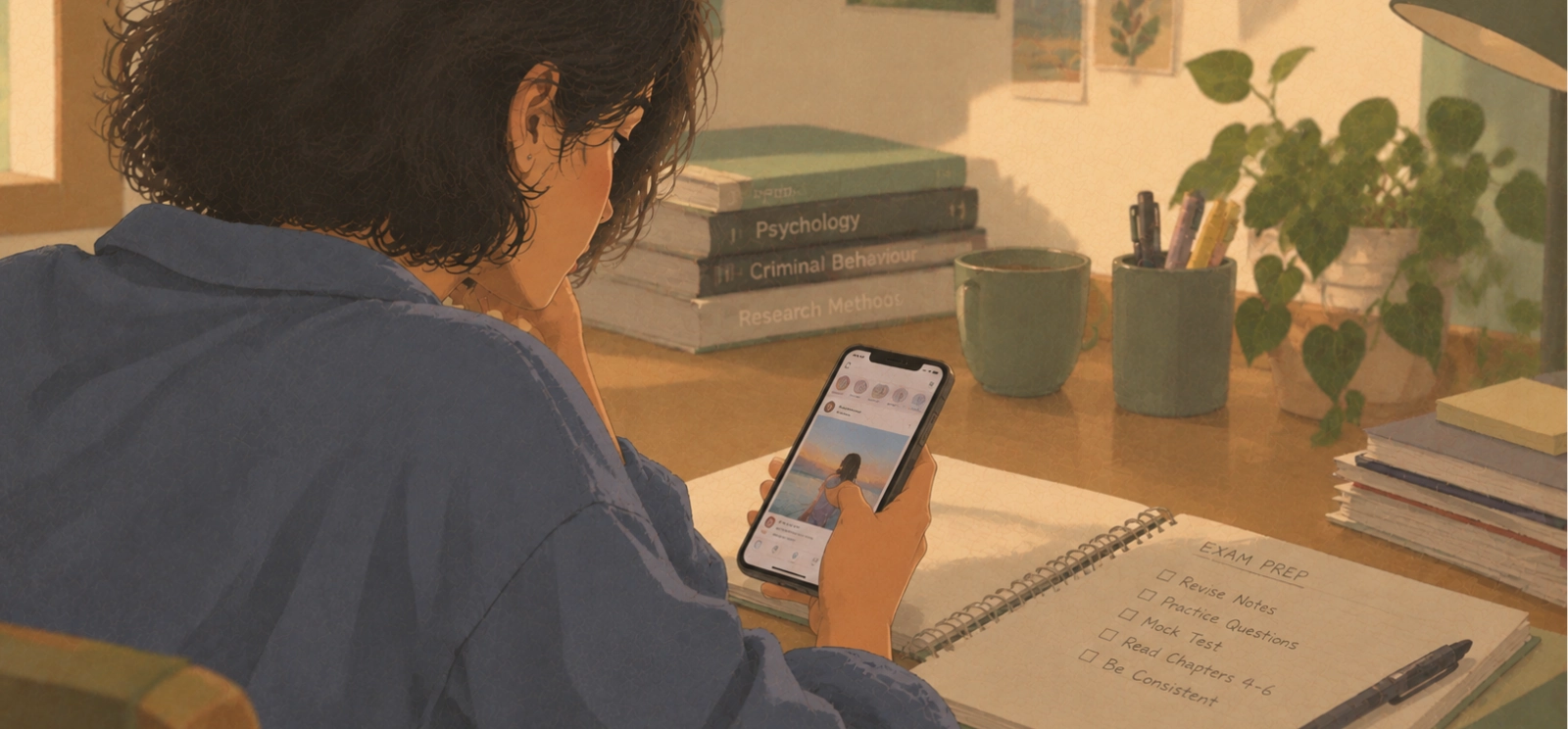
Take the phone pressure seriously. Ask what accounts they follow, without raiding the device.
And do not wait for agreement before seeing a doctor. Go yourself first if you need to.
A clinician can advise you even before the person is ready.
Go with a written list of what you have seen.
Dates help. So do specifics.
That list turns a vague worry into something a doctor can work with.
Keep the list to what you saw.
Not what you think it means.
The doctor will do that part.
If there is fainting, chest symptoms, or any talk of self-harm, treat it as urgent.
Q: How do I talk to my daughter about an eating disorder?
A: Name what you have seen, say you are worried, and ask to see a doctor together. Avoid all comments on weight and appearance. Expect denial and stay calm.
How Treatment Works
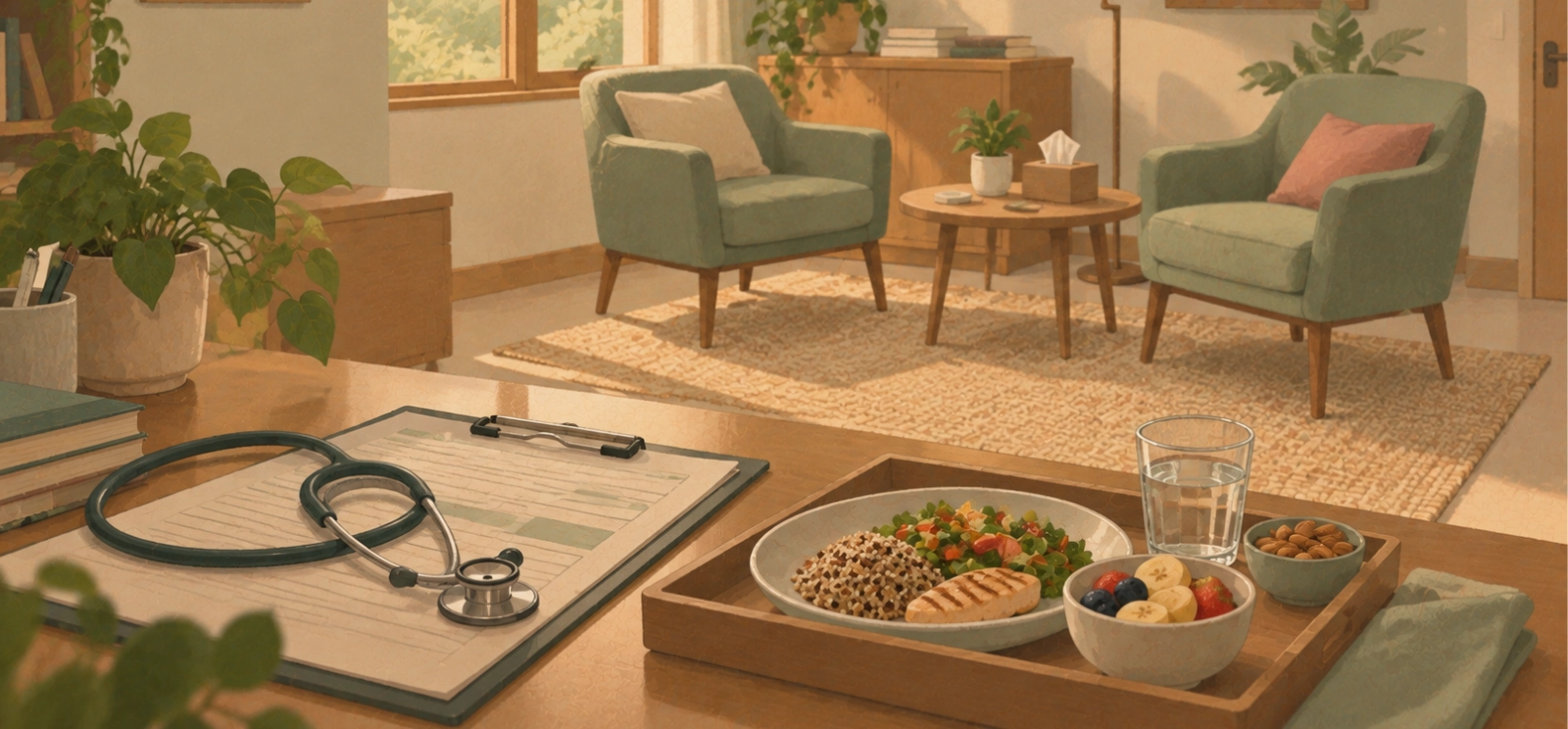
Treatment for eating disorders is a team job, and it usually has four parts.
Medical care first. Any physical risk gets checked and stabilised before anything else.
That means bloods, heart checks, and monitoring where needed.
Nutrition work. A structured plan to restore regular eating, guided by a professional.
This is not a diet plan. It is a rebuilding plan, and it is done in stages.
Therapy. This is the core of long-term recovery.
Cognitive behavioural therapy is the best studied approach here.
And the earlier treatment starts, the better it tends to go.
That is the one lever families fully control.
Not the illness. Not the recovery speed.
Just how soon the first appointment happens.
So book it. Even if they say no.
Go alone the first time if you must.
One visit is not a plan. It is a start.
Q: What does eating disorder treatment involve?
A: Medical checks first, then a structured eating plan, then therapy. Family involvement matters for younger patients. Anxiety and depression are treated alongside, because they usually travel together.
How Ganaa Supports Families Facing an Eating Disorder
Ganaa has worked in mental health care in India since 2012. We treat psychiatric conditions and substance use across age groups (Source: Ganaa, 2026 — ganaa.in).
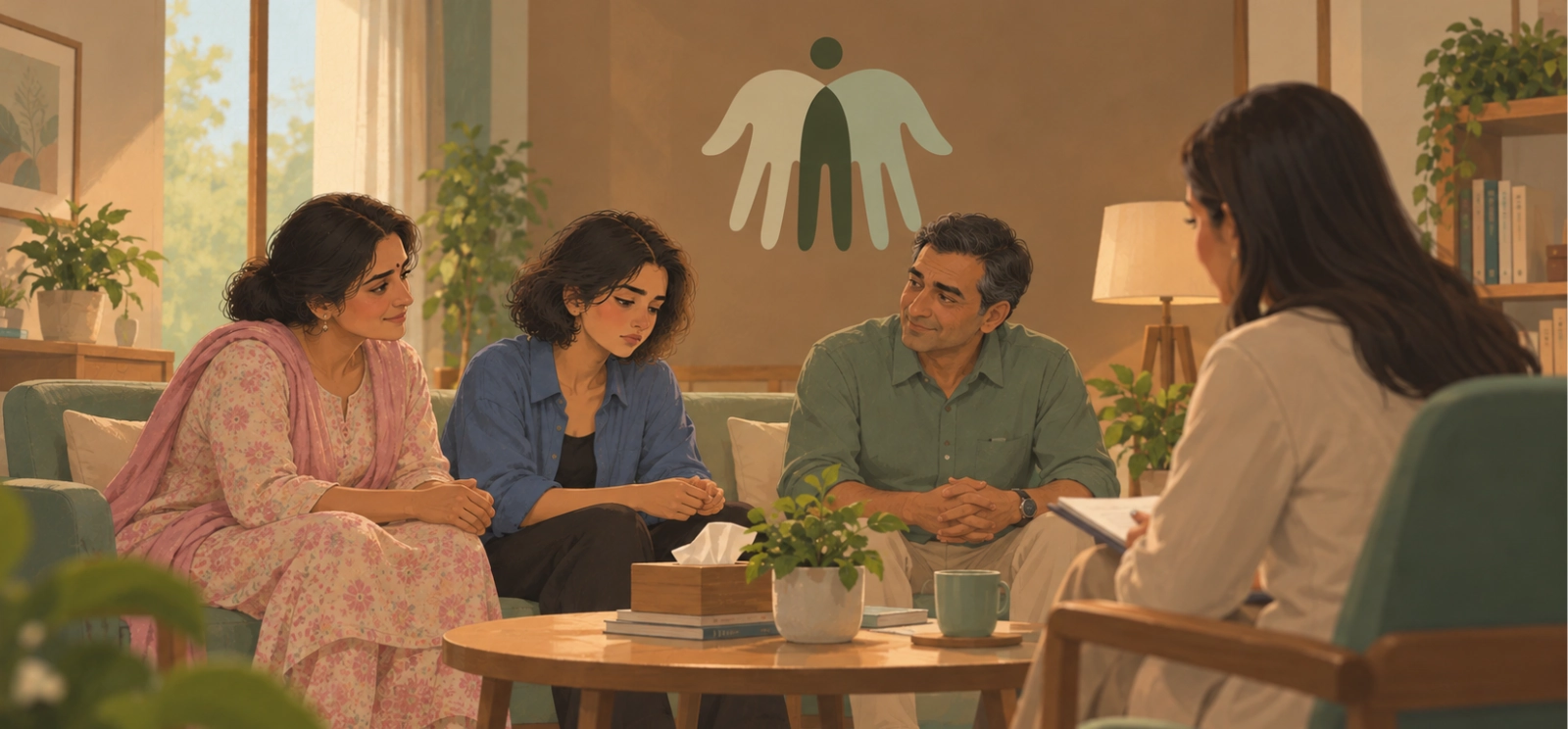
Families usually reach us after months of quiet worry. Often the person affected is not yet convinced.
So we start with the family, not with ultimatums.
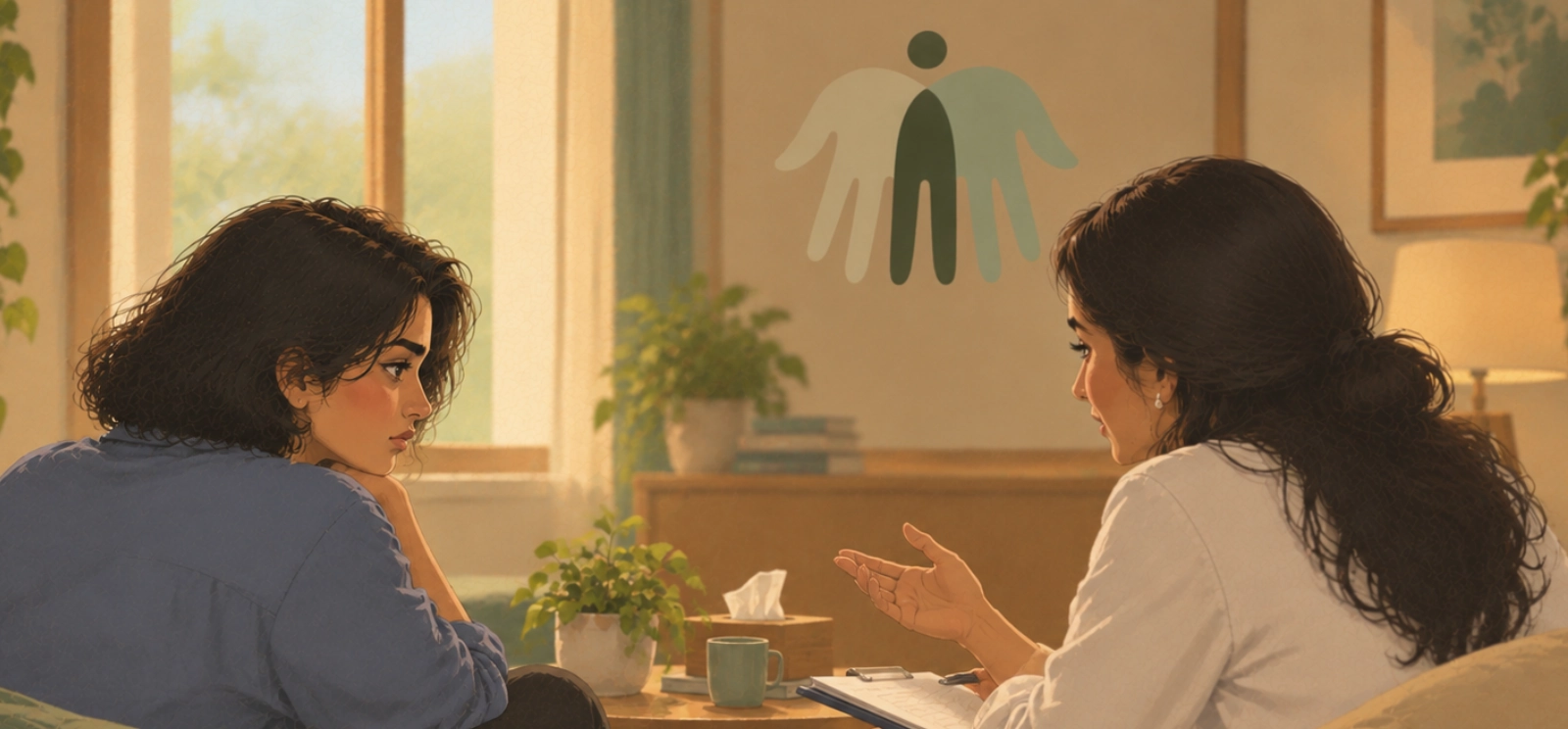
We help you understand what you are seeing. We help you decide what needs checking urgently.
Assessment covers the physical picture and the mental one together.
Most people do not need a residential stay. Our clinics in Faridabad, Greater Kailash and Greater Noida handle outpatient care.
Live-in centres are in Delhi, Gurugram, Greater Noida, and South Goa (Source: Ganaa, 2026 — ganaa.in).
Our Gurugram centre is an acute care premium facility and includes a women-only wing (Source: Ganaa, 2026 — ganaa.in).
Care blends psychiatric treatment with psychology sessions, family counselling, and holistic therapy (Source: Ganaa, 2026 — ganaa.in).
Family counselling is not an add-on here. With eating disorders it is central.
Treatment is tailored to the person, and to their age.
Where a stay is needed, published guidance puts programme length at 30 to 90 days (Source: Ganaa FAQ, 2026 — ganaa.in).
Aftercare continues once normal life resumes. Mealtimes at home are where recovery gets tested.
Support runs 24 hours a day.
If you have been worrying quietly for months, that is reason enough to call.
Speak to a Ganaa counsellor on +91 8750075006, or write to info@ganaa.in. You can also book a consultation at ganaa.in/booking.
Conclusion: Watch the Behaviour, Not the Body
Eating disorders do not announce themselves. They arrive dressed as good habits.
Rules about food. New exercise. Smaller portions. More discipline.
In Indian homes, those things get praised before they get questioned.
So change what you watch. Watch behaviour, not body shape.
Watch for eating alone, growing food rules, and long bathroom visits after meals.
Watch for a teenager who stops going anywhere food is served.
Remember that most people with an eating disorder are not underweight.
Remember that boys get them too, and get diagnosed later.
Remember that binge eating is the most common form, and dieting advice makes it worse.
If something feels wrong, say what you have seen and ask to see a doctor together.
You do not need certainty to start that conversation.
You only need to be the one who notices.
And then the one who says it out loud.
That is often where recovery starts. Not in a clinic. At a kitchen table.
Say the thing you have been rehearsing.
Keep it short. Keep it kind.
Then ask to go together. That is all it takes to begin.
FAQ
Q: What are the early warning signs of an eating disorder?
A: Rising rules about food, skipped meals, and eating alone are the usual first signs. Watch for long bathroom visits after meals, new intense exercise, and social withdrawal. Behaviour changes before body shape does.
Q: Do eating disorders only affect underweight girls?
A: No. Most people with an eating disorder are not underweight, and boys are affected too. Binge eating disorder is the most common type. Body size is a poor guide to illness.
Q: How common are eating disorders among Indian teenagers?
A: A 2025 survey of 860 adolescents in Chennai found roughly one in ten screened positive for high risk. Girls scored higher than boys. Younger teenagers scored slightly higher than older ones.
Q: Is social media linked to eating disorders in India?
A: The same Chennai study found social media use strongly linked to body dissatisfaction, which raises risk. High stress was also a clear predictor. Neither causes illness alone, but both add pressure.
Q: How dangerous is anorexia nervosa?
A: It is among the most dangerous psychiatric conditions. A 2025 meta-analysis found death rates about five times those of the general population. Suicide and heart problems were the leading causes.
Q: What should I say if I think my child has an eating disorder?
A: Speak about what you have noticed, not about weight or food. Name a behaviour, say you are worried, and ask to see a doctor together. Avoid bargaining, threats, and comments on appearance.
Q: Can eating disorders be treated successfully?
A: Yes. Treatment combines medical stabilising, nutrition work, therapy, and family involvement. Recovery is common, and early treatment makes it far more likely. Relapse is managed, not a failure.
High functioning anxiety hides behind good work and a calm face. Learn the hidden signs, what the body does, and when coping turns into the problem itself.
The cost of mental health rehab in India is rarely published openly. Here is what moves the price, what insurance must cover by law, and what to ask first.
Treatment resistant depression in India is common and treatable. Learn what the label means, what to rule out first, and the steps that follow failed medicine.