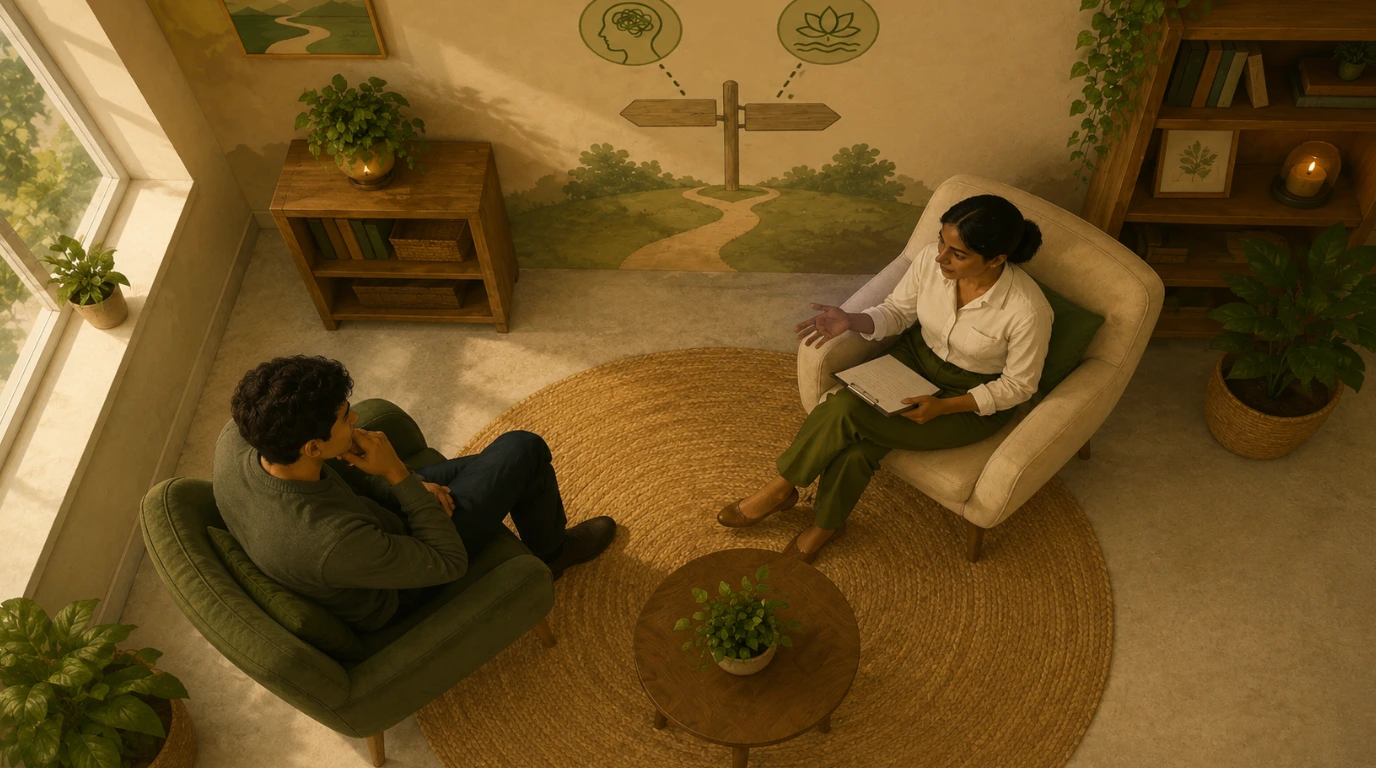
Compare DBT vs CBT in plain words. Learn how each therapy works, the conditions they treat, what to expect, and how to choose the right fit for you.
DBT vs CBT: Which Therapy Is Right for You
You have heard both names. A friend did CBT. A cousin was offered DBT.
Now you are trying to choose. The DBT vs CBT question feels confusing.
It does not have to be.
Both are talk therapies. Both are backed by strong research. Both can change how you cope each day.
But they were built for different jobs.
CBT works on the link between your thoughts, feelings, and actions. It suits anxiety, depression, and OCD.
DBT was built for intense emotions. It helps with self-harm, mood swings, and tense relationships.
This guide breaks down the DBT vs CBT choice in plain words. You will learn how each one works. You will see which conditions each one suits. You will learn what to expect in a session.
We also cover how to choose, and whether you can use both.
Read on, and the choice gets a lot simpler.
What Is Cognitive Behavioural Therapy (CBT)?
CBT is the most studied talk therapy in the world.
It rests on one simple idea. Your thoughts, feelings, and actions are linked.
Change one, and the others shift too.
Say you make a small mistake at work. A harsh thought follows. "I always fail."
That thought sinks your mood. You then avoid the next task. The avoidance feeds the fear.
CBT breaks this loop. You learn to spot the thought. You test if it is true. You replace it with a fairer one.
This is called cognitive restructuring. It is the core skill of CBT.
CBT is structured and short. Many courses run 12 to 20 sessions. You set goals early. You track progress each week.
Homework is a big part of it. You practise skills between sessions.
The therapist works with you, not on you. You set the goals together. You both check what is working. This shared style keeps you in control.
CBT works across many conditions. The evidence is broad and strong. A large review found it effective for depression. Even better when paired with medication (Source: Cognitive Behavioral Therapy for Depression, NIH/PMC, 2020 — pmc.ncbi.nlm.nih.gov).
Q: What does CBT actually treat? A: CBT treats anxiety, depression, OCD, panic, phobias, and PTSD. It also helps with stress, anger, and sleep problems. It is a flexible, evidence-led form of cognitive behavioural therapy India clinics now offer widely.
What Is Dialectical Behaviour Therapy (DBT)?
DBT is a younger therapy with a clear origin.
It was built by Dr Marsha Linehan in the 1980s. She first designed it for people with intense, painful emotions.
Many of her early clients self-harmed. Some felt suicidal. Standard therapy was not enough.
So she added something new. She added acceptance.
That is what "dialectical" means here. Two truths held at once.
You accept yourself as you are. You also work to change. Both can be true together.
DBT is built around skills. You learn them in a group and practise them at home (Source: Behavioral Research and Therapy Clinics, University of Washington — depts.washington.edu).
There are four skill modules. We cover them next. Each one targets a real-life problem.
DBT also gives you crisis support. Many programmes offer phone coaching between sessions.
This support is a key feature. You are not left alone in a hard moment. You can call your coach for guidance. They help you use a skill on the spot.
Full DBT is longer than CBT. It often runs about a year. The pace is slower on purpose.
Dialectical behaviour therapy is now used well beyond its first goal. It helps with eating disorders, substance use, and trauma too.
Q: Who was DBT first made for? A: DBT was first made for people with borderline personality disorder and chronic self-harm. It now helps anyone with strong, hard-to-manage emotions. That wider use is why dialectical behaviour therapy has grown so fast.
The Four Skills That Make DBT Different
DBT teaches four core skill sets. Together they form its toolkit.
This structure is the heart of the DBT vs CBT difference. CBT reshapes thoughts. DBT builds skills you use in the moment.
Here are the four modules.
Mindfulness. This is the base of DBT. You learn to notice the present moment. You watch thoughts without reacting. It calms a busy, racing mind.
Distress tolerance. This is for crisis moments. You learn to survive a bad hour without making it worse. No self-harm. No rash choices. Just safe ways to ride the wave.
Emotion regulation. Here you learn to name feelings. You spot what triggers them. You then take small steps to shift them. Over time, the swings get smaller.
Interpersonal effectiveness. This is for relationships. You learn to ask for what you need. You learn to say no. You handle conflict without burning bridges.
Each module builds on the last. You start with mindfulness. You then add the harder skills. The order is planned with care.
You also keep a daily diary card. You track your moods and urges. This helps your therapist spot patterns fast.
Two of these skills are about acceptance. Two are about change.
Mindfulness and distress tolerance help you accept hard moments. Emotion regulation and interpersonal effectiveness help you change them.
That balance is the DBT signature.
CBT does not split into these four parts. It stays focused on thoughts and behaviour. That is the cleaner contrast between the two.
Q: Do I learn DBT skills alone? A: No. Most DBT skills are taught in a weekly group. You then practise them in daily life. A separate one-to-one therapist helps you apply each skill to your own story.
DBT vs CBT: Key Differences at a Glance
You now know the basics of each. Let us put them side by side.
The table below sums up the core DBT vs CBT differences. Use it as a quick map.
FeatureCBTDBTMain focusThoughts and behaviourEmotions and acceptanceCore ideaChange unhelpful thinkingBalance acceptance with changeBuilt byAaron Beck, 1960sMarsha Linehan, 1980sFirst designed forDepression, anxietySelf-harm, intense emotionsFormatMostly one-to-oneGroup skills plus one-to-oneLengthShort, 12 to 20 sessionsLonger, often about a yearKey toolCognitive restructuringFour skill modulesCrisis supportRarely between sessionsOften phone coachingBest known strengthBroad, flexible, fastEmotion control, safety
Notice the pattern.
CBT is broad and quick. It fits many common problems.
DBT is deep and structured. It fits a narrower, harder set of needs.
Neither is "better." They simply do different jobs.
That is the most useful way to read this whole DBT vs CBT debate.
Q: Is DBT just a stricter CBT? A: Not quite. DBT grew from CBT, so they share roots. But DBT adds mindfulness, acceptance, and crisis skills. It is a specialised branch built for a tougher problem.
Which Conditions Suit CBT?
CBT shines when the main problem is unhelpful thinking.
If anxious or low thoughts drive your distress, CBT fits well.
It is the usual first choice for several conditions.
Anxiety disorders. CBT targets worry and avoidance head-on. A recent meta-analysis confirmed its benefit for anxiety-related disorders (Source: Efficacy of CBT for Anxiety-Related Disorders, NIH/PMC, 2023 — pmc.ncbi.nlm.nih.gov).
Depression. CBT helps you break the cycle of low mood and withdrawal. It is a front-line option for mild to moderate cases.
OCD. A CBT method called exposure and response prevention is the gold standard here.
Panic and phobias. CBT uses gentle exposure to shrink fear over time.
PTSD. Trauma-focused CBT is widely recommended for post-traumatic stress.
CBT also helps with stress, anger, and poor sleep. Its reach is wide.
It works for many ages too. Children, teens, and adults all use it. The tools are simply adjusted to fit.
The strength of CBT is speed and focus. You name a clear goal. You work toward it week by week.
This is why so many types of psychotherapy borrow CBT tools. They are practical and easy to learn.
Q: Is CBT good for everyday stress? A: Yes. You do not need a diagnosis to benefit. CBT skills help with work stress, exam fear, and worry. Many people use these tools to stay well, not just to recover.
Which Conditions Suit DBT?
DBT fits a different picture.
It helps most when emotions feel huge and hard to control.
If small triggers cause big reactions, DBT may suit you.
Borderline personality disorder. This was DBT's first target. Research shows it can lower self-harm in people with the condition (Source: DBT for adolescent self-harm and suicidal ideation, NIH/PMC, 2021 — pmc.ncbi.nlm.nih.gov).
Self-harm and suicidal thoughts. DBT teaches safe ways to ride out a crisis. A clinical trial found it helped high-risk teens too (Source: DBT for Adolescents at High Risk for Suicide, NIH/PMC, 2019 — pmc.ncbi.nlm.nih.gov).
Strong mood swings. DBT helps when emotions flip fast and hard.
Eating disorders. DBT skills can curb binge and purge cycles.
Substance use. DBT helps some people resist urges and stay safe.
Unstable relationships. Its interpersonal skills repair how you relate to others.
DBT is not the first pick for simple anxiety or low mood. CBT does that job faster.
DBT earns its place when safety and emotion control come first.
That is the real divide in the DBT vs CBT choice.
Q: Can DBT help if I have not been diagnosed? A: Yes. You do not need a formal label to learn DBT skills. The tools suit anyone who struggles with strong emotions. Still, a clinician should confirm the best plan for you.
What to Expect in a CBT or DBT Session
Knowing what happens helps the fear fade.
The two therapies feel different in the room. Here is a simple picture of each.
A CBT session is focused and goal-led.
You start by setting an agenda. You review last week's homework. You then work on one clear problem.
Your therapist may use a thought record. You write down a tough moment. You break apart the thoughts behind it.
You leave with a task to try. The pace is brisk and practical.
DBT looks different. It usually has two parts.
First is a weekly skills group. You learn one of the four modules with others. It feels a bit like a class.
Second is one-to-one therapy. Here you apply the skills to your own life.
Many DBT programmes add phone coaching. You can reach support during a crisis.
So CBT is mostly solo and short. DBT is mixed, social, and longer.
Both ask you to practise between sessions. Skills only stick with daily use.
Across many types of psychotherapy, this homework habit is what drives real change.
Q: Will I have to talk about my childhood? A: Not always. CBT and DBT focus mostly on the present. Your past may come up when it helps. But the main aim is coping better now, not reliving old events.
How to Choose Between DBT and CBT
So which one fits you?
Start with your main struggle. That points the way.
Ask yourself a few simple questions.
Is your problem mainly anxious or low thinking? CBT likely fits best.
Do small triggers cause huge emotional waves? DBT may suit you more.
Have you self-harmed or felt unsafe? DBT is built for that.
Do you want a short, focused course? Lean toward CBT.
Are your relationships in constant turmoil? DBT skills target that.
But please do not self-diagnose alone.
The safest first step is an assessment. A psychiatrist or psychologist will hear your story. They will match you to the right method.
Sometimes the answer is not one or the other. It is a blend. We cover that next.
Cost and access also matter in India. CBT is more widely available. Full DBT programmes are fewer, though they are growing.
Online sessions now make both easier to reach. You can start from home in many cities.
Whatever you pick, check the clinician's training. Good therapy needs a properly trained guide.
Family support helps too. Loved ones can join some sessions. They learn how to help you at home. This matters most in DBT, where skills are shared.
Money should not block care. Many clinics offer sliding fees. Some NGOs run low-cost therapy. Ask about options before you rule it out.
Q: What if I choose wrong? A: You can switch. Therapy is not a one-way door. A good clinician reviews your progress often. If one method stalls, they adjust the plan with you.
Can DBT and CBT be combined? Yes. And they often are.
The DBT vs CBT choice is not always either-or.
Many clinicians mix tools from both. They build a plan around your needs.
Remember, DBT grew out of CBT. They share the same roots. So they blend well.
Picture someone with depression and intense mood swings.
CBT can tackle the low, hopeless thoughts. DBT skills can steady the emotional storms.
One plan. Two toolkits. Used at the right time.
This is common in good clinical care. The label matters less than the fit.
Among the many types of psychotherapy, this kind of blending is now standard practice.
A skilled therapist sequences it well. They may start with safety and DBT skills. Then they move to CBT for deeper thought work.
The order depends on you. There is no fixed recipe.
This is why an expert assessment matters so much. Your clinician maps the route.
You do not need to pick a side today. You need the right help, in the right order.
That is the real answer to the DBT vs CBT question.
Q: Who decides the mix of therapies? A: Your psychiatrist or therapist does, with you. They assess your symptoms first. They then choose which tools come first. The plan can change as you grow.
- Nearly 1 in 7 Indians lived with a mental disorder, by the National Mental Health Survey 2015–16 —
- The treatment gap for common mental disorders in India was about 85% —
- About 280 million people worldwide lived with depression in 2019 —
- CBT is effective for depression, and stronger when paired with medication —
- DBT can reduce self-harm and suicidal thoughts in young people — .
How Ganaa Can Help You Find the Right Therapy
Choosing a therapy is hard to do alone.
That is where the right team helps.
Ganaa is a residential mental health and rehabilitation provider in India. We were founded in 2012. In 2026, we merged with Mindvriksha to widen our reach.
We use both CBT and DBT in our care. Our clinicians match the method to your needs. No two plans look the same.
We run five residential centres. These are Ganaa Delhi I, Ganaa Delhi II, Ganaa Gurugram, Ganaa Goa, and Ganaa Greater Noida.
Each one sits in a calm, nature-led setting. Care runs 24 hours a day.
We also run three OPD clinics. You will find these in Faridabad, Greater Kailash, and Greater Noida. They suit people who do not need to stay in.
Our care blends old wisdom with modern science. We pair yoga, meditation, and Ayurveda with proven tools like CBT, DBT, and neurofeedback.
We offer 30, 60, and 90-day residential programmes. Aftercare continues once you go home.
Our approach is tailored to each person. We treat psychiatric conditions and substance use, including dual diagnosis.
You do not have to figure out DBT vs CBT on your own. Our team will assess you. They will then guide you to the right fit.
Speak to a Ganaa admissions counsellor to start. Or visit ganaa.in to learn more about our programmes.
Conclusion: Pick the Fit, Not the Label
The DBT vs CBT question has a clear answer. It depends on you.
CBT is broad, fast, and practical. It suits anxiety, depression, and OCD. It works on the thoughts that hold you back.
DBT is deeper and more structured. It suits strong emotions, self-harm, and tense bonds. It builds skills you use in the heat of the moment.
Neither one wins. They were built for different jobs.
Many people do best with a mix. A good clinician blends both at the right pace.
So do not stress over the label. Focus on the fit.
The first step is simple. Get assessed by a trained professional.
They will hear your story. They will match you to the right method. They will adjust as you heal.
Help is closer than it feels. The right therapy can change your daily life.
Take that first step today. Reach out and ask for support.
FAQ
Q: Is DBT better than CBT? A: Neither is better overall. CBT is the stronger first choice for anxiety, depression, and OCD. DBT is the stronger choice for intense emotions, self-harm, and unstable relationships. The right pick depends on your symptoms, not on one therapy winning.
Q: Is DBT a type of CBT? A: Yes. DBT grew out of CBT and shares its skills-based, structured roots. DBT then adds mindfulness, acceptance, and crisis-survival skills. So it is a specialised branch, not a rival school.
Q: How long does each therapy take? A: CBT is usually short. Many courses run 12 to 20 sessions. Full DBT is longer and often runs about a year, because skills are taught in stages and practised in a group.
Q: Can I do DBT and CBT together? A: Often, yes. Many clinicians blend tools from both. A treatment plan may use CBT for one problem and DBT skills for another. Your psychiatrist or therapist decides the mix and the order.
Q: Which therapy is best for anxiety? A: CBT is the usual first choice for anxiety. It targets anxious thoughts and avoidance directly. DBT can still help when anxiety comes with strong emotional swings or self-harm.
Q: Are DBT and CBT available in India? A: Yes. Both are offered by trained psychologists and psychiatrists across Indian cities. Residential centres, OPD clinics, and online sessions all provide them. Always check the clinician's training before you start.
Q: Do I need medication with therapy? A: Not always. Mild to moderate conditions often respond to therapy alone. More severe conditions may need both medication and therapy. A psychiatrist makes that call after an assessment.
Mindfulness-based therapy cuts depression relapse risk in recurrent cases. Here is what MBCT is, what the trials found, and how the eight weeks actually run.
Eating disorders in India hide behind praise for discipline and thinness. Learn the early warning signs, what to say, and how treatment actually works.
High functioning anxiety hides behind good work and a calm face. Learn the hidden signs, what the body does, and when coping turns into the problem itself.

.webp)
.webp)
.webp)
.webp)
.webp)
.webp)
.webp)
.webp)