How Do I Know If It's Anxiety or a Heart Attack?
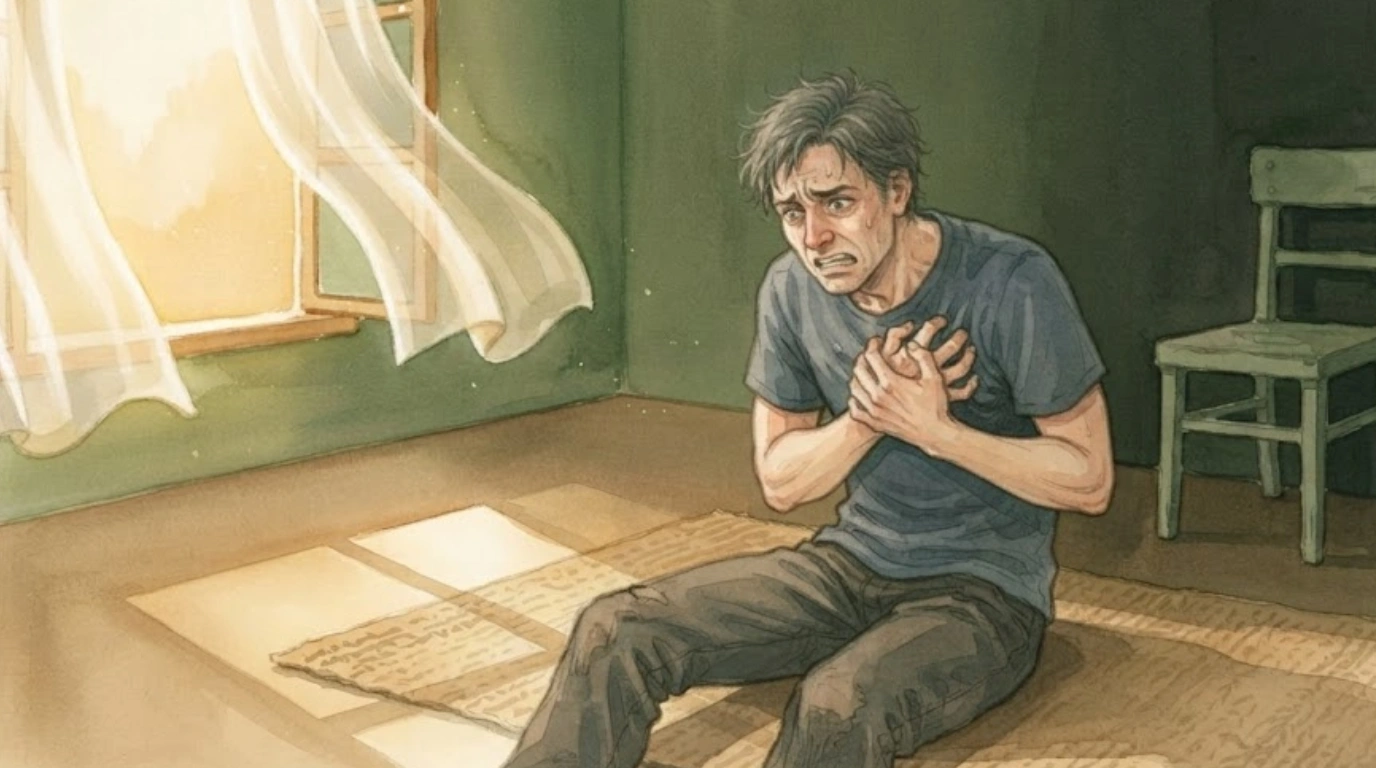
Your chest tightens. Your heart pounds. Your hands go cold.
Your mind jumps to one terrifying thought. Is this a heart attack?
For many people, the answer turns out to be anxiety. But the two can feel almost identical in the moment.
That is why the anxiety vs heart attack question is so hard to answer alone. Both can bring chest pain, a racing heart, and a wave of fear.
Here is the honest truth. You cannot always tell them apart by feeling alone. And you should never have to.
Chest pain is not something to guess about. A doctor rules out the heart first. Anxiety is what is left once the dangerous causes are cleared.
This guide will help you understand both. We will look at what anxiety and a heart attack share. How they often feel different. What chest pain means in each case.
We will cover the timing clues. The warning signs that mean you must act now. What health anxiety does to your body over time.
You will also get simple, copy-and-keep steps to calm a panic attack. And how doctors reach a proper diagnosis.
Let us start with why these two feel so alike.
What Anxiety and a Heart Attack Share
Anxiety and a heart attack share one root. Both set off your body's alarm system.
This alarm is the fight-or-flight response. It floods you with adrenaline in seconds.
Adrenaline was built to save your life. It readies the body to fight or run.
But it does not check if the threat is real. A panic attack triggers the same surge as real danger.
So the physical signs overlap a lot. That is why they are so easy to confuse.
Both can bring a pounding or racing heart. Both can cause chest pain or pressure. Both can leave you short of breath.
You may sweat. You may feel dizzy. Your hands may tingle or go numb.
There can be a deep sense of dread. A feeling that something is very wrong.
Anxiety disorders are common, so this mix-up is common too. An estimated 301 million people lived with an anxiety disorder in 2019 (Source: WHO, 2023 — who.int).
Heart disease is common as well. Cardiovascular disease is the world's leading cause of death (Source: WHO, 2021 — who.int).
So both are real. Both matter. Neither should be brushed aside.
This is the key point to hold onto. Shared symptoms do not mean shared danger.
A panic attack is frightening but not damaging to the heart. A heart attack harms the heart muscle itself.
The problem is simple. In the moment, your body cannot tell you which one you are having.
That is a job for tests, not feelings. We will see how doctors sort it out.
Q: Why do anxiety and a heart attack feel so similar?
A: Both trigger the fight-or-flight response and a rush of adrenaline. That surge causes a racing heart, chest pain, and shortness of breath in either case. The physical feelings overlap, which is why they are so easy to confuse.

How the Two Actually Feel Different
Even so, there are patterns. The two often feel different in key ways.
Let us start with anxiety attack symptoms. These tend to peak fast, then fade.
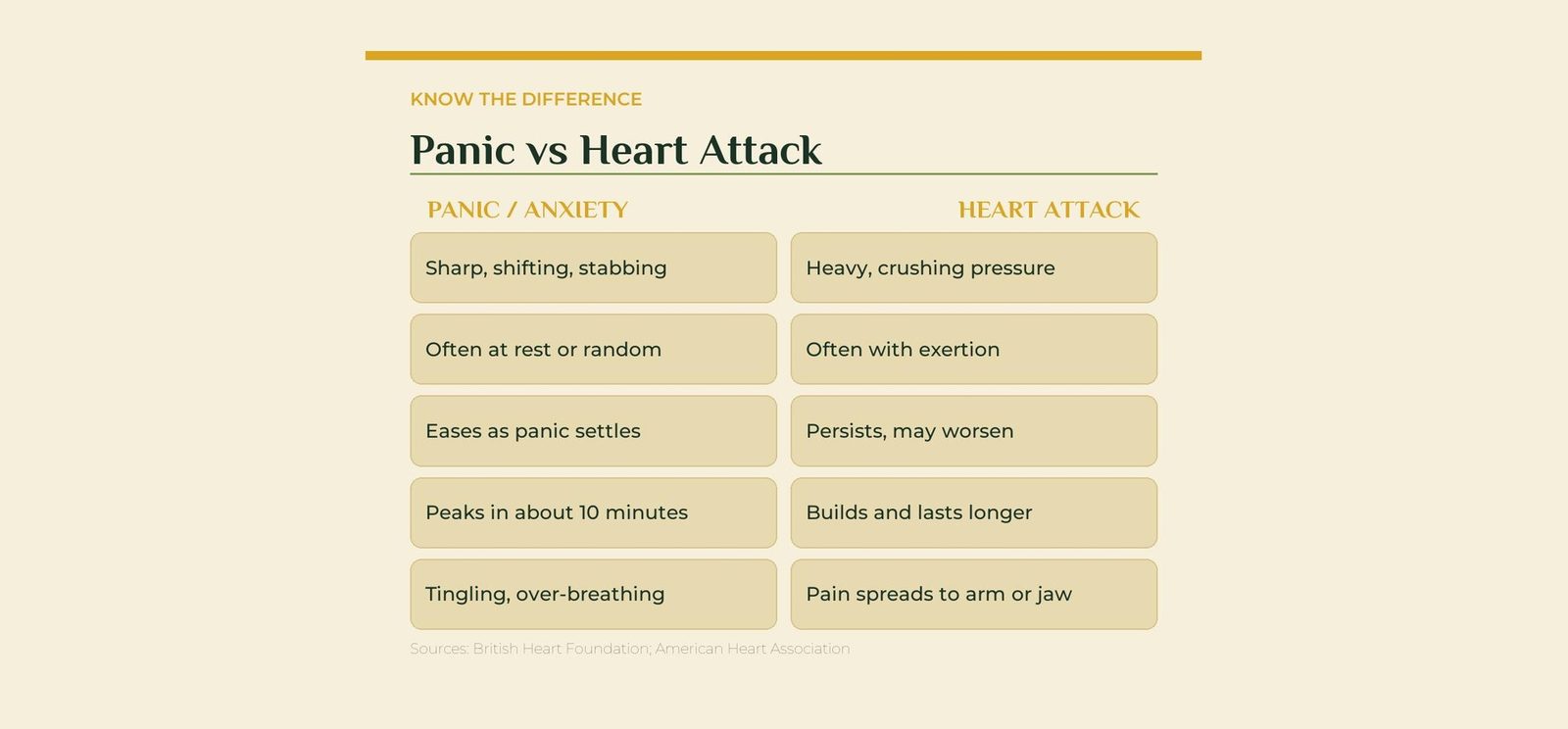
A panic attack usually builds within minutes. It hits a peak, then slowly eases off. Most pass within twenty to thirty minutes.
The fear is front and centre. Racing thoughts. A sense of losing control. A feeling of unreality.
Tingling in the fingers is common. So is a lump in the throat. These point more toward anxiety than the heart.
A heart attack often feels different. The discomfort tends to stay. It may build slowly and then not let go.
Cardiac pain is often described as pressure. Like a heavy weight or a tight band on the chest (Source: British Heart Foundation, 2023 — bhf.org.uk).
That pain may spread. It can move to the arm, jaw, neck, or back.
There may be cold sweat and nausea. A sense of impending doom can come with both.
Here is one useful clue. Panic often improves as you calm down. Cardiac pain usually does not.
Movement is another clue. Anxiety chest pain may ease when you relax or breathe slowly. Heart pain often stays the same or worsens with effort.
But please hold this loosely. These are patterns, not proof.
Some heart attacks are quiet. They bring only mild discomfort, or none at all. This is more common in women and older adults (Source: American Heart Association, 2022 — heart.org).
So the differences help. They do not replace a doctor. When the two blur together, the heart is checked first.
Q: How can I tell anxiety attack symptoms from a heart attack?
A: Anxiety tends to peak within minutes and ease as you calm down, often with tingling and racing thoughts. Cardiac pain feels more like heavy pressure that lingers and may spread to the arm or jaw. These are only clues, so any chest pain still needs a doctor.
Chest Pain: Panic Versus Cardiac
Chest pain scares everyone. It is the symptom that sends people to the ER.
So let us look closely at panic attack chest pain. And how it compares with cardiac pain.
Panic attack chest pain is real, not imagined. Your body truly feels it.
It often comes from tense chest muscles. Fast, shallow breathing tires them out. They start to ache and cramp.
This pain is usually sharp or stabbing. It may sit in one small spot. It can change when you press on it or shift position.
It tends to come with clear panic. The fear arrives first or alongside the pain.
Cardiac chest pain feels different in most cases. It is often dull, heavy, or squeezing. Like something sitting on your chest.
It usually covers a wider area. You cannot point to it with one finger.
It does not change when you press the spot. And it often comes with effort, like climbing stairs.
Breathing pattern gives another hint. In panic, slowing your breath often eases the chest. In a heart attack, it usually does not help.
Still, none of this is a safe home test. The overlap is too large to trust.
The stakes are simply too high. Missing a heart attack can cost a life.
So the rule stays the same. New, severe, or lasting chest pain needs urgent care. You do not diagnose this at home.
If you have known anxiety, you may learn your own pattern over time. Even then, a new or different pain deserves a check.
When in doubt, get it checked. That choice is never an overreaction.
Q: Is panic attack chest pain dangerous?
A: The chest pain from a panic attack is not damaging to the heart itself, but it feels very real. The real danger is mistaking a heart attack for a panic attack. Because the two overlap, new or severe chest pain should always be checked by a doctor.
The Timing and Trigger Clues
Timing tells a story. So does the trigger behind the episode.
Panic attacks often have a clear trigger. Stress. A phobia. A tense memory. Sometimes a crowd or a closed space.
But not always. Some panic attacks come out of nowhere. You can even wake from sleep in one.
They tend to strike fast and peak fast. Then they fade over the next half hour.
After a panic attack, you often feel drained. Shaky and tired, but physically unharmed.
Heart attacks follow a different clock. The discomfort often builds and then stays. It can last more than a few minutes without easing.
Effort is a common trigger. Climbing stairs. Carrying weight. Rushing to catch a bus.
Chest pain that comes with exertion is a red flag. Especially if rest makes it settle.
Age and history matter too. Risk rises with high blood pressure, diabetes, smoking, and family history.
Anxiety can strike at any age. It is common in younger adults. But it never rules out a heart problem in someone with risk factors.
Here is a trap to avoid. Do not assume youth protects you. And do not assume anxiety just because you feel stressed.
Time of day can mislead too. Both can happen at night. A night-time episode is not proof of either.
So use timing as a clue, not a verdict. Pair it with the other signs.
And when the picture is mixed, treat the heart as the priority. Rule out the dangerous cause first.
Q: Can a panic attack happen for no reason?
A: Yes. Many panic attacks have a clear trigger like stress or a phobia, but some arrive with no warning at all. You can even wake from sleep in one. This unpredictability is part of what makes panic disorder so distressing.
When You Must Treat It as an Emergency
This section matters most. Please read it slowly.
Some signs mean you must act now. Do not wait to see if they pass.
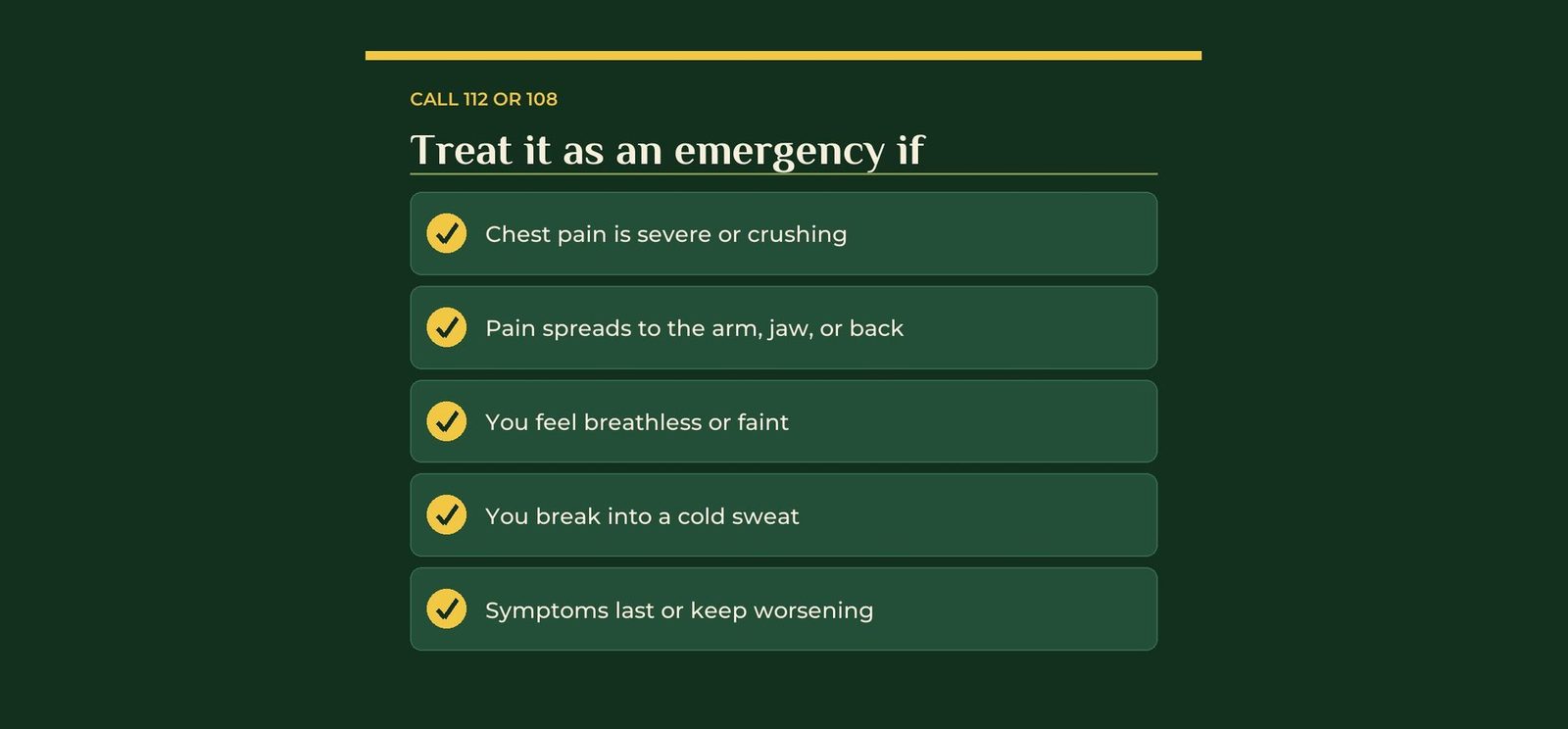
Call emergency services if chest pain is severe or crushing. In India, dial 112 or 108 for an ambulance.
Call for help if the pain spreads. To the arm, jaw, neck, back, or stomach.
Get help if you feel breathless at rest. Or if you break into a cold sweat.
Act fast if you feel faint or collapse. Or if your heartbeat feels wildly irregular.
Never drive yourself if you can avoid it. Let an ambulance come to you.
Do not try to sleep it off. Do not wait for morning. Time matters with the heart.
Here is the mindset to hold. It is always better to be checked and reassured. Far better than to miss a heart attack.
Doctors would rather see you and rule out danger. They will not judge you for coming in.
Many people who reach the ER with chest pain are fine. Their hearts are healthy. That is a good outcome, not a wasted trip.
This is why anxiety is never a self-diagnosis. You cannot safely decide "it is just anxiety" at home.
That call belongs to a doctor. It is made after the heart is checked and cleared.
If you are with someone having these signs, act for them. Call for help. Stay calm. Keep them seated and still.
When in real doubt, choose the hospital. Your life is worth the trip.
Q: When should chest pain be treated as an emergency?
A: Treat it as an emergency if the pain is severe. The same is true if it spreads to the arm or jaw, or comes with breathlessness, cold sweat, or fainting. Call an ambulance on 112 or 108 in India rather than driving yourself. It is always safer to be checked than to assume it is anxiety.
What Health Anxiety Does to the Body
Sometimes the fear itself becomes the problem. This is where health anxiety comes in.
Health anxiety means a constant worry about being ill. Even when tests come back clear.
For some people, one panic attack starts it. They fear their heart is failing. So they watch it closely, all the time.
That watching backfires. The more you scan your body, the more you notice. Every skipped beat feels like danger.
This creates a painful loop. Worry raises adrenaline. Adrenaline speeds the heart. The fast heart then fuels more worry.
So the fear of a heart attack can trigger the very symptoms you dread. Not a heart attack, but a panic attack.
Health anxiety can take over daily life. You may check your pulse many times a day. You may avoid exercise, sure it will harm you.
Some people visit the ER again and again. Each visit brings relief for a day or two. Then the fear creeps back.
Others do the opposite. They avoid doctors, terrified of bad news. The uncertainty keeps them tense.
This is exhausting to live with. It is also very treatable.
Health anxiety responds well to talking therapy. Cognitive behavioural therapy is a strong option. It helps you break the checking-and-fear loop.
The goal is not to ignore your body. It is to respond to it in a calmer, wiser way.
If worry about your heart runs your days, please seek help. This is a real condition, not a weakness.
A psychiatrist or psychologist can guide you. Relief is genuinely possible.
Q: What is health anxiety and can it be treated?
A: Health anxiety is a constant fear of serious illness that persists even when medical tests are normal. It can drive repeated checking, ER visits, or avoidance. It responds well to cognitive behavioural therapy, so speaking to a mental health professional can bring real relief.
How to Calm a Panic Attack in the Moment
Once your heart is cleared, panic becomes manageable. Here are steps you can use in the moment.
Keep these simple. Practise them before you need them.
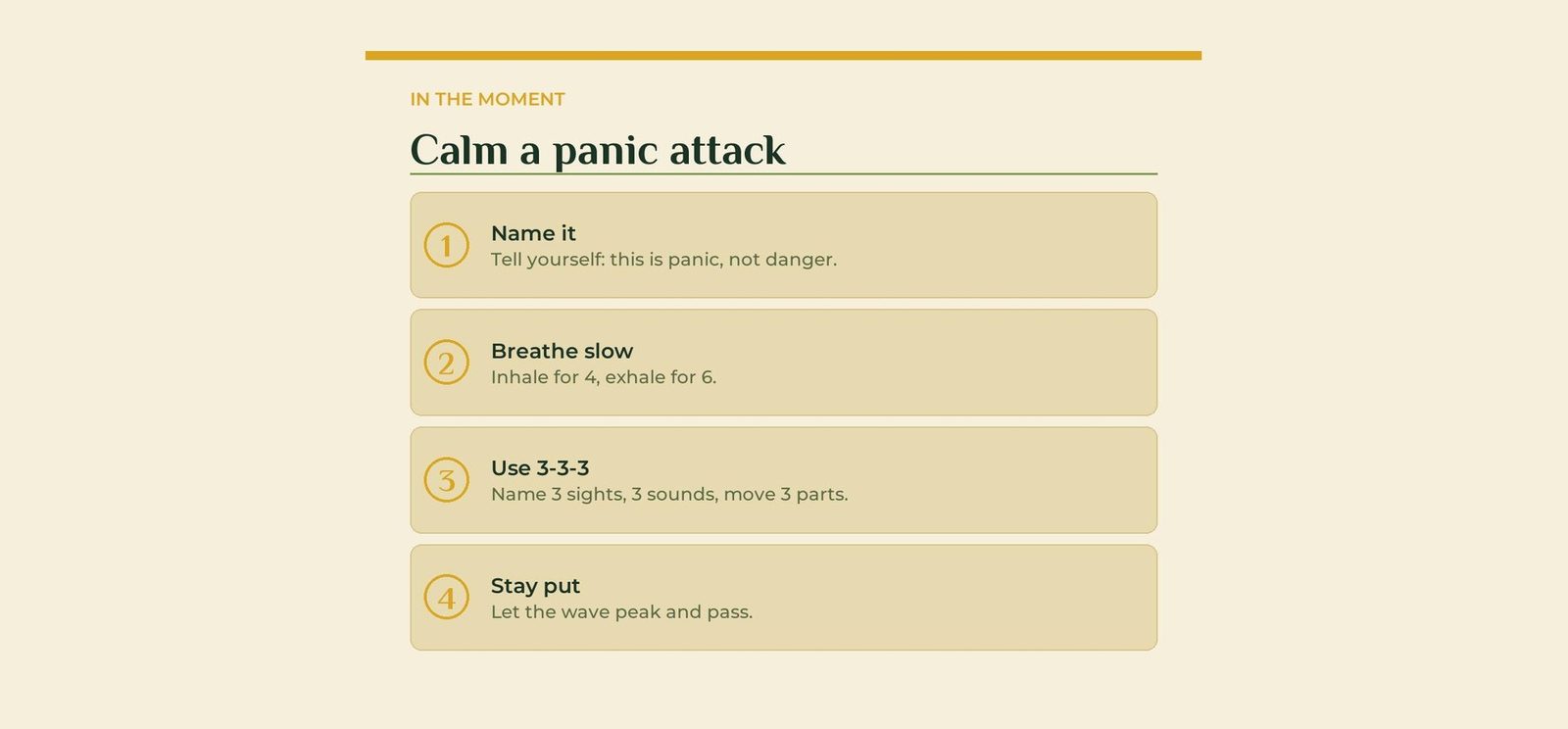
First, name it. Tell yourself, "This is a panic attack." Remind yourself it will pass. Most peak within about ten minutes.
Second, slow your breathing. This is the most powerful tool.
Breathe in gently for four counts.
Hold for a moment.
Breathe out slowly for six counts.
Repeat for a few minutes.
The long exhale is the key. It switches on the body's calm state.
Third, try the 3-3-3 method. Name three things you can see. Name three sounds you can hear. Move three parts of your body, like fingers and toes.
This pulls your mind out of fear. It anchors you in the present.
Fourth, ground your senses. Hold something cold. Splash water on your face. Press your feet into the floor.
Fifth, drop your shoulders. Unclench your jaw. Let your hands go loose. Tense muscles feed the panic.
Sixth, do not fight it. Let the wave rise and fall. Fighting panic often makes it stronger.
Tell yourself the truth. "I am safe. This feeling is not dangerous. It will fade."
Try not to flee the place you are in. Leaving can teach your brain that the place was the threat.
Ride it out where you are, if you safely can. Each time you do, panic loses some grip.
After it passes, be gentle with yourself. Drink some water. Rest for a while.
One caution stays. Use these steps for known anxiety, once the heart is cleared. New or severe chest pain still needs a doctor.
Q: What is the fastest way to calm a panic attack?
A: Slow your breathing with a long, gentle exhale, breathing out for longer than you breathe in. Pair it with grounding, like naming three things you can see and hear. Remind yourself it is panic, it is not dangerous, and it will pass within minutes.
Getting a Proper Diagnosis
You cannot diagnose this alone. And you should not try.
Anxiety is what doctors call a diagnosis of exclusion. They rule out the dangerous causes first.
So the heart gets checked before anxiety is named. This protects you.
For sudden chest pain, doctors act fast. They may run an ECG. This records your heart's electrical activity.
They may take blood tests. These check for markers released when heart muscle is hurt.
They may watch you for a while. Sometimes they repeat the tests over hours.
If the heart is clear, that is real reassurance. It means the danger has been ruled out.
Then the focus can shift. A doctor may ask about your stress, mood, and worries.
Panic disorder has its own clear pattern. Repeated panic attacks. Plus ongoing fear of the next one.
A psychiatrist can confirm this. They look at your history, not just one episode.
Treatment then has a clear path. Talking therapy helps many people. Cognitive behavioural therapy is well proven for panic.
Some people also benefit from medication. A psychiatrist can guide that choice. Never start or stop such medicines alone.
Lifestyle support helps too. Steady sleep. Less caffeine. Regular movement. These calm the nervous system over time.
The takeaway is hopeful. Once the heart is cleared, anxiety is very treatable. You do not have to live in fear of the next attack.
Getting the right diagnosis is the first real step. It turns fear into a plan.
Q: Who diagnoses whether it is anxiety or a heart problem?
A: A medical doctor checks the heart first, often with an ECG and blood tests, to rule out cardiac causes. Only once the heart is cleared can anxiety or panic disorder be confirmed, usually by a psychiatrist. Anxiety is a diagnosis of exclusion, so it is never something to decide on your own at home.
Quick Facts: Anxiety and Heart Health in India
- An estimated 301 million people worldwide lived with an anxiety disorder in 2019 — (Source: WHO, 2023 — who.int).
- Cardiovascular disease is the leading cause of death globally, taking about 17.9 million lives a year — (Source: WHO, 2021 — who.int).
- Panic attack symptoms usually peak within about ten minutes — (Source: Cleveland Clinic, 2023 — my.clevelandclinic.org).
- India's treatment gap for common mental disorders is over 80% — (Source: NMHS / NIMHANS, 2016 — indianmhs.nimhans.ac.in).
- Heart attack pain is often felt as heavy pressure that can spread to the arm, jaw, neck, or back — (Source: British Heart Foundation, 2023 — bhf.org.uk).

How Ganaa Helps With Anxiety and Panic
When panic runs your life, the right support changes everything.
Ganaa is a mental health and rehabilitation brand in India. We help adults living with anxiety, panic, and health anxiety.
We start with your whole picture. Not just one frightening episode.
Our care blends modern clinical science with calm, restful settings. Therapy and psychiatric support work side by side.
For anxiety and panic, talking therapy is central. It helps you understand the fear and loosen its grip.
Our psychiatrists can review whether medication may help. That choice is always made with you, never rushed.
Daily structure supports recovery too. Steady routine, mindfulness, and yoga help calm a wired nervous system. Each plan is tailored to the person, never generic.
Ganaa runs five residential centres across India. They are in Delhi, Gurugram, Goa, and Greater Noida.
We also run three OPD clinics for outpatient care. These are in Faridabad, Greater Kailash, and Greater Noida.
Many people start with outpatient support for anxiety. Care can flex around your work and family life.
You do not have to face panic alone. And you do not have to keep fearing the next attack.
If anxiety or health anxiety is wearing you down, reach out. Speak to a Ganaa counsellor, or visit ganaa.in to learn about our programmes.
Please remember one thing first. If you have chest pain that has not been checked, see a doctor before anything else.
Conclusion: Safety First, Then Calm
The anxiety vs heart attack question has no simple home answer. And it is not meant to.
Both can bring chest pain, a racing heart, and real fear. In the moment, they can feel the same.
So the rule is clear. New or severe chest pain is checked by a doctor first. Always.
Anxiety is what is left once the heart is ruled out. It is a diagnosis for doctors, not for guessing alone.
If the picture is ever unclear, treat it as an emergency. Call for help. It is never an overreaction.
Once your heart is cleared, there is real hope. Panic and health anxiety are very treatable.
Slow breathing helps in the moment. Grounding helps. So does naming the fear for what it is.
For lasting relief, seek proper support. Therapy works. So does calm, steady care.
You deserve to feel safe in your own body again. That peace is within reach.
Take the first step today. Get checked if you need to. Then reach out for the calm you deserve.
FAQ
Q: What is the difference between anxiety and a heart attack?
A: Both can cause chest pain, a racing heart, and shortness of breath because both trigger a rush of adrenaline. Anxiety tends to peak within minutes and ease as you calm down. A heart attack often brings heavy, lasting pressure that can spread to the arm or jaw. Because they overlap, any chest pain should be checked by a doctor.
Q: Can a panic attack feel exactly like a heart attack?
A: Yes, a panic attack can closely mimic a heart attack, with chest pain, a pounding heart, sweating. A sense of doom. This is why the two are so easily confused. The safest approach is to have new or severe chest pain assessed medically rather than assuming it is anxiety.
Q: How long does panic attack chest pain last?
A: Panic attack chest pain usually eases as the panic settles, and most panic attacks peak within about ten minutes. Cardiac chest pain tends to last longer and may not ease with rest. If chest pain is severe or lingers, treat it as an emergency and seek medical help.
Q: Is health anxiety a real condition?
A: Yes, health anxiety is a recognised mental health condition. It involves a persistent fear of serious illness that continues even when tests are normal. It can lead to constant body-checking or repeated ER visits. It responds well to cognitive behavioural therapy and support from a mental health professional.
Q: How do I calm a panic attack quickly?
A: Slow your breathing with a long, gentle exhale, breathing out for longer than you breathe in. Try grounding, such as naming three things you can see and three you can hear. Remind yourself that it is panic, that it is not dangerous, and that it will pass within minutes.
Q: When should I go to hospital for chest pain?
A: Go to hospital or call an ambulance if chest pain is severe. Also seek help if it spreads to the arm, jaw, or back, or comes with breathlessness, cold sweat, or fainting. In India, dial 112 or 108. It is always safer to be checked and reassured than to risk missing a heart attack.