What's the Difference Between a Panic Attack and Anxiety?
Your heart pounds. Your chest tightens. The fear comes out of nowhere.
Or maybe it is slower. A tight, worried hum that follows you all day.
These two feelings are not the same. Knowing the panic attack vs anxiety attack difference can bring real relief.
One hits hard and fast. It peaks in minutes, then fades. The other builds slowly and lingers.
People mix them up all the time. That is normal. They share many symptoms.
But they behave very differently. They start differently. They last for different lengths of time.
First, a gentle note on words. "Anxiety attack" is not a formal medical term. We will explain that clearly and kindly.
This guide breaks it all down in plain language. What a panic attack feels like. What anxiety feels like.
We will compare their speed, peak, and duration. We will look at triggers. And we will cover how each one is treated.
Most of all, you will learn what helps. Simple steps you can use. And when it is time to speak to a professional.
Let us start with the single clearest difference.
The Core Difference in One Line
Here is the short version. Remember this and the rest falls into place.
A panic attack is a sudden, intense surge of fear. It peaks within minutes.
Anxiety is different. It builds slowly. It can last for hours, days, or longer.
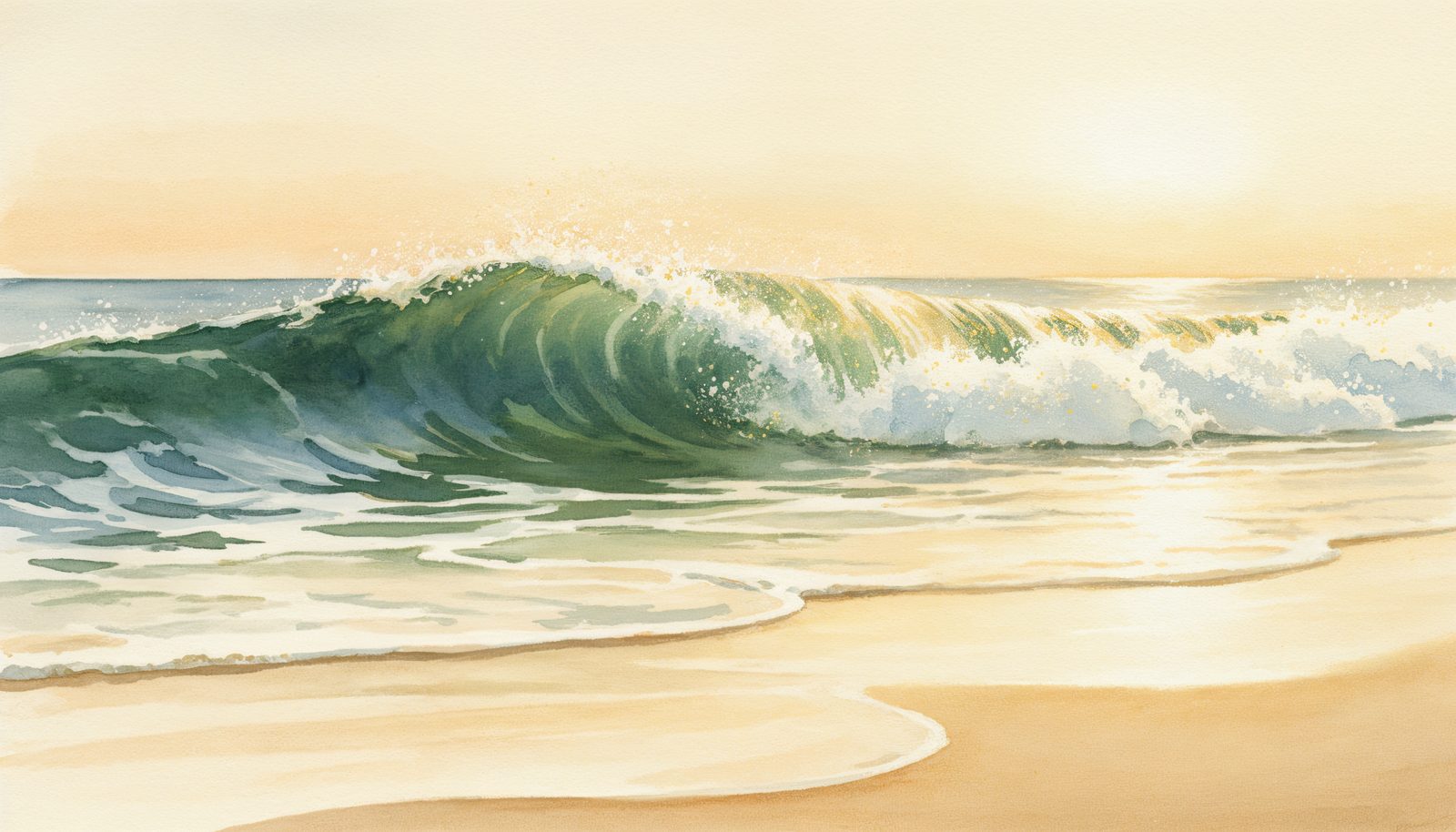
Think of panic as a wave. It rises fast, crashes hard, then pulls back.
Anxiety is more like the tide. It creeps in quietly. It stays around for a while.
One is a spike. The other is a hum.
A panic attack often feels like an emergency. Your body acts as if you are in danger.
Anxiety feels more like dread. A background worry that will not switch off.
Both come from the same alarm system. Your body's fight-or-flight response.
In panic, that alarm blares all at once. In anxiety, it stays half-on for a long time.
This is why they feel so different in the body. Panic is loud and fast. Anxiety is slow and heavy.
Anxiety disorders are the most common mental health conditions worldwide (Source: WHO, 2023 — who.int).
So if you feel either one, you are far from alone. Millions of people do.
Keep this one-line rule in mind as we go. Panic peaks in minutes. Anxiety builds and lingers.
Q: What is the main difference between a panic attack and anxiety?
A: A panic attack is a sudden, intense surge of fear that peaks within minutes. Anxiety builds slowly and lasts much longer. Panic is a sharp spike. Anxiety is a lasting hum of worry.
What a Panic Attack Feels Like
A panic attack can feel terrifying. Many people think they are dying.
It comes on fast. Often within seconds. The body floods with fear.
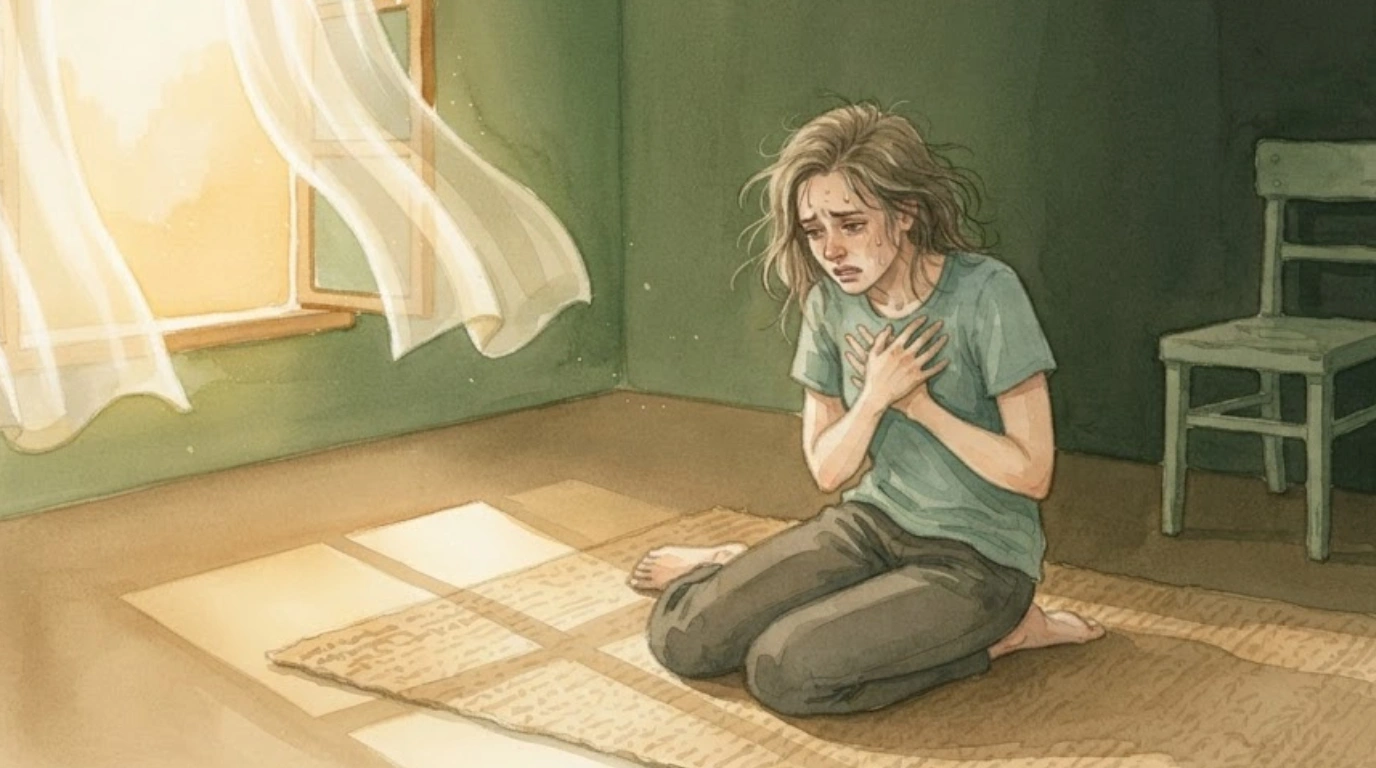
The physical panic attack symptoms are strong and clear. Your heart races. Your chest feels tight.
You may struggle to breathe. Your hands shake. You sweat or feel chills.
Some people feel dizzy or faint. Others feel a wave of nausea.
There is often a sense of unreality. The world can feel far away or dreamlike.
And there is the fear itself. A crushing sense that something awful is about to happen.
Many people fear a heart attack. Some fear they are losing control. Some fear death.
This is why panic attacks send so many people to the emergency room. The symptoms mimic a heart problem.
Here is the reassuring part. A panic attack is not dangerous to your body.
It is your alarm system misfiring. Real fear, but no real threat.
The worst of it is brief. Symptoms usually peak within about ten minutes (Source: Cleveland Clinic, 2023 — my.clevelandclinic.org).
Then the wave breaks. The body slowly calms down.
After it passes, you may feel wiped out. Shaky, tired, and drained for a while.
One thing helps in the moment. Remind yourself it will pass. It always does.
Slow breathing helps too. A long, slow exhale tells the body the danger is over.
Q: Is a panic attack dangerous?
A: A panic attack feels frightening but does not harm your body. It is your alarm system misfiring, not a real threat. The symptoms peak fast, then fade. If chest pain is new for you, get it checked to be safe.

What Anxiety Feels Like
Anxiety is quieter than panic. But it can wear you down over time.
It does not crash in. It seeps in. Slowly, over hours or days.
Anxiety is a state of worry. Your mind expects something to go wrong.
The body stays on low alert. Muscles tense. Jaw tight. Shoulders raised.
You may feel restless. Unable to settle or sit still.
Sleep often suffers. The mind races when you lie down.
There are physical signs too. An upset stomach. A tight chest. Tiredness that rest does not fix.
The thoughts are the hardest part. Worry loops around and around. One "what if" leads to another.
Unlike panic, anxiety does not peak and vanish. It hangs around in the background.
You can still go about your day. But it colours everything grey.
Many people call an intense spike of this an "anxiety attack". That word feels real to them.
But here is the gentle clarification. "Anxiety attack" is not a clinical term.
Doctors do not diagnose an "anxiety attack". They use "panic attack" for the sudden surge. They use "anxiety" for the slow build.
This is not about being wrong. It is about getting the right help faster.
When you name it correctly, a clinician knows what you mean. That speeds up good care.
So use whatever word helps you describe it. Just know the clinical terms too.
Anxiety disorders are also very treatable. Most people improve with the right support (Source: NIMH, 2024 — nimh.nih.gov).
Q: Is an anxiety attack a real term?
A: No, anxiety attack is not a formal clinical term. Doctors use panic attack for the sudden surge and anxiety for the slower build. The feeling is very real. Knowing the clinical words just helps you get the right care.
Speed, Peak and Duration Compared
Timing is the clearest way to tell them apart.
A panic attack is fast. It can peak in minutes.
Anxiety is slow. It can build over hours or days.
Let us break down the three key stages. Onset. Peak. Duration.
Onset is how it starts. Panic starts suddenly, often with no warning. Anxiety starts gradually and quietly.
Peak is the most intense point. Panic peaks sharply, usually within ten minutes. Anxiety may have no clear peak at all.
Duration is how long it lasts. A panic attack is short. It usually eases within twenty to thirty minutes.
Anxiety is long. It can linger for days or weeks.
Here is a simple side-by-side view.
| Feature |
Panic attack |
Anxiety |
| Onset |
Sudden, often out of the blue |
Slow and gradual |
| Peak |
Within about 10 minutes |
Often no clear peak |
| Duration |
Minutes, then fades |
Hours, days, or longer |
| Intensity |
Very high, alarming |
Lower, but constant |
| After-effect |
Drained and shaky |
Ongoing, low-grade tension |
Intensity is another clue. Panic is extreme but brief. Anxiety is milder but lasting.
Think of it like weather. Panic is a sudden storm. Anxiety is a grey, overcast week.
Both can appear together, too. Ongoing anxiety can raise the odds of a panic attack.
That mix is common. You may live with steady worry, then get a sudden spike.
Knowing the timing helps you respond. For panic, you ride out the wave. For anxiety, you build steady daily habits.
Q: How long does a panic attack last compared to anxiety?
A: A panic attack peaks within about ten minutes and eases within half an hour. Anxiety can last for hours, days, or longer. Panic is short and sharp. Anxiety is slow and steady.
Triggers: Out of the Blue vs a Known Worry
Triggers tell you a lot. They often separate panic from anxiety.
Panic attacks can strike for no clear reason. They come out of the blue.
You could be resting on the sofa. Or even waking from sleep. Suddenly the fear hits.
This is what makes panic so frightening. There is often nothing to point to.
Some panic attacks do have triggers. A crowded place. A tight space. A painful memory.
But many do not. The alarm just fires on its own.
Anxiety is usually different. It tends to attach to a known worry.
A big exam. Money problems. A sick family member. A looming deadline.
You can often name the source. The worry has a story behind it.
That is a useful clue. If you can point to a cause, it is likely anxiety. If it comes from nowhere, it may be panic.
Over time, panic can create its own trigger. The fear of another attack.
This is called anticipatory anxiety. You start to dread the next wave.
That dread can then set off the very thing you fear. A hard loop to be stuck in.
It also shapes behaviour. People start to avoid places where panic struck before.
Someone may stop taking the metro. Or avoid malls. Or refuse to be alone.
This avoidance shrinks life slowly. It is a sign to seek help early.
The good news is that this loop can be broken. Facing the fear gently, with support, is the way out.
Q: What is the difference in triggers for panic and anxiety?
A: Panic attacks often strike out of the blue, with no clear cause. Anxiety usually links to a known worry, like money or health. Panic can also start to feed on the fear of the next attack. That loop is treatable.

Is It a Panic Attack or Panic Disorder?
A panic attack is one event. Panic disorder is a pattern.
Many people have a panic attack at some point. It does not always mean a disorder.
One attack during high stress is common. It may never happen again.
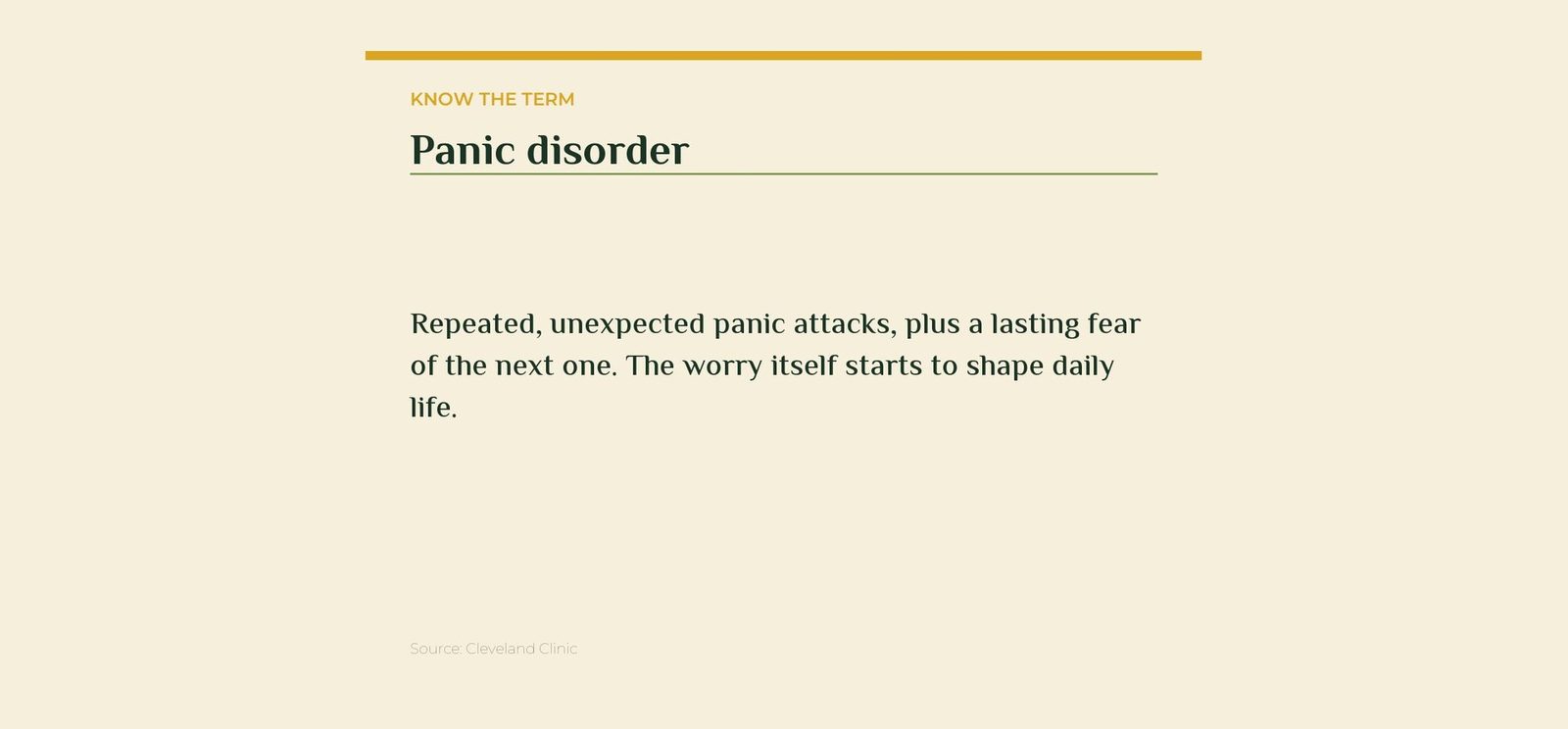
Panic disorder is different. It means repeated, unexpected panic attacks.
There is another key part. You start to fear the next attack.
That fear changes how you live. You may avoid places or activities.
You might carry a constant worry. When will the next wave hit?
This ongoing dread is a core sign of panic disorder. It is more than the attacks themselves.
To be clear, a diagnosis is a doctor's job. Only a clinician can confirm panic disorder.
But knowing the difference helps you seek the right help. One attack may just need reassurance. A pattern needs proper care.
Panic disorder is a recognised condition. About 2.7% of US adults had it in the past year (Source: NIMH, 2023 — nimh.nih.gov).
So it is far from rare. And it responds very well to treatment.
Watch for a few signs. Repeated attacks. Fear of the next one. Avoiding places where they struck.
If that sounds like you, it is worth speaking to a professional. You do not have to wait for it to get worse.
Early help works better. It stops the avoidance from spreading.
In India, many people never reach that help. The treatment gap for mental health is over 80% (Source: NMHS / NIMHANS, 2016 — indianmhs.nimhans.ac.in).
Reaching out early puts you on the better side of that gap.
Q: What is the difference between a panic attack and panic disorder?
A: A panic attack is one event, often during stress. Panic disorder means repeated, unexpected attacks plus a lasting fear of the next one. The fear changes how you live. A clinician can confirm the diagnosis and guide care.
How Each Is Treated
Here is the hopeful part. Both panic and anxiety respond well to treatment.
You do not have to just live with them. Real help exists.
The main approach is talking therapy. Cognitive behavioural therapy, or CBT, leads the way.
CBT helps you understand the fear. It retrains how your mind reads danger.
For panic, one method stands out. It is called exposure.
Exposure means facing the fear in small, safe steps. Slowly, the alarm learns to quiet down.
Let us make this concrete. Here are steps that often help.
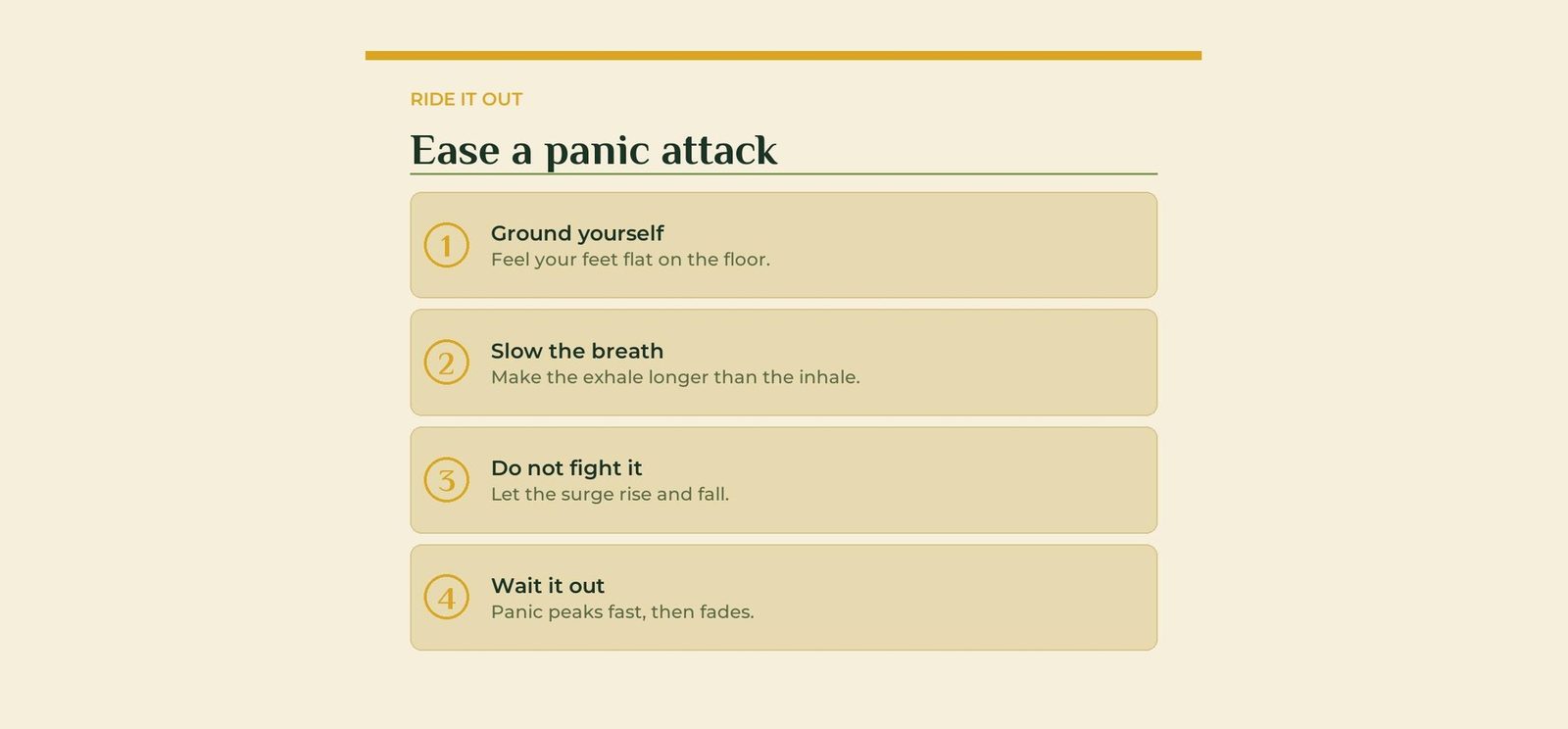
First, learn slow breathing. Breathe in for four counts. Breathe out for six. Practise it daily, not only in a crisis.
Second, name what is happening. Tell yourself, "This is a panic attack. It will pass." Naming it lowers the fear.
Third, ride the wave, do not fight it. Fighting panic feeds it. Let it rise and fall while you breathe slowly.
Fourth, face avoided places gently. With a therapist's guidance, return to them in small steps. This breaks the avoidance loop.
For anxiety, daily habits matter most. Steady sleep. Regular movement. Less caffeine.
Writing worries down helps too. Park them on paper before bed.
Sometimes therapy is not enough alone. That is where medication can help.
A psychiatrist may suggest medication for panic disorder or strong anxiety. It can steady the system while therapy does its work.
This is always a doctor's decision. Never start or stop medication on your own.
Please speak to a psychiatrist or a Ganaa clinician for any medication choice. Self-treating is not safe.
The mix of therapy and, when needed, medication is powerful. Most people get real relief.
Q: How are panic attacks and anxiety treated?
A: Both respond well to cognitive behavioural therapy, or CBT. For panic, exposure and slow breathing help most. For anxiety, steady daily habits matter. When needed, a psychiatrist may add medication to support recovery.
When to See a Professional
Self-help works for many people. But not for everyone, and not forever.
So how do you know when to reach out? A few clear signs point the way.
See a professional if panic or anxiety disrupts your daily life. Work, sleep, or relationships suffering is a signal.
Reach out if you start avoiding places. Skipping the metro, malls, or social plans is a red flag.
Seek help if you fear the next attack. That anticipatory dread wears you down fast.
Talk to someone if the worry never switches off. Constant, all-day anxiety needs support.
And get help sooner for bigger warning signs. Deep sadness. Hopelessness. Any thoughts of self-harm.
There is one important safety note. If chest pain is new for you, see a doctor first.
Panic can mimic a heart attack. A doctor can rule out a physical cause. Then you can treat the panic with peace of mind.
Asking for help is not weakness. It is a smart, strong choice.
Panic disorder and anxiety are highly treatable. Most people improve with the right care (Source: NIMH, 2023 — nimh.nih.gov).
The earlier you start, the easier it is. Early care stops avoidance from taking over.
You would see a doctor for lasting chest pain. Lasting fear deserves the same care.
You do not have to figure this out alone. Support is closer than you think.
Q: When should I see a professional about panic or anxiety?
A: See a professional if panic or anxiety disrupts your daily life. Get help if you avoid places or fear the next attack. If chest pain is new, see a doctor first to rule out a heart cause. Both conditions are very treatable.
Quick Facts: Panic and Anxiety in India and Beyond
- Anxiety disorders are the most common mental health conditions worldwide — (Source: WHO, 2023 — who.int).
- Panic attack symptoms usually peak within about ten minutes — (Source: Cleveland Clinic, 2023 — my.clevelandclinic.org).
- About 2.7% of US adults had panic disorder in the past year — (Source: NIMH, 2023 — nimh.nih.gov).
- Anxiety disorders are common and respond well to treatment — (Source: NIMH, 2024 — nimh.nih.gov).
- The treatment gap for mental health conditions in India is over 80% — (Source: NMHS / NIMHANS, 2016 — indianmhs.nimhans.ac.in).

How Ganaa Helps With Panic and Anxiety
When fear takes over your days, the right care changes everything.
Ganaa is a mental health and rehabilitation brand in India. We help adults facing panic, anxiety, and related conditions.
We do not just calm the symptom. We look at what keeps the alarm firing.
Our care blends modern clinical science with calm, restful settings. Therapy, psychiatric support, and steady routine work together.
For panic and anxiety, talking therapy is central. Our clinicians use CBT to retrain the fear response.
Care can include mindfulness, yoga, and breathing training. Each of these helps lower the body's alert state.
Where needed, a psychiatrist reviews medication. This is always a careful, guided choice, never a guess.
Structure helps too. A steady daily rhythm teaches an anxious body how to settle.
Each plan is tailored to the person, never generic. We meet you where you are.
Ganaa runs five residential centres across India. They are in Delhi, Gurugram, Goa, and Greater Noida.
We also run three OPD clinics for outpatient support. They are in Faridabad, Greater Kailash, and Greater Noida.
Many people start with outpatient care for panic or anxiety. Support can flex around your work and life.
If the fear feels bigger than you, reach out. You do not have to carry it alone.
Speak to a Ganaa counsellor, or visit ganaa.in to learn about our programmes.
Conclusion: You Can Feel Calm Again
Panic and anxiety are not the same. Now you can tell them apart.
A panic attack is a sudden surge of fear. It peaks in minutes, then fades.
Anxiety builds slowly. It hums in the background for much longer.
In the panic attack vs anxiety attack question, timing is the clearest clue. Panic spikes. Anxiety lingers.
Both come from the same alarm system. And both are very treatable.
The answer is not to fight the fear. It is to understand it and calm it.
Learn slow breathing. Name what is happening. Ride the wave without a battle.
For anxiety, build steady daily habits. Good sleep. Regular movement. Worries parked on paper.
And if the fear runs your days, ask for help. Talking therapy works. Medication can help when needed.
You are not weak for feeling this way. Your alarm system is simply too sensitive right now.
It can be retrained. Calm is a skill, and it can be learned.
Start with one slow breath today. Then reach out when you are ready. Relief is closer than it feels.
FAQ
Q: What is the difference between a panic attack and anxiety?
A: A panic attack is a sudden, intense surge of fear that peaks within minutes. Anxiety builds slowly and can last for hours or days. Panic hits hard and fast, then fades. Anxiety is a longer, lower hum of worry. Both are real, and both respond well to care.
Q: Is an anxiety attack a real medical term?
A: No, anxiety attack is not a formal clinical term. Doctors use panic attack for the sudden surge and anxiety for the slower build. People often say anxiety attack to mean a peak of intense worry. It describes a real feeling, even if it is not an official label.
Q: How long does a panic attack last?
A: Most panic attacks peak within about ten minutes. The worst part is short but very intense. The whole episode usually eases within twenty to thirty minutes. You may feel drained and shaky for a while after it passes.
Q: Can a panic attack feel like a heart attack?
A: Yes. A panic attack can cause chest pain, a racing heart, and shortness of breath. Many people fear they are dying or having a heart attack. If you have chest pain for the first time, get it checked by a doctor to be safe.
Q: What triggers a panic attack?
A: Panic attacks often strike out of the blue, with no clear cause. Some are set off by stress, crowds, or a bad memory. Anxiety, by contrast, usually links to a known worry. Over time, fear of another attack can become a trigger itself.
Q: When should I see a professional about panic or anxiety?
A: See a professional if panic or anxiety disrupts your daily life. Get help if you start avoiding places or fearing the next attack. Both panic disorder and anxiety are very treatable. Talking therapy and, when needed, medication can help you feel calm again.