What Is a Nasha Mukti Kendra, and What Happens Inside One?
A nasha mukti kendra can help a person heal or cause real harm. Learn what happens inside, what the law bans, and how to check a centre before admission.
What Is a Nasha Mukti Kendra, and What Happens Inside One?
A nasha mukti kendra is a centre where people get help to stop using alcohol or drugs.
Some are safe, well run, and staffed by doctors. Some are locked houses with no doctor at all.
From the road, both can look the same. Both can carry the same words on the board.
If you are reading this, you are probably scared for someone you love. Maybe a son who drinks every day. Maybe a husband who has lost one more job.
You need plain facts, not a sales pitch.
So here is the short answer. A good centre gives medical care for withdrawal, then counselling, then a plan for life after discharge. It treats each person with dignity. It follows the law.
This guide covers who runs these centres and what a normal day looks like.
It explains detox and rehab, what the law bans, and the red flags to watch for.
It also shows you how to check a centre before you hand over a person you love.
One note before we start. This is general guidance, not a diagnosis. Only a doctor or psychiatrist can assess a person.
What Is a Nasha Mukti Kendra, in Plain Words?
Start with the words themselves.
In Hindi, nasha means intoxication. Mukti means freedom. Kendra means centre.
So nasha mukti means freedom from intoxication. The kendra is the place that helps you get there.
In English, the same kind of place may be called a de-addiction centre, a rehab, or a drug treatment centre.
The name tells you very little. One board can hide a hospital ward. Another can hide a rented house.
The law looks past the board too. It covers any place that keeps people for this kind of care, by whatever name it is called (Source: Mental Healthcare Act 2017, Section 2, Gazette of India — egazette.gov.in).
Why do so many of these centres exist? Because the need is huge.
About 14.6% of Indians aged 10 to 75 use alcohol, which is about 16 crore people (Source: Press Information Bureau, 2019 — pib.gov.in).
More than 5.7 crore people are affected by harmful or dependent drinking (Source: Press Information Bureau, 2019 — pib.gov.in).
Yet very few get care. Just about one in 38 people with alcohol dependence has received any treatment (Source: NDDTC, AIIMS, Magnitude of Substance Use in India, 2019 — aiims.edu).
Among those who did get help for alcohol, the largest source was spiritual or religious help, at 33% (Source: NDDTC, AIIMS, Magnitude of Substance Use in India, 2019 — aiims.edu).
Think about what that means for a family. They try prayer, promises, and threats for years.
Then there is a crisis. A job goes. A car is crashed. Someone gets hurt.
Now they need a place by tonight. They are tired, ashamed, and in a hurry.
That is when people choose badly. So it helps to know the facts before the crisis comes.
Q: Is a nasha mukti kendra the same as a rehab?
A: Mostly, yes. Both words describe a place that helps a person stop using alcohol or drugs. Quality is the real difference, not the name. Some centres have doctors and nurses. Others have neither.
Who Runs These Centres in India
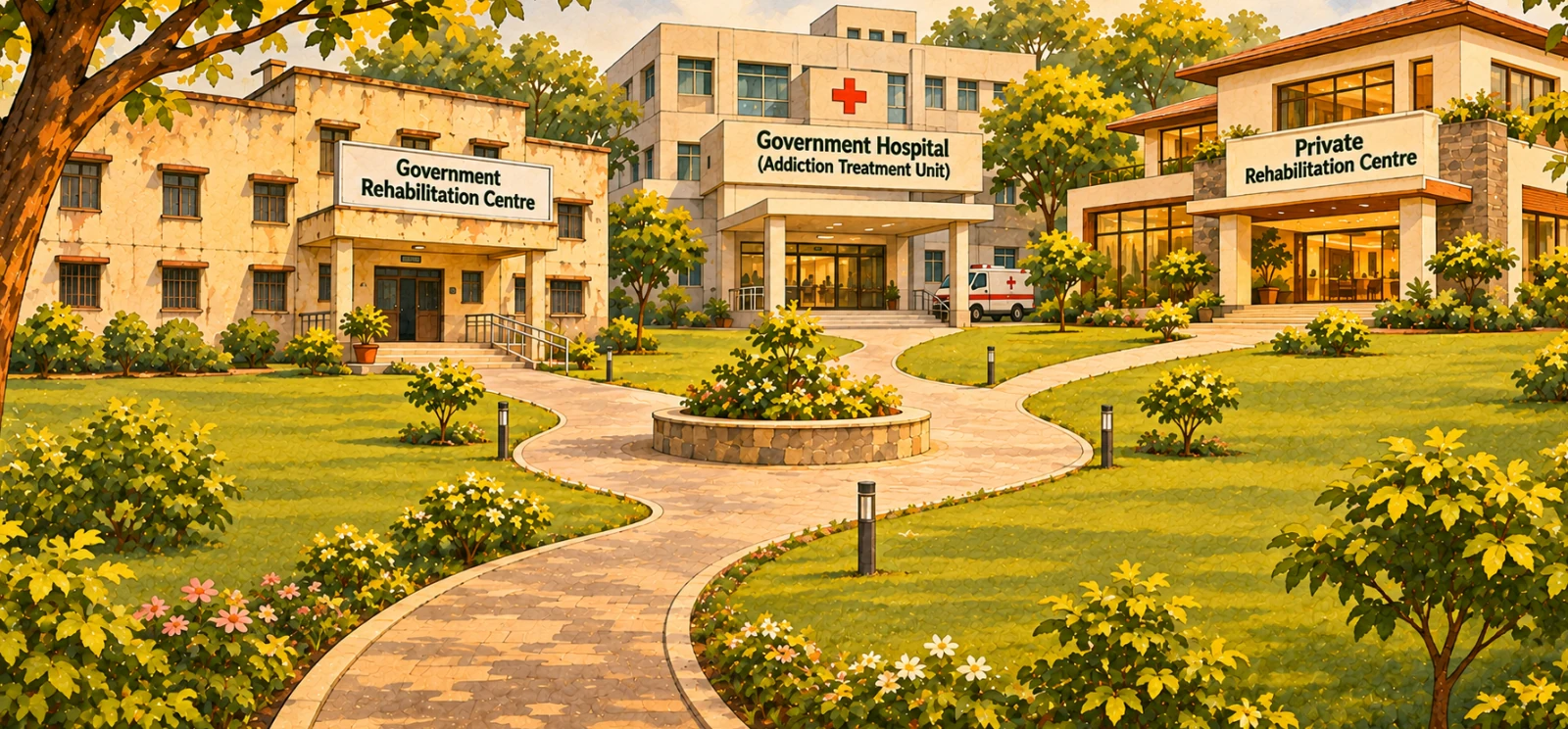
Three main groups run this kind of care. Each works in its own way.
Centres funded by the government. The central government pays NGOs to run Integrated Rehabilitation Centres for Addicts, known as IRCAs.
There are 349 of them. They offer in-patient treatment, counselling, detox, after care, and help returning to normal life (Source: Press Information Bureau, 2026 — pib.gov.in).
The same scheme supports 145 District De-Addiction Centres and 76 Outreach and Drop-in Centres (Source: Press Information Bureau, 2026 — pib.gov.in).
Government hospitals. The scheme also backs 154 Addiction Treatment Facilities in government hospitals (Source: Press Information Bureau, 2026 — pib.gov.in).
Separately, the health ministry runs 6 Drug Addiction Treatment Centres in central government hospitals. It also runs 25 Drug Treatment Clinics at district hospitals and medical colleges (Source: Press Information Bureau, 2026 — pib.gov.in).
Private centres. India has more private de-addiction centres than public ones (Source: Molanguri, Indian Journal of Psychological Medicine, 2025 — ovid.com).
This is where the range is widest. At one end, you find hospitals with psychiatrists, nurses, and therapists. At the other end, you find a few rooms and a padlock.
You may also have heard of the Nasha Mukt Bharat Abhiyaan. It is a public awareness campaign, not a chain of centres.
It began on 15 August 2020 in 272 districts. It now covers all districts of the country (Source: Press Information Bureau, 2025 — pib.gov.in).
So a poster with that name on a wall proves nothing about a centre.
If you do not know where to begin, there is a free first step. The national toll-free helpline is 14446. It gives primary counselling and immediate referral (Source: Press Information Bureau, 2026 — pib.gov.in).
Q: What is the government helpline number for de-addiction?
A: The toll-free number is 14446. It gives basic counselling and can refer you to a centre. It is a good first call if you do not know where to start.
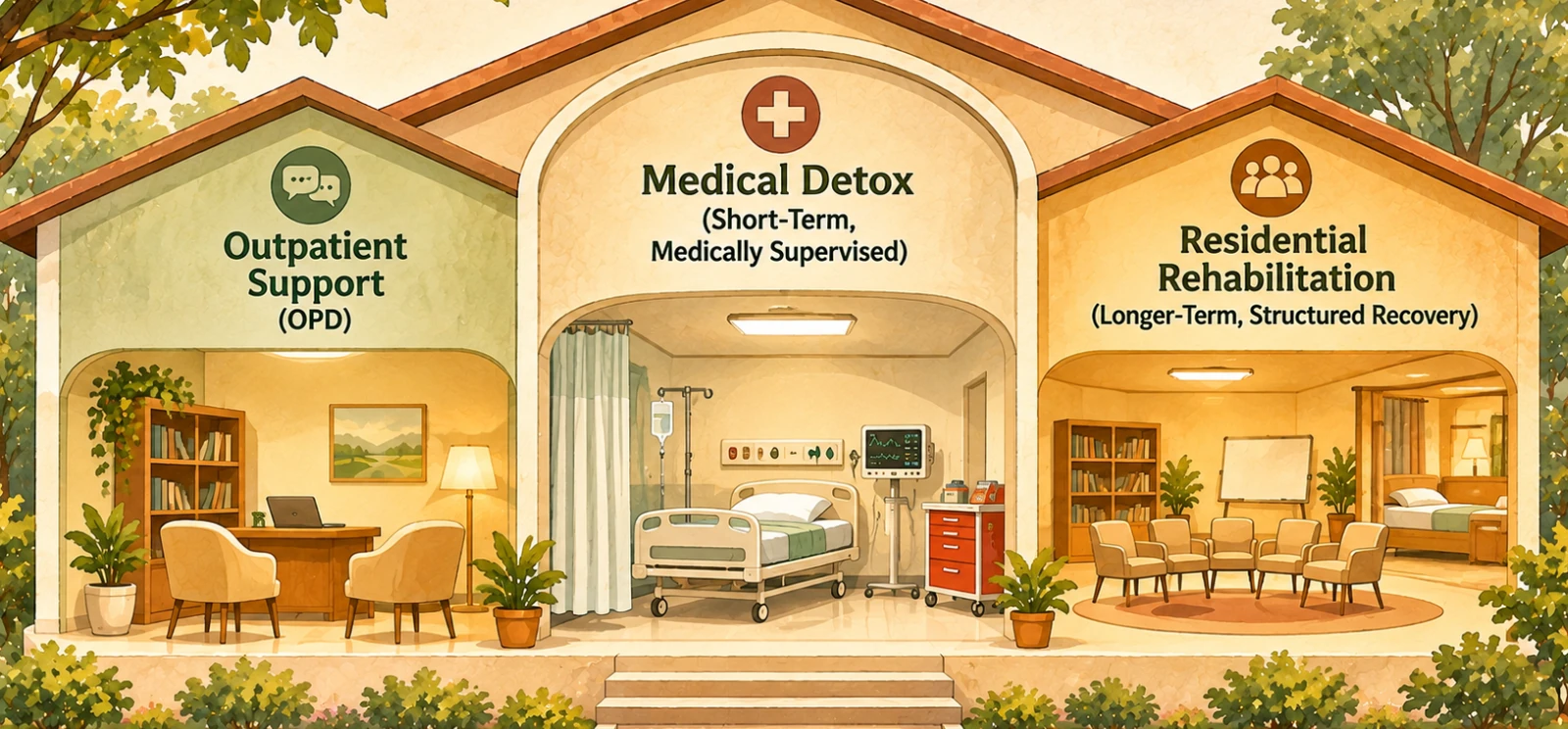
Detox, Rehab, or Outpatient Care: Which Is Needed?
Here is something few centres will tell you. Not everyone needs to stay in one.
United Nations and WHO standards name outpatient care as the first choice from a public health view. It must also meet the person's needs. Live-in care may be needed for severe or complex problems (Source: UNODC and WHO, International Standards for the Treatment of Drug Use Disorders, 2020 — unodc.org).
Take two people.
One drinks too much at weekends and still works well. He may do fine with a clinic and a counsellor.
The other drinks from morning. His hands shake without a drink. He has tried to stop and failed three times. He likely needs medical care first.
So who decides? A psychiatrist should. Tamil Nadu's rules say a person can be admitted only after a psychiatrist's check. That doctor then decides between outpatient care, detox, and rehab (Source: Tamil Nadu Government Gazette, 2025 — stationeryprinting.tn.gov.in).
Now, two words get mixed up all the time. They are different jobs.
Detox is medical care. It takes a person safely through the worst of withdrawal.
The first week can need emergency care for life-threatening problems (Source: Tamil Nadu Government Gazette, 2025 — stationeryprinting.tn.gov.in).
Rehab comes after. It works on the old problems of mind, life, and behaviour under the habit (Source: Tamil Nadu Government Gazette, 2025 — stationeryprinting.tn.gov.in).
Why does this matter? Because many centres sell one and call it the other.
A family may pay for a week of drying out and think the problem is solved. It is not.
Detox on its own is not considered an effective treatment. Relapse rates after short detox are high, and it can raise the risk of opioid overdose (Source: UNODC and WHO, International Standards for the Treatment of Drug Use Disorders, 2020 — unodc.org).
The reverse is also risky. A rehab-only centre should give first aid, then send a person in acute need to a hospital without delay (Source: Tamil Nadu Government Gazette, 2025 — stationeryprinting.tn.gov.in).
So ask one direct question on your first call. If this person's withdrawal turns dangerous tonight, who treats them, and where?
Q: Can detox be done at a nasha mukti kendra?
A: Only at a place set up for it, with doctors, nurses, and a plan for emergencies. Many centres offer rehab only. Ask before you admit anyone, and ask which hospital they use if things go wrong.
Nasha Mukti Kendra Me Kya Hota Hai? A Normal Day Inside
This is the question most families type at midnight. Nasha mukti kendra me kya hota hai? What actually goes on in there?
Schedules differ from place to place. What follows is the pattern at a well-run centre, not a fixed rule.
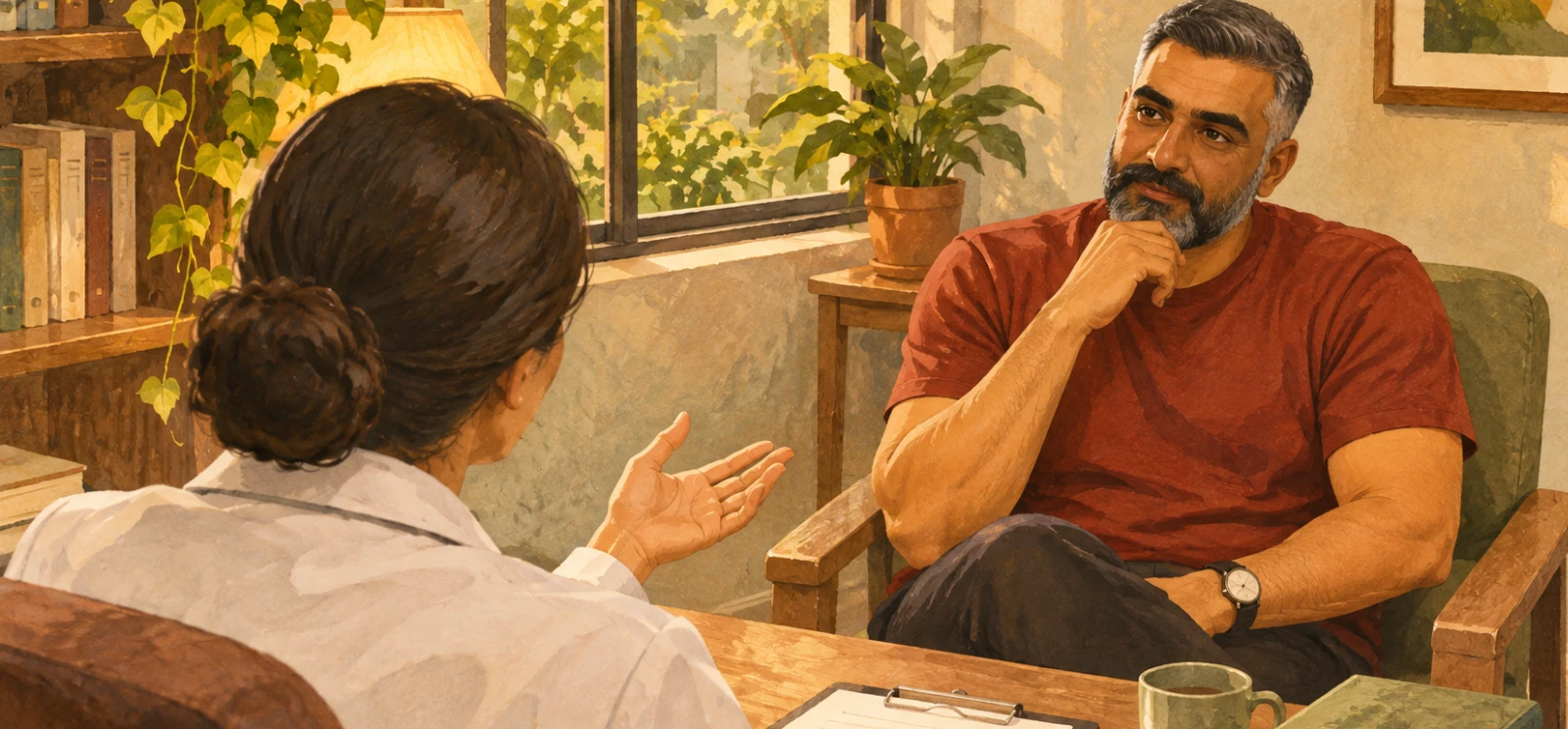
The first few days. A doctor takes a full history and checks the body. Tests are done. Your family tells the team what has been happening at home.
If withdrawal is likely, medical care starts here. Most people sleep a lot and feel unwell. Nurses check on them often.
Early morning. People wake at a set time. Medicines are given by nursing staff. There is often a walk or some yoga before breakfast.
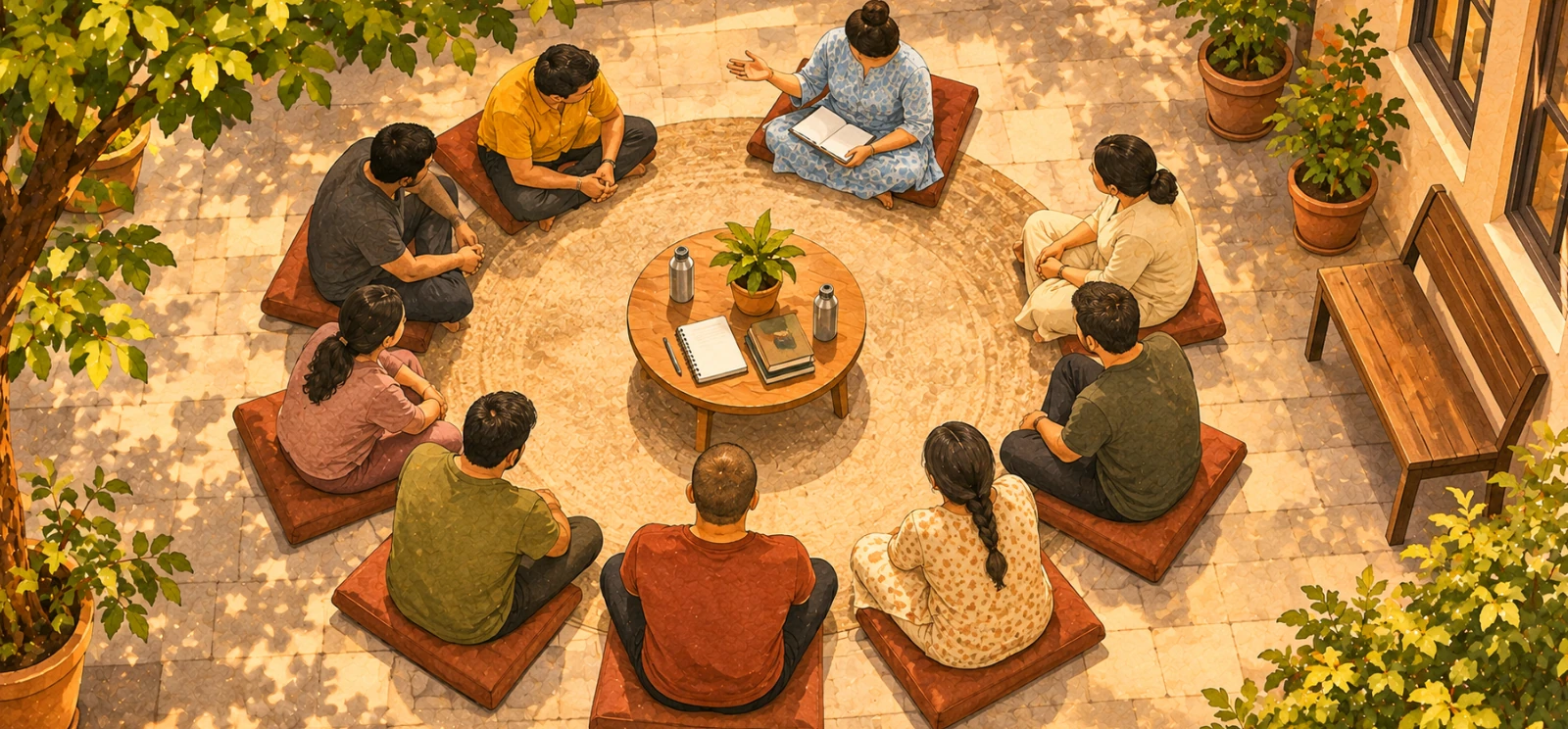
Mid-morning. Group therapy begins. A trained therapist leads a small circle of people.
They talk about triggers, cravings, and what drinking or drugs have cost them. It feels awkward at first. Then someone says the exact thing you were too ashamed to say.
Afternoon. After lunch and rest, there is one-to-one counselling.
This is where a person looks at the deeper reasons. It may be grief, stress, or low mood. They also learn plain skills. How to refuse a drink at a wedding. What to do when a craving hits at 11 at night.
Evening. There is time for games, reading, or music. Many centres hold a mutual help meeting, such as Alcoholics Anonymous or Narcotics Anonymous.
Night. Dinner is early. Lights go off at a set time. The aim is a steady rhythm, because life at home had lost it.
Family time. Good centres bring families in. You learn what helped, what harmed, and how to set limits at home.
Rules on visits vary from centre to centre. By law, a patient may receive or refuse visitors and phone calls at reasonable times, within the centre's norms (Source: Mental Healthcare Act 2017, Section 26, Gazette of India — egazette.gov.in).
The stay usually runs for weeks, not days. Our own guidance puts the usual range at 30 to 90 days, based on how severe the condition is (Source: Ganaa FAQ, 2026 — ganaa.in).
Then comes the part that is most often skipped. Dependence is a long-term illness, and a return to use can be part of recovery. Many people need long-term care or more than one round of it (Source: National Institute on Drug Abuse, 2025 — nida.nih.gov).
So a good centre starts planning discharge early. It sets up follow-up visits, a sponsor or support group, and a plan for the first bad day. See our note on Aftercare in Addiction Recovery for what that looks like.
Q: What happens in a nasha mukti kendra in the first week?
A: The team assesses the person, treats withdrawal if needed, and helps the body settle. Therapy starts slowly as the person becomes able to take part. Most people feel worse before they feel better, which is why medical support matters.
What the Law Does Not Allow
Many families do not know this. A strong law protects their relative.
The Mental Healthcare Act covers mental conditions linked to the abuse of alcohol and drugs (Source: Mental Healthcare Act 2017, Section 2, Gazette of India — egazette.gov.in).
So these protections apply inside a nasha mukti kendra. Here are the main ones.
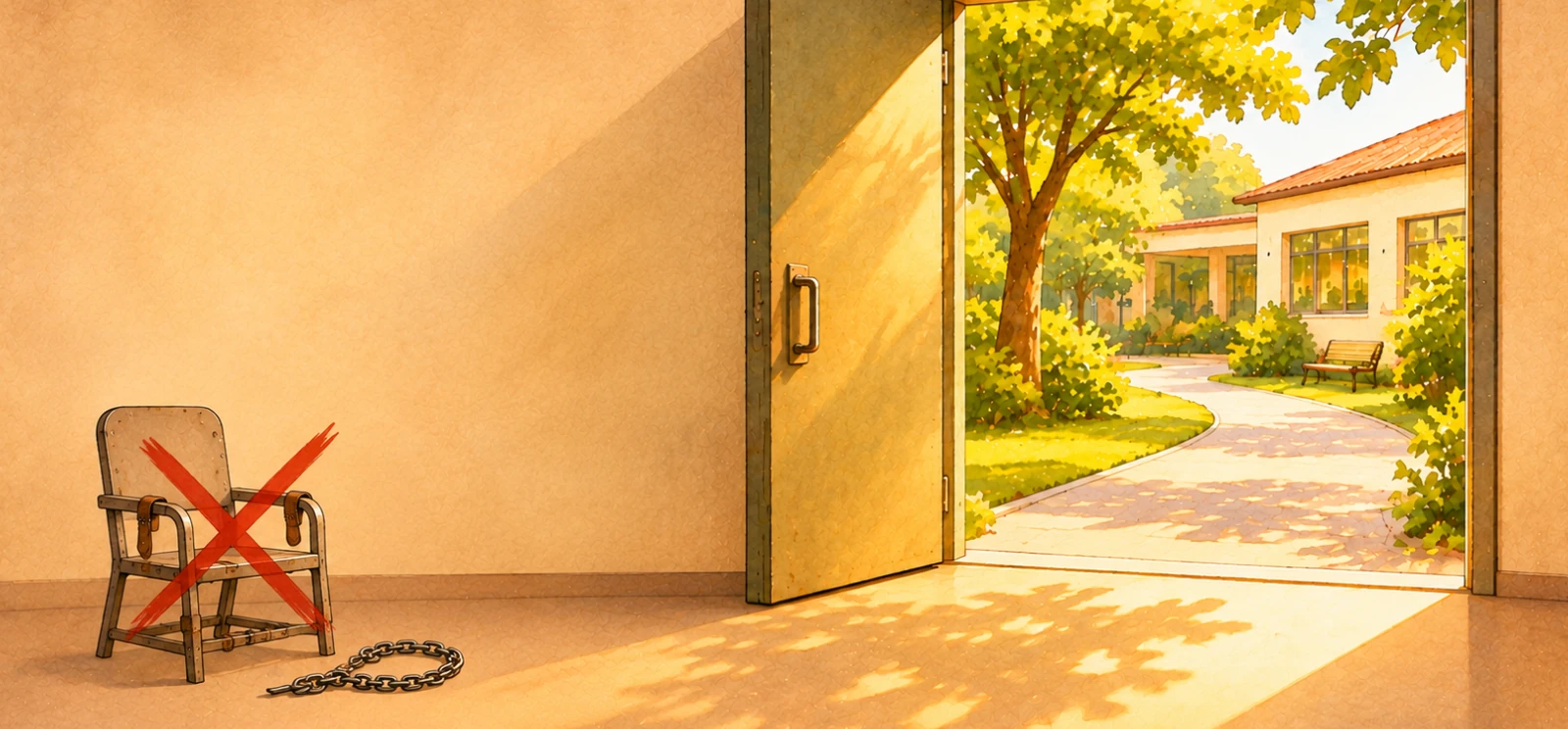
No chains. A person with mental illness cannot be chained in any manner or form (Source: Mental Healthcare Act 2017, Section 95, Gazette of India — egazette.gov.in).
No locked solitary rooms. Seclusion and solitary confinement are not allowed (Source: Mental Healthcare Act 2017, Section 97, Gazette of India — egazette.gov.in).
Physical restraint only as a last step. It is allowed only to stop immediate harm, and a psychiatrist must authorise it. It must be recorded, and it can never be a punishment (Source: Mental Healthcare Act 2017, Section 97, Gazette of India — egazette.gov.in).
Family must be told. The nominated representative must hear about each restraint within 24 hours (Source: Mental Healthcare Act 2017, Section 97, Gazette of India — egazette.gov.in).
No forced work. Patients cannot be forced to work, and work done must be properly paid (Source: Mental Healthcare Act 2017, Section 20, Gazette of India — egazette.gov.in).
No forced head shaving or uniforms. People may wear their own clothes (Source: Mental Healthcare Act 2017, Section 20, Gazette of India — egazette.gov.in).
No abuse of any kind. The law protects people from physical, verbal, emotional, and sexual abuse (Source: Mental Healthcare Act 2017, Section 20, Gazette of India — egazette.gov.in).
World standards say the same. Beatings, chaining, and holding back food or treatment should never be used (Source: UNODC and WHO, International Standards for the Treatment of Drug Use Disorders, 2020 — unodc.org).
Consent matters too. An adult who was admitted by their own choice must be discharged when they ask.
The team can hold them for up to 24 hours only to assess them, in set cases of risk (Source: Mental Healthcare Act 2017, Section 88, Gazette of India — egazette.gov.in).
In 2018, a legal inspection covered 124 de-addiction centres in Delhi. The team met 2,135 inmates and found 750 of them held against their will (Source: Joseph and Hemalatha, Indian Journal of Medical Ethics, 2021 — ijme.in).
The same paper reviewed 157 news articles from 13 states. They described patients who were tied up, chained, beaten with sticks, and locked in rooms (Source: Joseph and Hemalatha, Indian Journal of Medical Ethics, 2021 — ijme.in).
Such concerns were reported in both licensed and unlicensed places. So a licence alone is not enough.
Families are sometimes misled into believing force and unpaid labour are part of therapy (Source: Molanguri, Indian Journal of Psychological Medicine, 2025 — ovid.com).
Let us be clear. They are not. Fear does not treat dependence. Beating a person is a crime, not a method.
Q: Can a nasha mukti kendra keep someone against their will?
A: A centre cannot simply lock up an adult because the family paid. The law sets out who can be admitted without full consent, and how. That route needs a proper check and has legal safeguards. If a person is being held with no paperwork, treat it as a serious warning.
Red Flags Families Should Not Ignore
You will not always get a second chance to check. So learn these signs now.
No doctor you can meet. Illegal centres may lack trained staff, clean rooms, and even basic first aid (Source: Molanguri, Indian Journal of Psychological Medicine, 2025 — ovid.com).
A doctor's name, but no doctor. Some professionals lend out their licences to several centres, which is legally unacceptable (Source: Molanguri, Indian Journal of Psychological Medicine, 2025 — ovid.com).
A pick-up by force. Reports describe people moved from home late at night or at dawn, with no psychiatric assessment first (Source: Joseph and Hemalatha, Indian Journal of Medical Ethics, 2021 — ijme.in).
No contact for weeks. Some centres cut off phones and all family contact (Source: Molanguri, Indian Journal of Psychological Medicine, 2025 — ovid.com).
Patients doing the staff's work. Cleaning, cooking, or tending animals may be sold as therapy. In reality, it can simply save the centre money (Source: Molanguri, Indian Journal of Psychological Medicine, 2025 — ovid.com).
Medicines handed out by anyone. Scheduled drugs should be given only under a doctor's supervision (Source: Molanguri, Indian Journal of Psychological Medicine, 2025 — ovid.com).
Some other warning signs need no research to spot.
They refuse to show you the rooms. They talk about a sure cure. They ask for full payment before anyone has seen the patient. They say that discipline is the treatment.
They will not put anything in writing. They pressure you to decide today.
One more point needs care. Many good programmes use people in recovery as peer counsellors.
That is a real strength. Someone who has lived it can reach a person no textbook can.
But peer support should sit alongside trained staff, not replace them. If the only counsellor is a former patient with no training, keep looking.
Now think about the person inside. They may be frightened, unwell, and unsure who to trust.
Would you be comfortable sleeping there for one night yourself? If your answer is no, listen to it.
Q: How do I know if a de-addiction centre is fake?
A: Ask for the registration certificate, meet the doctor in person, and see the rooms. A real centre will agree to all three without fuss. Be wary if they refuse, rush you, or will not let you speak to the patient.
How to Check a Nasha Mukti Kendra Before You Say Yes
People search for the best nasha mukti kendra as if there were one right answer.
There is not. The best nasha mukti kendra is the one that suits this person and follows the law. It also lets you see how it works.
Here is a simple way to check any centre, in order.
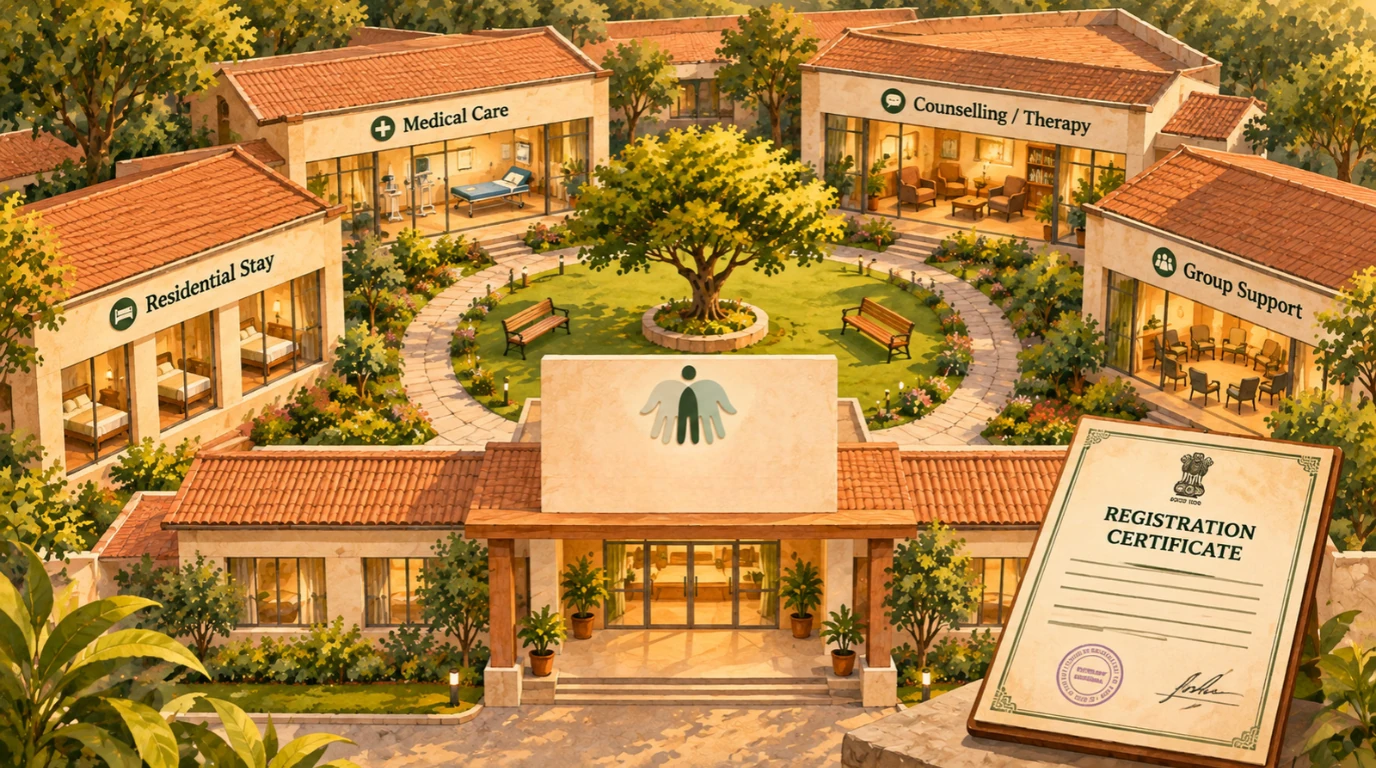
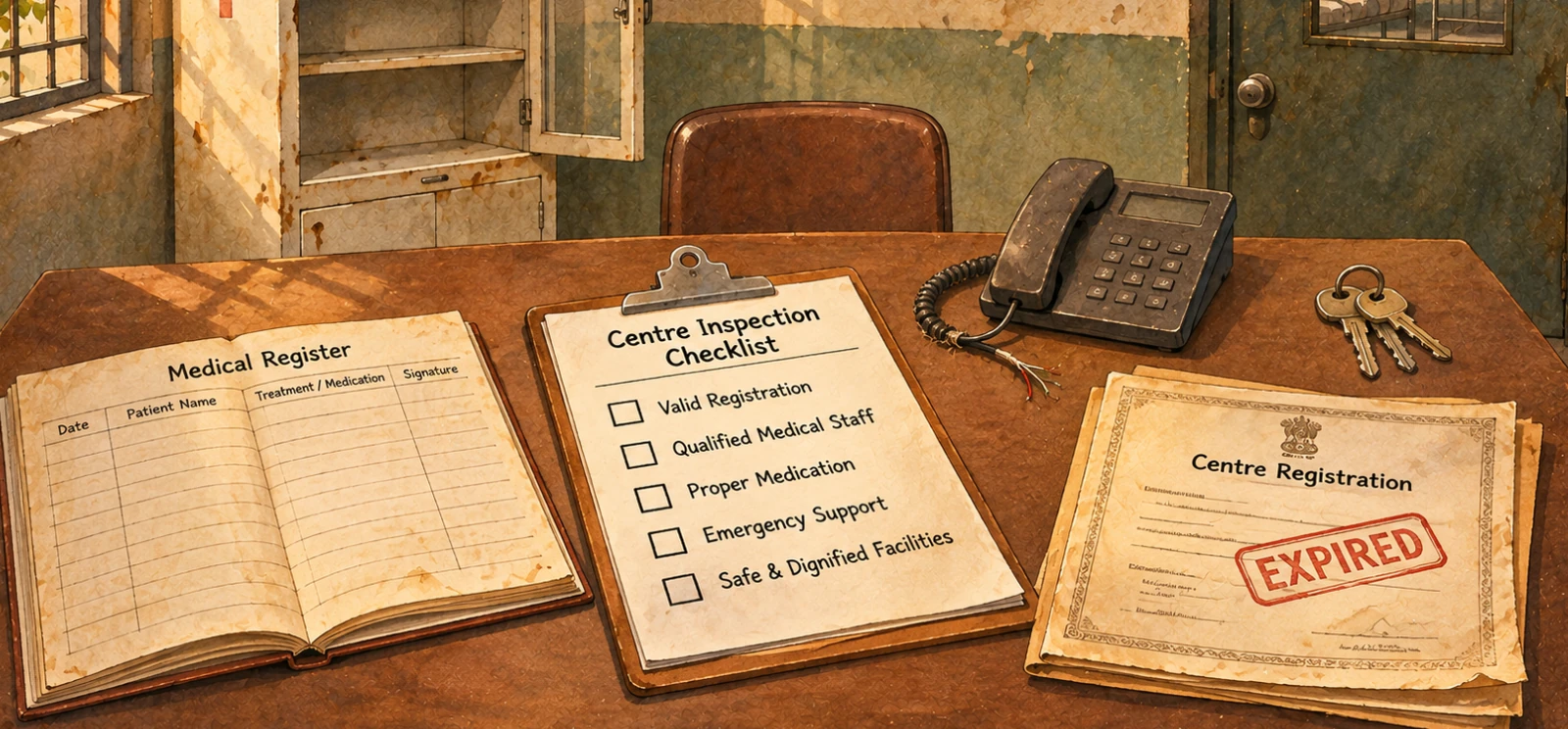
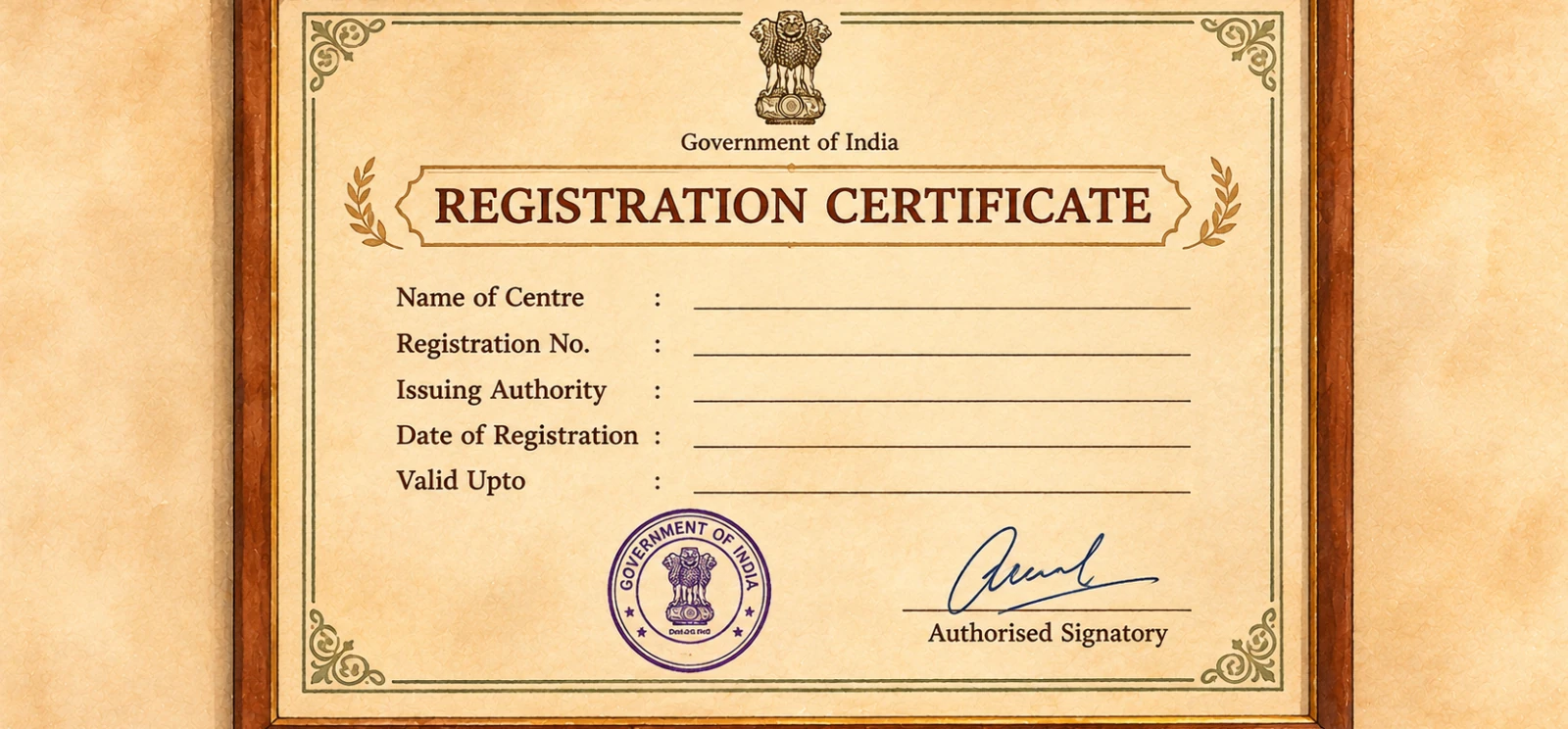
Step 1: Ask to see the certificate. No person or group can run such a place without registering it (Source: Mental Healthcare Act 2017, Section 65, Gazette of India — egazette.gov.in).
The certificate must be displayed where every visitor can see it (Source: Mental Healthcare Act 2017, Section 70, Gazette of India — egazette.gov.in).
If it is not on the wall, ask why.
Step 2: Check with the State Mental Health Authority. Each State Authority must keep a register of these centres and publish it, including online (Source: Mental Healthcare Act 2017, Section 55, Gazette of India — egazette.gov.in).
If you cannot find the list, call or write to the authority and ask.
Step 3: Know what a certificate can and cannot prove. Provisional registration can be given with no inquiry at all (Source: Mental Healthcare Act 2017, Section 66, Gazette of India — egazette.gov.in).
So a certificate is the floor, not proof of quality. You still need to see the place.
Step 4: Visit in person. See the beds, toilets, and kitchen. Talk to a nurse. Notice how staff speak to patients.
Step 5: Ask who actually works there. Tamil Nadu's rules give a useful yardstick, even if you live elsewhere. These are the minimum for a rehab centre in that state.
RoleMinimum in a Tamil Nadu rehab centrePsychiatristVisits at least once a weekMBBS doctorExamines all patients every dayRegistered nurseOne for up to 50 beds, round the clockPsychologistOne for every 50 patientsSocial workerOne for up to 50 beds, dailyAttendantOne for every 20 patients, round the clock
These figures come straight from the gazette (Source: Tamil Nadu Government Gazette, 2025 — stationeryprinting.tn.gov.in).
The same rules ask for separate rooms for men and women. Each patient gets a cot and a locker. Only female attendants may look after women (Source: Tamil Nadu Government Gazette, 2025 — stationeryprinting.tn.gov.in).
Centres that offer detox need more. A psychiatrist must see each patient on the first day and daily during detox (Source: Tamil Nadu Government Gazette, 2025 — stationeryprinting.tn.gov.in).
Step 6: Look for the Review Board details. Every centre must display the contact details of its Mental Health Review Board. It must also give patients free phone access to apply for a review of their admission (Source: Mental Healthcare Act 2017, Section 72, Gazette of India — egazette.gov.in).
That poster is a small thing. It tells you a lot about how a centre sees its patients.
Step 7: Know where to complain. The State Authority receives complaints about poor services (Source: Mental Healthcare Act 2017, Section 55, Gazette of India — egazette.gov.in).
If you fear someone is being hurt, do not wait for a letter. Call the police.
Q: How do I check if a nasha mukti kendra is registered?
A: Ask to see the certificate, which must be displayed at the centre. Then check the State Mental Health Authority's register or call its office. Remember that a certificate alone does not prove good care.
Nasha Mukti Kendra Fees: What Decides the Cost
Nasha mukti kendra fees vary so much that a single number would mislead you.
Two centres in one city can charge very different amounts for what sounds like the same stay. So ask what the fee buys, not just what it is.
These are the main things that move the price.
Medical care. Detox with doctors and round-the-clock nurses costs more than a stay with counselling only.
Staff. A psychiatrist, psychologist, and trained nurses cost money. Very low fees can mean they are missing.
Length of stay. A few weeks costs less than three months.
Other conditions. Depression, psychosis, or a medical illness needs added care.
Room and location. A shared room in a small town costs less than a private room in a metro.
After care. Follow-up visits and family sessions may or may not be included.
Price will not tell you how safe a centre is.
A high fee does not prove good care. A low fee does not prove bad care.
Remember that abuse has been reported in licensed centres as well as unlicensed ones (Source: Joseph and Hemalatha, Indian Journal of Medical Ethics, 2021 — ijme.in).
If money is the main barrier, look at public options first.
The health ministry's programme aims to give affordable, accessible treatment through government hospitals (Source: Press Information Bureau, 2026 — pib.gov.in).
The 14446 helpline can point you to options near you. Choosing a government hospital is far better than choosing an unsafe cheap house.
Before you pay anything, ask for the fee in writing. Ask what is included, what counts as extra, and what happens if the person leaves early.
A: Mostly because of staff, medical care, time, and room type. A centre with doctors on site spends far more than one without them. Always ask what the fee includes, in writing, before you pay.
Here are the key facts in one place.
Quick Facts: Nasha Mukti Kendra in India
More than 5.7 crore Indians are affected by harmful or dependent drinking — (Source: Press Information Bureau, 2019 — pib.gov.in).
Just about one in 38 people with alcohol dependence has received any treatment — (Source: NDDTC, AIIMS, Magnitude of Substance Use in India, 2019 — aiims.edu).
The government backs 349 rehabilitation centres run by NGOs — (Source: Press Information Bureau, 2026 — pib.gov.in).
The national toll-free de-addiction helpline is 14446 — (Source: Press Information Bureau, 2026 — pib.gov.in).
Chaining a person with mental illness in any form is banned by law — (Source: Mental Healthcare Act 2017, Section 95, Gazette of India — egazette.gov.in).
Running a centre without registration can bring a penalty of up to ₹5 lakh for repeat offences — (Source: Mental Healthcare Act 2017, Section 107, Gazette of India — egazette.gov.in).
How Ganaa Approaches De-addiction Care
We have worked in mental health and de-addiction care since 2012 (Source: Ganaa, 2026 — ganaa.in).
We run five hospitals and rehabs, in South Delhi, Chattarpur, Gurugram, Greater Noida, and South Goa. A sixth is opening soon in Lonavala (Source: Ganaa, 2026 — ganaa.in).
We also run five outpatient clinics, in Greater Kailash II, Gurugram, Greater Noida, Faridabad, and Panaji (Source: Ganaa, 2026 — ganaa.in).
That matters, because not everyone needs to stay. Some people can start with a clinic visit. Others need a safe bed tonight.
Our live-in centres have a 2:1 staff-to-client ratio, with 24/7 medical and psychiatric support (Source: Ganaa, 2026 — ganaa.in).
Care follows a set path. Medical detox comes first, then psychiatric and psychological care, then a 12-step programme based on AA and NA (Source: Ganaa FAQ, 2026 — ganaa.in).
Psychiatrists review patients daily. A psychologist keeps the family updated, along with daily WhatsApp updates (Source: Ganaa FAQ, 2026 — ganaa.in).
Support carries on after discharge, and families are part of the work (Source: Ganaa FAQ, 2026 — ganaa.in).
Everything in this guide applies to us too. Ask us for our papers. You can see our licences at ganaa.in/license. Ask to meet the team. Ask what a day looks like.
Speak to a Ganaa counsellor on +91 8750075006, or write to info@ganaa.in. The line runs 24 hours a day (Source: Ganaa, 2026 — ganaa.in).
Conclusion: Judge the Care, Not the Name
A nasha mukti kendra can save a life. It can also harm one.
The name on the board will not tell you which.
So look at what is behind it. Is there a doctor you can meet? Is there a certificate on the wall? Can you see the rooms, and can your relative call you?
Remember the difference between detox and rehab. One clears the body. The other does the longer work.
Remember too that not everyone needs a bed. A psychiatrist can tell you which level of care fits.
Know the law. No chains. No forced work. No beating dressed up as discipline.
Know the free first step as well. The 14446 helpline can guide you if you feel lost.
You did not cause this illness, and you cannot fix it alone.
But you can choose carefully, even in a crisis. Spend one hour on the checks in this guide.
That hour may be the most useful thing you do this year.
Then take the next step. Call, ask your questions, and go and see the place for yourself.
Dependence is treatable. Your relative deserves care that treats them as a person.
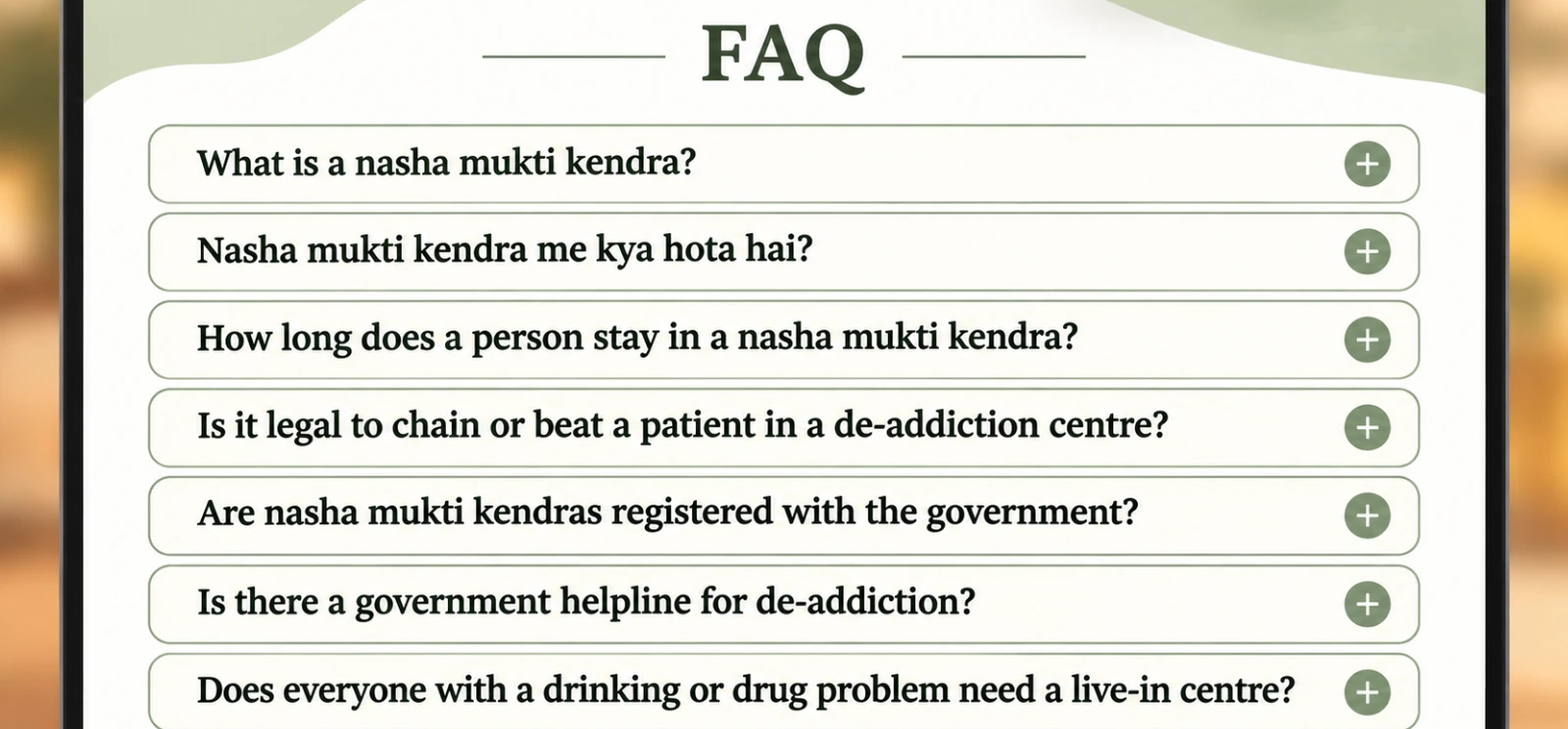
FAQ
Q: What is a nasha mukti kendra?
A: It is a centre that helps people stop using alcohol or drugs. Services can include medical detox, counselling, and follow-up care. Quality varies widely, so the name alone tells you little about the care inside.
Q: Nasha mukti kendra me kya hota hai?
A: A person is first assessed by a doctor, and withdrawal is treated if needed. After that, the day includes group therapy, one-to-one counselling, exercise, and family sessions. A good centre also plans for life after discharge.
Q: How long does a person stay in a nasha mukti kendra?
A: It depends on how severe the problem is. Our guidance puts the usual range at 30 to 90 days. A psychiatrist should set the plan, and care should continue after discharge.
Q: Is it legal to chain or beat a patient in a de-addiction centre?
A: No. Indian law bans chaining in any form and protects patients from physical, verbal, emotional, and sexual abuse. If you suspect this is happening, contact the police and the State Mental Health Authority.
Q: Are nasha mukti kendras registered with the government?
A: The law requires them to be. A centre must register with the State Mental Health Authority and display its certificate. Some still run illegally, so always ask to see the paper.
Q: Is there a government helpline for de-addiction?
A: Yes. The national toll-free helpline is 14446. It offers basic counselling and can refer you to a nearby centre or hospital.
Q: Does everyone with a drinking or drug problem need a live-in centre?
A: No. Many people do well with outpatient care. Live-in care suits those with severe problems, risky withdrawal, or many failed attempts. A psychiatrist can tell you which level of care is right.
Learn how to stop drinking alcohol safely: when quitting suddenly is dangerous, when you need medical detox, and a step-by-step plan for life in India.
Looking for the best mental hospital in India? Use this family guide to check registration, staffing, safety rules, visits and aftercare before admission.