Best Mental Hospital in India: How Families Can Judge One
Looking for the best mental hospital in India? Use this family guide to check registration, staffing, safety rules, visits and aftercare before admission.
Best Mental Hospital in India: How Families Can Judge One
Almost every family asks the same thing in a crisis. Which is the best mental hospital in India?
The honest answer is that no one hospital is best for everyone.
For your family, the best mental hospital in India is registered, well staffed, safe, and right for this illness.
That answer can feel thin at two in the morning. So this guide turns it into checks you can run yourself.
Most searches lead to top 10 lists. Many of those lists come from hospitals or directories with something to sell.
They give you names. They rarely tell you what to ask.
Here we cover the famous names first. Then six steps any family can use. Then one checklist you can carry on a visit.
One note before we start. This is general guidance, not medical or legal advice.
If someone is in danger right now, go to the nearest emergency room. You can also call Tele-MANAS, the national helpline, on 14416 (Source: Medical Dialogues, 2026 — medicaldialogues.in).
Is the Best Mental Hospital in India Always the Most Famous?
No. Fame tells you about history and training. It does not tell you about a bed for your father next week.
India has 47 government mental hospitals, and three of them are central institutes (Source: Medical Dialogues, 2026 — medicaldialogues.in).
These are the names you will see on most lists of the famous mental hospital in India:
NIMHANS, Bengaluru. It became an Institute of National Importance in 2012 (Source: NIMHANS, 2026 — nimhans.ac.in).
Central Institute of Psychiatry, Ranchi. It began in 1918 as the Ranchi European Lunatic Asylum (Source: CIP Ranchi, 2026 — cipranchi.nic.in).
LGBRIMH, Tezpur. It began in 1876 as the Tezpur Lunatic Asylum (Source: LGBRIMH, 2026 — lgbrimh.gov.in).
IHBAS, Delhi. It was set up on the directions of the Supreme Court in a public interest case (Source: IHBAS, 2026 — ihbas.delhi.gov.in).
You can also get mental health care at all AIIMS institutions (Source: Medical Dialogues, 2026 — medicaldialogues.in).
These are serious places. For complex cases or a tight budget, one of them may be the right call.
But a big name is not proof of good care on your ward. In January 2023, the National Human Rights Commission looked at 46 government mental health institutions. It said all of them were in deplorable condition, with an acute shortage of doctors and staff (Source: NHRC, 2023 — nhrc.nic.in).
That does not make every unit bad. It means a name cannot do your checking for you.
The same goes for private care. A calm lobby and good photos tell you nothing about who is on duty at night.
So treat any top 10 mental hospital in India list as a place to start. Never treat it as the answer.
Q: Is there an official ranking of mental hospitals in India?
A: Not one that we know of. Most top 10 lists are written by hospitals, directories, or blogs. Use them for names only, then run your own checks.
Step 1: Match the Hospital to the Illness
The first question is not "which hospital?". It is "what does this person need right now?"
Places that treat mental illness are not all the same. Haryana's new rules show this well. They sort these places into six groups (Source: Medical Dialogues, 2026 — medicaldialogues.in).
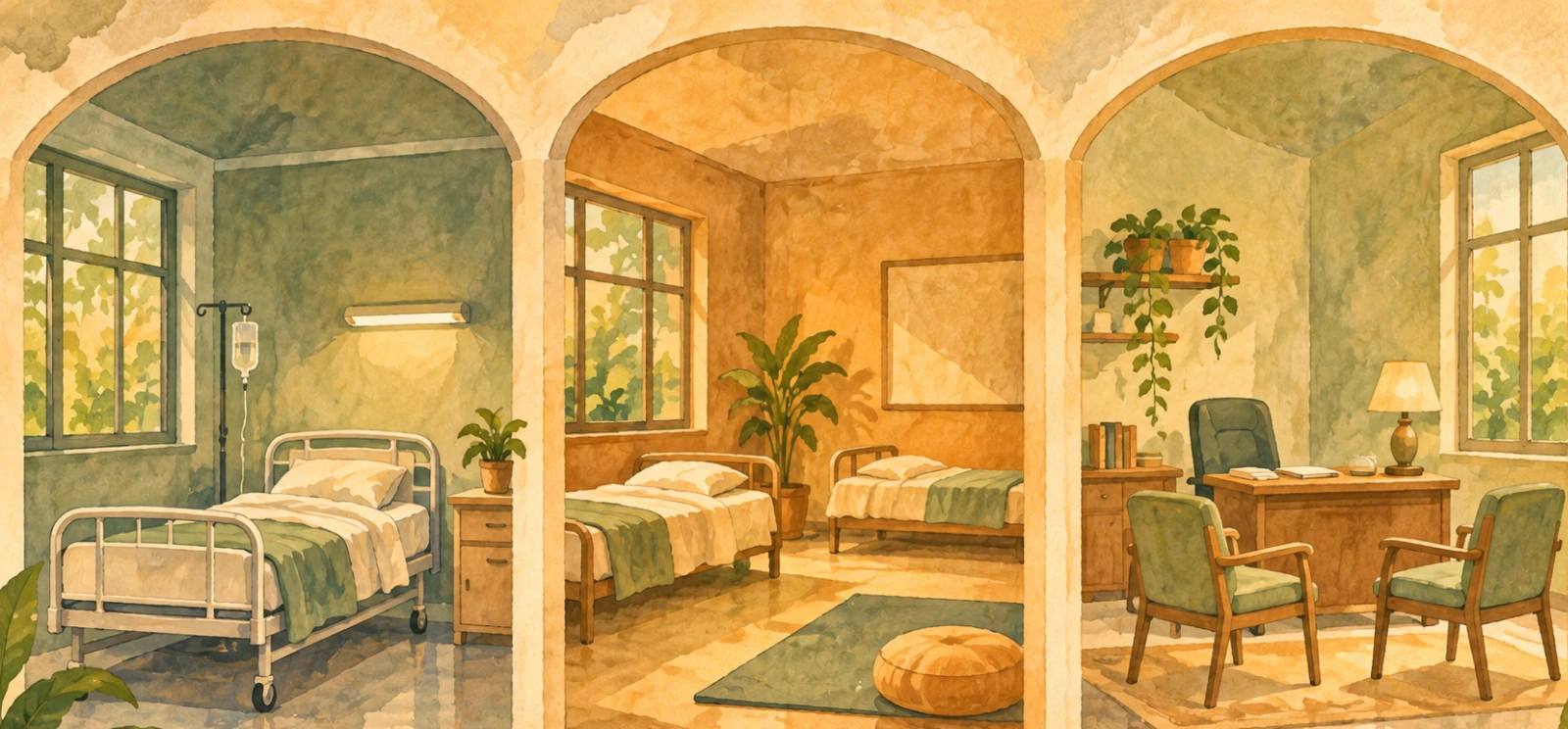
Some are standalone units. Some are wards in large or teaching hospitals. Others are de-addiction or rehab centres.
Each one is built for its own need. Here is a simple way to think about the match.
What is happeningWhere to look firstSuicide risk, severe agitation, or not eatingA hospital with round-the-clock psychiatric coverSerious physical illness as wellA psychiatric ward in a general or teaching hospitalAlcohol or drug withdrawalA medically supervised de-addiction unitLong illness and lost daily skillsA psychiatric rehabilitation programmeStable and safe at homeAn outpatient clinic
Take an older man with severe depression and heart disease. A scenic rehab may look lovely. But he may need a place with quick access to a cardiac team.
Now take a young woman with a long illness who has stopped cooking, bathing, and going out. A short hospital stay may calm her symptoms. It may not rebuild her day.
Same search. Very different "best".
Only a psychiatrist can decide the right level of care. If you are unsure, begin with an outpatient review.
Then ask each hospital one direct question. How many people with this exact problem did you treat this month?
A good team will answer plainly. A weak one will just say "we treat everything".
Do not let a hard week rush you into the wrong bed. If there is no immediate danger, you can take a day.
Call two or three places. Ask them the same questions. Then sit down and compare what you heard.
Q: Does every mental illness need a hospital stay?
A: No. Many people do well with a psychiatrist and therapy while living at home. Admission is for safety, for severe illness, or when care at home has failed.
Step 2: Check That It Is Legally Registered
This check takes five minutes. It may be the most useful one in this guide.
Indian law is clear. No person or organisation can run a mental health establishment unless it is registered with the Authority (Source: Mental Healthcare Act, Section 65, Gazette of India, 2017 — egazette.gov.in).
For most private places, that means the State Mental Health Authority. For places under the Central Government, it means the Central Authority.
Registration can start as provisional. A permanent one comes once the Authority checks basic standards (Source: Mental Healthcare Act, Section 66, Gazette of India, 2017 — egazette.gov.in).
Registered places must also face an audit every three years (Source: Mental Healthcare Act, Section 67, Gazette of India, 2017 — egazette.gov.in).
Running without registration brings a penalty. A first one can run from ₹5,000 to ₹50,000 (Source: Mental Healthcare Act, Section 107, Gazette of India, 2017 — egazette.gov.in).
Rules still differ by state. Haryana set out its own detailed rules only in October 2026 (Source: Medical Dialogues, 2026 — medicaldialogues.in).
So ask three simple things at the front desk:
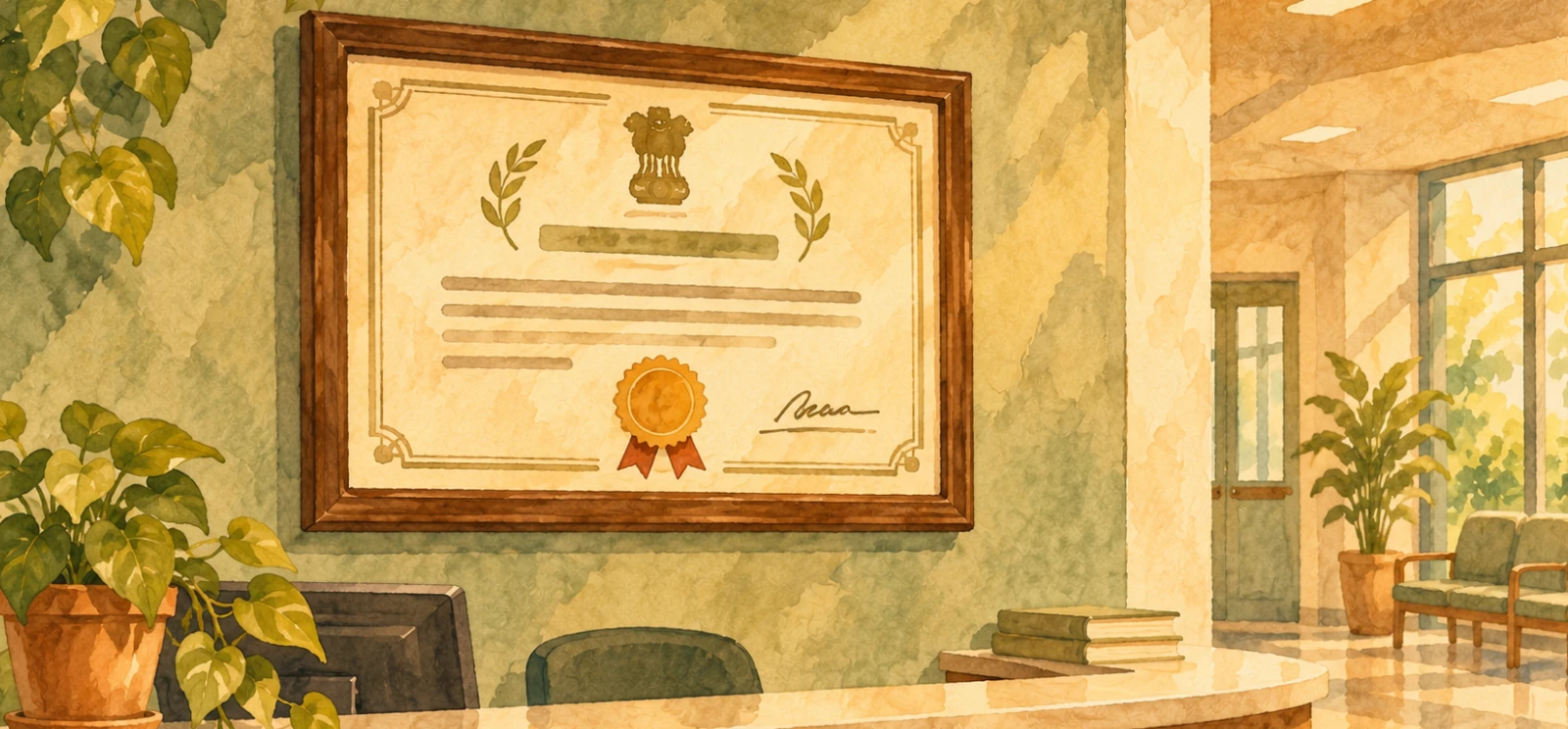
May I see your registration certificate?
Which Authority issued it?
Is it provisional or permanent?
A sound hospital will not be offended. If staff dodge the question, take that as your answer.
Why does this matter so much? Because it gives you a way to act. If things go wrong, you know who to go to.
At a place with no papers, you may have no one to turn to at all.
Accreditation, such as NABH, is a welcome extra. It does not replace registration.
Step 3: Ask Who Actually Treats the Patient
India is short of psychiatrists. So who sees your relative matters more than the name on the gate.
In national survey data, Madhya Pradesh had just 0.05 psychiatrists per lakh people. Kerala had 1.2 per lakh (Source: Indian Journal of Psychological Medicine, 2024 — pmc.ncbi.nlm.nih.gov).
That shortage has a real effect on wards. A well-known doctor may lend a name to a place and visit only now and then.
So ask for facts, not titles:
How often does a psychiatrist see each patient?
Who is the treating doctor, and how do I reach them?
Which doctor is on site at 2 a.m.?
How many nurses are on the ward at night?
Is there a clinical psychologist on the team?
Who runs family sessions?
Then ask about the worst night. What happens if there is a seizure, a fall, or a suicide attempt?
You want a clear plan. Who responds? Where is the nearest ICU? How long does the transfer take?
Withdrawal and severe illness can turn fast. A vague answer here is a warning.
Listen to how they answer. Do they give you a name or just a job title? Do they give you a fact or a soft line?
Good staff will admit what they do not know. They will offer to find out. Weak staff will just tell you not to worry.
That is kind, but it is not a plan.
Also check who prescribes. Under the Act, no one may recommend a treatment outside their own field (Source: Mental Healthcare Act, Section 106, Gazette of India, 2017 — egazette.gov.in).
Q: Should the top doctor see my relative every day?
A: Not always. A trained team can do much of the daily work. What matters is that a psychiatrist reviews the patient often and that you know who is in charge.
Step 4: Check the Safety Rules, Not Just the Rooms
The law sets firm lines here. Knowing them protects your family.
Under the Act, chaining a person with mental illness is banned in any form. So is electro-convulsive therapy, or ECT, without anaesthesia and muscle relaxants (Source: Mental Healthcare Act, Section 95, Gazette of India, 2017 — egazette.gov.in).
ECT itself is a real treatment. It is not banned. It is the unmodified kind that the law bans.
ECT for children is also barred. The one exception needs the guardian's consent and the Board's prior nod (Source: Mental Healthcare Act, Section 95, Gazette of India, 2017 — egazette.gov.in).
Keeping a person locked away alone is not allowed. Physical restraint is allowed only to stop harm that is about to happen. There must be no other way, and a psychiatrist must approve it (Source: Mental Healthcare Act, Section 97, Gazette of India, 2017 — egazette.gov.in).
It cannot be used as punishment. It cannot be used because staff are short.
The person's nominated representative must be told of each use within 24 hours (Source: Mental Healthcare Act, Section 97, Gazette of India, 2017 — egazette.gov.in).
Daily life is covered too. Patients have a right to safe and clean living, to privacy, and to wear their own clothes. They cannot be forced to work, and their heads cannot be shaved by force (Source: Mental Healthcare Act, Section 20, Gazette of India, 2017 — egazette.gov.in).
So when you visit, walk the ward if rules allow. Look past the reception area.
Check the toilets. Look at the food. Notice how staff speak to patients when they think no one is watching.
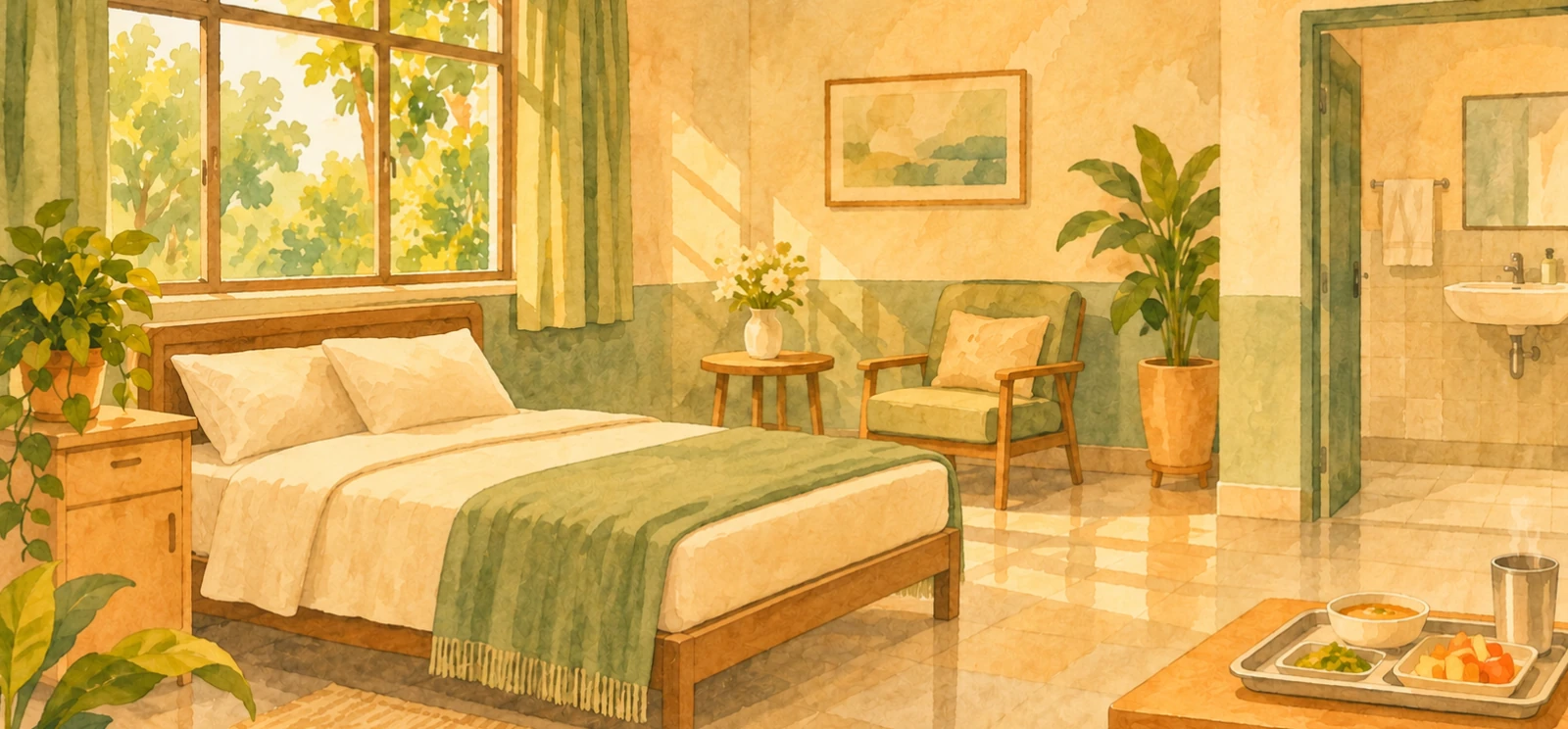
Do people look cared for? Are they up and about, or all asleep at noon? Do staff know their names? Is there a place to sit in the sun?
You do not need to be a doctor to see these things. You just need to look.
Ask how they calm an upset patient. A good team talks first and acts last.
Q: Is restraint ever legal in a mental hospital?
A: Yes, but only in narrow cases. It must be the only way to stop immediate harm, a psychiatrist must authorise it, and it must be recorded. It can never be a punishment.
Step 5: See How It Treats Families
Good hospitals treat you as part of care. Poor ones treat you as a visitor with a credit card.
Watch how they talk to you on the first call. Do they rush you? Do they let you finish? Do they use words you can follow?
That tells you how they will talk to you when things get hard.
The law gives real rights here. The patient and the nominated representative can ask about the illness, the treatment plan, and known side effects. This must come in a language they understand (Source: Mental Healthcare Act, Section 22, Gazette of India, 2017 — egazette.gov.in).
Patients can also receive visitors and make phone calls at reasonable times, subject to the hospital's norms (Source: Mental Healthcare Act, Section 26, Gazette of India, 2017 — egazette.gov.in).
Family work may also help recovery. A review of 53 trials looked at family work in schizophrenia. It found this work may reduce relapse, though study quality was often poor (Source: Cochrane review, PMC, 2010 — pmc.ncbi.nlm.nih.gov).
So ask how you will be kept informed:
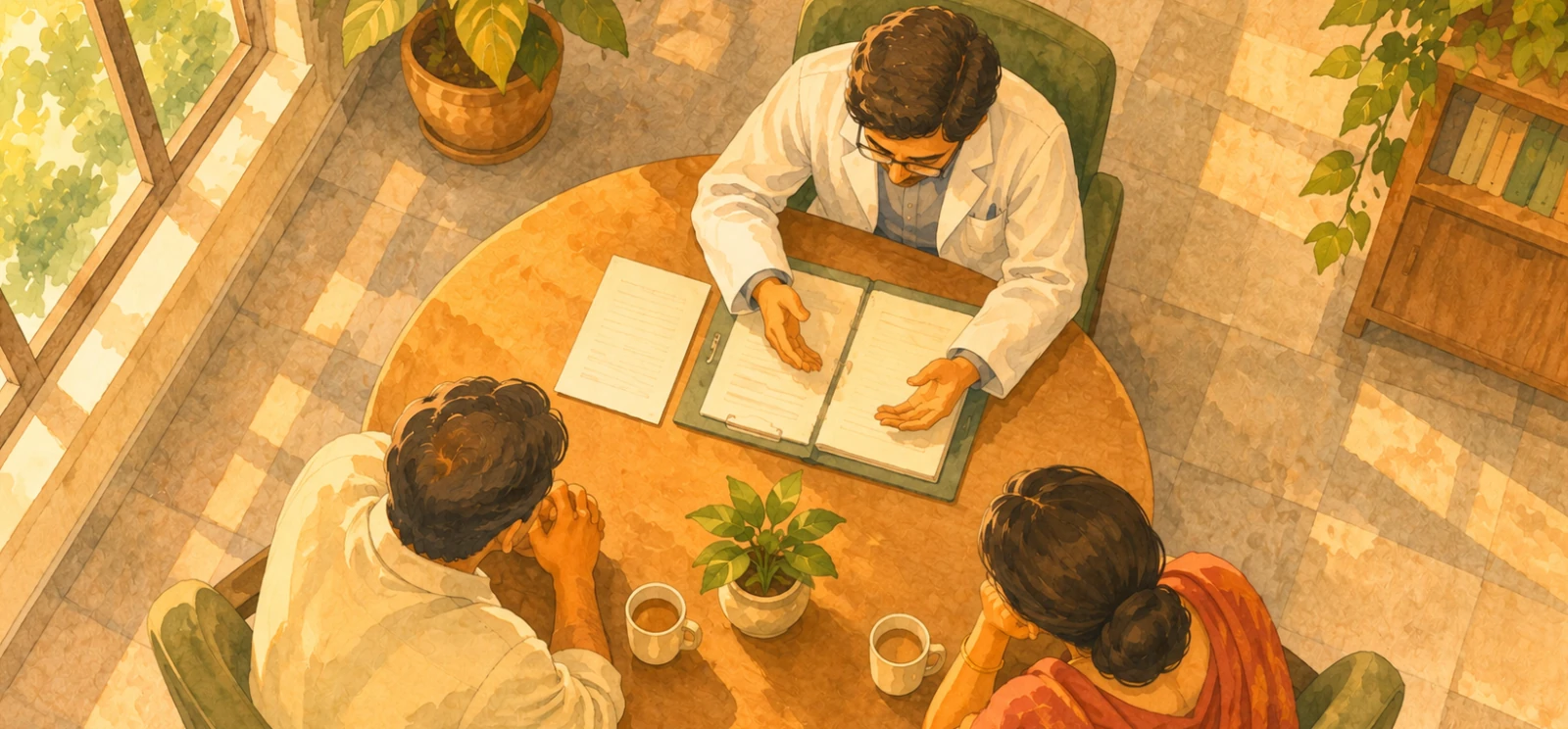
Who will update us, and how often?
Are there family sessions?
Will you teach us about this illness?
When can we visit and call?
Limits on calls can be fair early in treatment. What matters is that the reason is explained to you.
If something goes wrong, you can complain. Start with the person in charge. Then go to the Review Board, and then the State Authority (Source: Mental Healthcare Act, Section 28, Gazette of India, 2017 — egazette.gov.in).
Q: Can a hospital stop me from seeing my relative?
A: It can set visiting norms, and short limits can be part of care. It should explain why. If you feel a limit is unfair, ask the person in charge, then the Review Board.
Step 6: Ask What Happens After Discharge
Most families focus on getting a bed. The harder stretch often begins after leaving it.
A large review looked at 100 studies of people leaving psychiatric care. Suicide risk was highest in the first three months after leaving, at about 100 times the global rate (Source: Chung et al., JAMA Psychiatry, PMC, 2017 — pmc.ncbi.nlm.nih.gov).
That review is global, not Indian. It is no cause for panic. It is a strong reason to plan early.
The law expects this plan. The psychiatrist must talk to the patient, the nominated representative, and the family or carer who takes over (Source: Mental Healthcare Act, Section 98, Gazette of India, 2017 — egazette.gov.in).
So ask these questions before the first payment:
Will we get a written discharge plan?
When is the first follow-up visit?
Who do we call if things slip at night?
Do you offer online reviews after discharge?
How do you involve us in the last week of the stay?
Also watch the other risk. No one should stay in a hospital just because they have no family. The same holds if family will not take them back (Source: Mental Healthcare Act, Section 19, Gazette of India, 2017 — egazette.gov.in).
The NHRC flagged this very problem, saying cured patients were being kept illegally in hospitals (Source: NHRC, 2023 — nhrc.nic.in).
A good hospital is always working towards the day you do not need it.
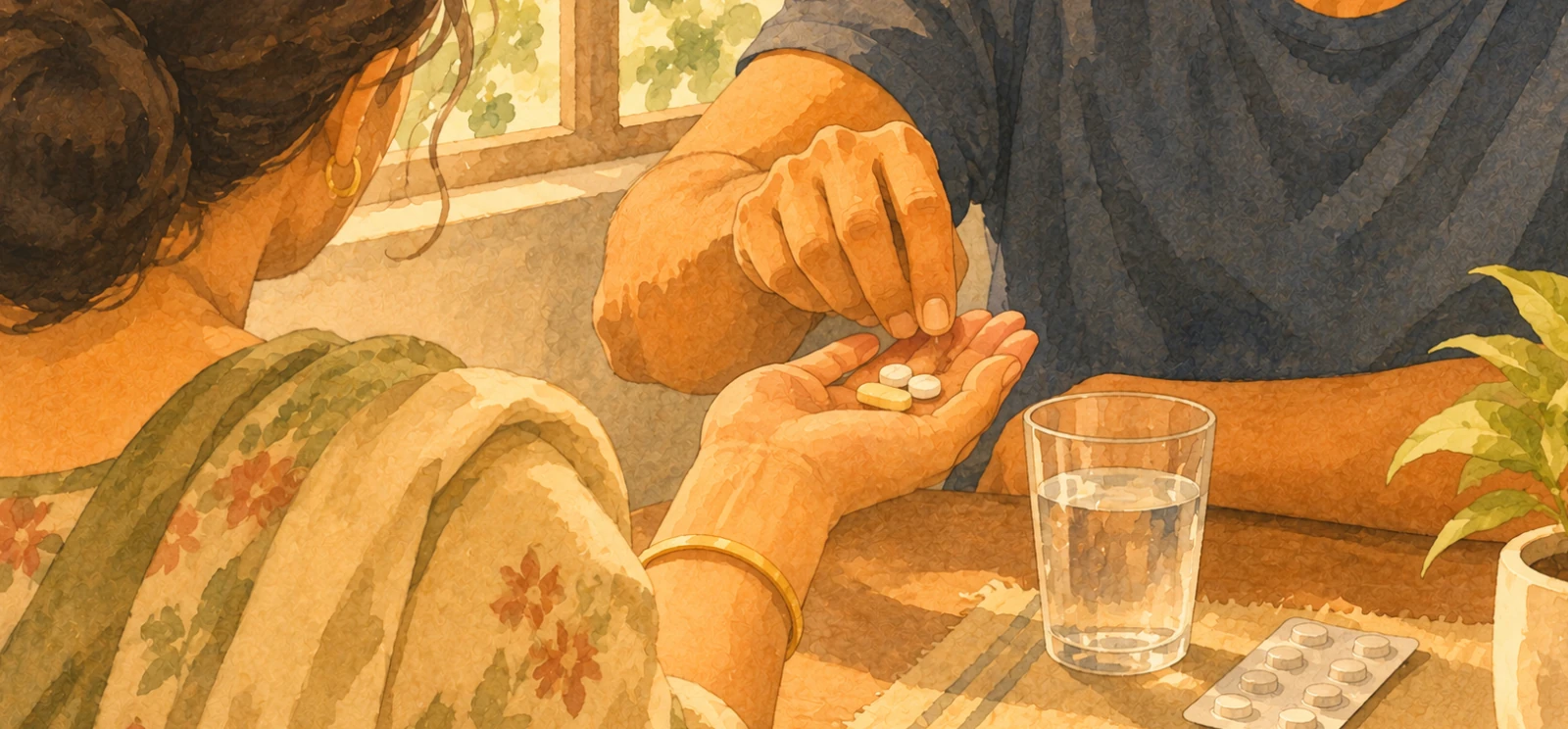
Think about the first week at home. Who gives the pills? Who drives to the first visit? Who sits with the person on a bad night?
Write the names down. Put them on the fridge. A plan on paper is easier to follow when you are tired.
The Family Checklist for the Best Mental Hospital in India
Take this on your visit. If you can, go with one other relative so you can compare notes.
What to askA good signA warning signRegistrationCertificate shown without fussStaff avoid the questionFit for the illnessClear experience with this condition"We treat everything"Psychiatrist accessA set review scheduleA big name who rarely visitsNight coverA named doctor and a clear plan"Call us if needed"EmergenciesA known ICU and transfer planNo plan at allRestraint and ECTClear rules and written recordsVague or defensive answersWard lifeClean, private, own clothesCrowded, locked, and silentFamily updatesA named person and a scheduleYou must chase for newsDischargeA written plan and follow-upNothing beyond the last billCostA clear written estimateCash only, or surprise charges
Three red flags should end the visit. Someone offers to "pick up" a patient by force with no doctor involved. No one will show you the ward. You are pushed to pay today.
Pressure is never a sign of good care. A serious hospital can wait an hour while you think.
India has 47 government mental hospitals, including three central institutes — (Source: Medical Dialogues, 2026 — medicaldialogues.in).
Every mental health establishment must be registered with the Authority — (Source: Mental Healthcare Act, Section 65, Gazette of India, 2017 — egazette.gov.in).
The Act bans chaining and any ECT without anaesthesia and muscle relaxants — (Source: Mental Healthcare Act, Section 95, Gazette of India, 2017 — egazette.gov.in).
The National Mental Health Survey reported a treatment gap of 70% to 92% — (Source: Indian Journal of Psychological Medicine, 2024 — pmc.ncbi.nlm.nih.gov).
Psychiatrist availability runs from 0.05 per lakh in Madhya Pradesh to 1.2 per lakh in Kerala — (Source: Indian Journal of Psychological Medicine, 2024 — pmc.ncbi.nlm.nih.gov).
Tele-MANAS, the national helpline on 14416, offers support round the clock — (Source: Medical Dialogues, 2026 — medicaldialogues.in).
How Ganaa Fits Into This Checklist
We would rather you compare with care than choose in panic. So use this same checklist with us.
Ganaa has served patients since 2012. We treat addiction and psychiatric conditions, for both voluntary and involuntary patients (Source: Ganaa, 2026 — ganaa.in).
We run five hospitals and rehabs, in South Delhi, Chattarpur, Gurugram, Greater Noida, and South Goa. A sixth is opening soon in Lonavala (Source: Ganaa, 2026 — ganaa.in).
We also run five outpatient clinics, in Greater Kailash II, Gurugram, Greater Noida, Faridabad, and Panaji (Source: Ganaa, 2026 — ganaa.in).
Our residential centres have a 2:1 staff-to-client ratio and 24/7 medical and psychiatric support (Source: Ganaa, 2026 — ganaa.in).
Each centre is different. South Delhi offers structured care with added safety for those who need intensive rehab. Gurugram is set up for acute care. Goa suits people who want to recover away from home (Source: Ganaa, 2026 — ganaa.in).
Families stay in the loop. We assign a psychologist for regular updates, and you also get daily WhatsApp updates (Source: Ganaa FAQ, 2026 — ganaa.in).
Discharge is planned jointly by the medical team, the patient, and the family (Source: Ganaa FAQ, 2026 — ganaa.in).
Not everyone needs admission. If a clinic visit is the right next step, we will say so.
Conclusion: The Right Hospital Is the One That Passes Your Checks
There is no single best mental hospital in India. There is only the best fit for this person, at this stage of this illness.
Famous names matter. They can be the right choice. But a name cannot show you the night shift.
So start with need. Then check registration.
Ask who treats the patient and who is there at 2 a.m. Learn the safety rules, so you can spot a place that ignores them.
See how the team treats you. Ask what happens after discharge, before you ever pay.
None of this needs a medical degree. It needs a list, a calm hour, and the courage to ask.
You are not being difficult. You are doing your job as family.
Good hospitals welcome these questions. Many will be glad you asked.
If you are worn out and cannot think straight, that is normal. Take one small step today.
Call one hospital. Ask one question from the checklist.
The way they answer will tell you more than any top 10 list.
The first step does not have to be the perfect one. It only has to be a careful one.
FAQ
Q: Which is the best mental hospital in India?
A: No single hospital is best for everyone, and we know of no official ranking. The right choice is registered, well staffed, safe, and suited to the illness. Use the checks in this guide to compare places yourself.
Q: Which are the famous mental hospitals in India?
A: Well-known government names include NIMHANS in Bengaluru, CIP in Ranchi, LGBRIMH in Tezpur, and IHBAS in Delhi. Mental health services are also available at AIIMS institutions. A famous name is a starting point, not proof of fit.
Q: How do I check if a mental hospital is registered?
A: Ask to see the registration certificate. Check which Authority issued it, and whether it is provisional or permanent. If you still have doubts, contact your State Mental Health Authority.
Q: Are government mental hospitals better than private ones?
A: Neither is better by default. Government institutes can offer deep expertise and lower cost, while waits and crowding can be a problem. Private places vary widely, so run the same checks on both.
Q: Can a mental hospital use chains or give ECT without anaesthesia?
A: No. The Mental Healthcare Act bans chaining in any form. It also bans ECT without anaesthesia and muscle relaxants.
Q: Can family members visit a patient in a mental hospital?
A: Yes. Patients have a right to visitors and phone calls at reasonable times, subject to the hospital's norms. Early limits can be part of care, but the team should explain them.
Q: What should we ask before discharge?
A: Ask for a written plan, the first follow-up date, and a number to call at night. Ask how medicines will be reviewed and who will support the family at home.
Learn how to stop drinking alcohol safely: when quitting suddenly is dangerous, when you need medical detox, and a step-by-step plan for life in India.
Compulsive pornography use has a clinical definition, and it is not what most people assume. Learn where the line sits, what drives it, and what treatment works.