What Is a Mental Hospital? Old Asylums vs Care Today
What is a mental hospital? Learn what asylums were, how Indian law changed, who the patients are, what a day inside looks like, and how to check standards.
What Is a Mental Hospital? Old Asylums vs Care Today
A mental hospital is a hospital where people with serious mental illness get round-the-clock psychiatric care.
That is the plain answer to what is a mental hospital.
Doctors, nurses and therapists look after people who cannot stay safe or well at home for now. The aim is simple. Help the person get stable, then help them go home.
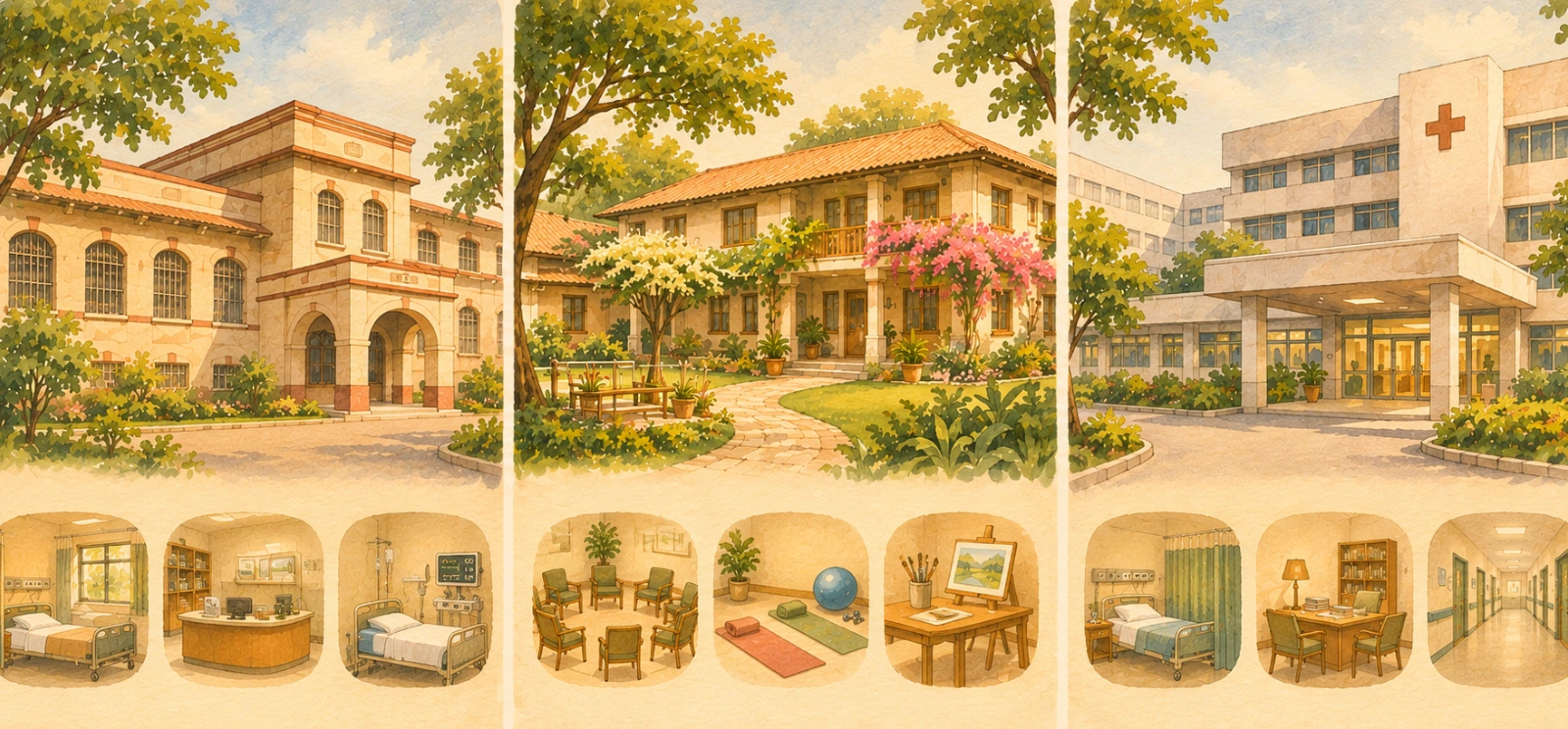
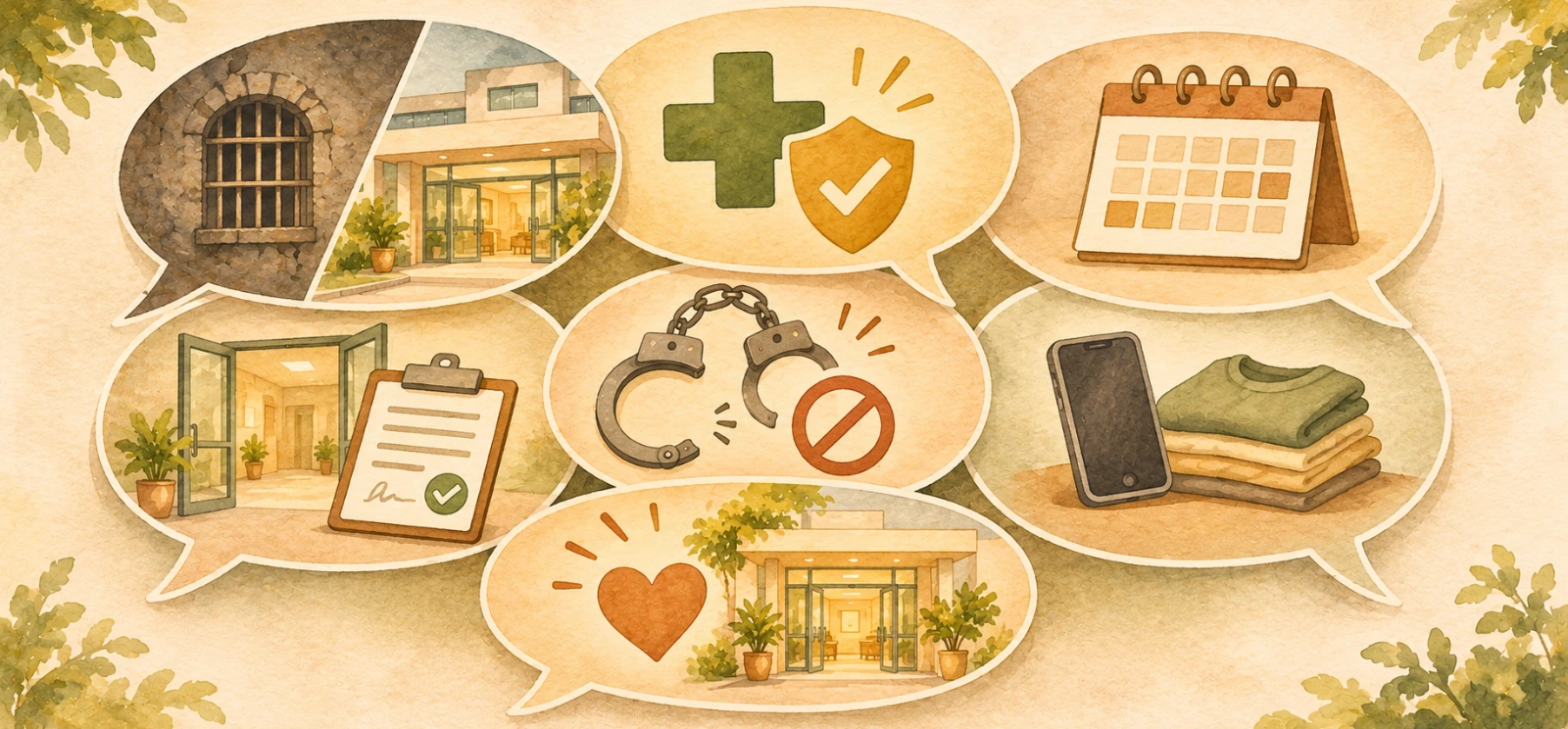
Most people do not picture that. They picture bars, chains and locked gates. They picture the old word, asylum.
Those fears came from somewhere real. India's early asylums were built to protect the public, not to heal the people inside (Source: Daund et al., Indian Journal of Psychiatry, 2018 — pmc.ncbi.nlm.nih.gov).
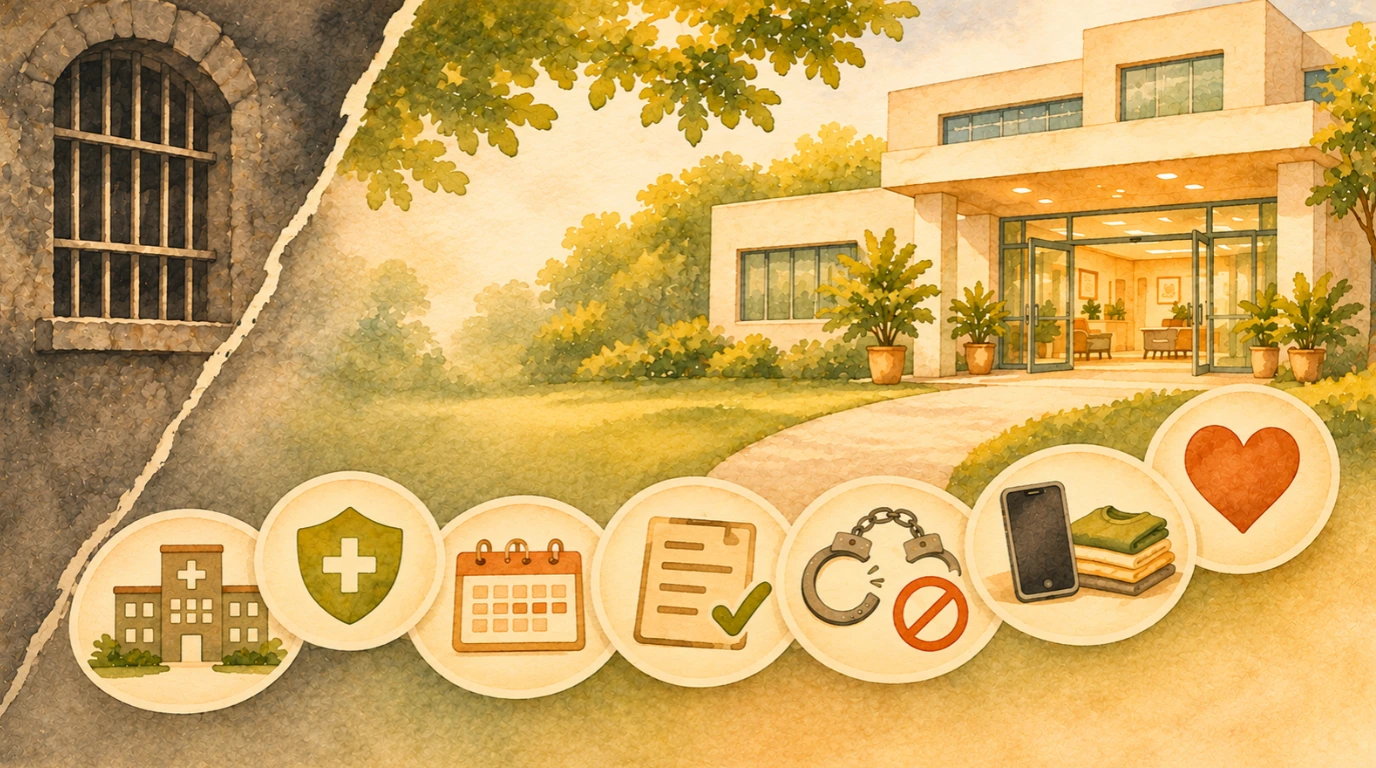
But a great deal has changed. The law has changed most of all.
This guide walks you through the full story. What an asylum was. How India moved on. Who the patients are. What a normal day looks like.
You will also see how rights and going home work, and where care still falls short.
We run mental health hospitals ourselves, so we will try to be fair to both sides.
One note before we start. This is general information, not medical or legal advice. A doctor who has met the person can tell you what they need.
What Is a Mental Hospital, in Plain Words
Think of it as a hospital with one focus. The illness is in the mind, not the bones or the heart.
Like any hospital, it has doctors, nurses on each shift, medicine, records and a plan for each patient.
The main change is the kind of risk it can hold. A person may hear voices that scare them. They may have stopped eating. They may be thinking of ending their life.
Home cannot always hold that safely. A hospital can, for a while.
Indian law does not really use the words mental hospital. The Mental Healthcare Act uses a wider term, mental health establishment. It means any place where people with mental illness are admitted and live for care and treatment (Source: Mental Healthcare Act, 2017, Section 2 — qps.nhsrcindia.org).
So the law treats a state hospital, a private one and a rehab in the same way. All must follow one set of rules.
One review calls mental hospitals tertiary centres, which means they deal with the harder cases. They offer stays, clinics, rehab and talk-based care (Source: Daund et al., Indian Journal of Psychiatry, 2018 — pmc.ncbi.nlm.nih.gov).
So it is not only a place to stay. Many people visit for a short clinic slot and go home the same day.
A stay is for when the illness is too severe or too risky for that.
Q: Is a mental hospital the same as a psychiatric hospital?
A: Yes, in everyday use. Both mean a hospital that treats mental illness. Psychiatric hospital is the newer and more respectful term, and many old hospitals now call themselves institutes.
What Was a Mental Asylum, and Why the Word Has Gone
A mental asylum was an early, lock-up-first form of the mental hospital. Keeping people away from the public mattered more than treating them.
The modern asylum reached India with colonial rule. One review calls it a British and European idea (Source: Daund et al., Indian Journal of Psychiatry, 2018 — pmc.ncbi.nlm.nih.gov).
The first ones opened in Bombay in 1745 and Calcutta in 1784, and they were only for Europeans (Source: Daund et al., Indian Journal of Psychiatry, 2018 — pmc.ncbi.nlm.nih.gov).
Their design tells you the purpose. They sat far from towns, behind high walls, often in old army barracks (Source: Daund et al., Indian Journal of Psychiatry, 2018 — pmc.ncbi.nlm.nih.gov).
The goal was to stop people from getting out. Healing came second, if it came at all.
Care in those years was crude. The same review lists opium, hot baths and leeches among the methods (Source: Daund et al., Indian Journal of Psychiatry, 2018 — pmc.ncbi.nlm.nih.gov).
Not all of these places were cruel by design. Some staff did care. But good drugs for mental illness did not exist yet. Doctors had very little to give.
Then the word began to shift. Asylums across India were renamed mental hospitals in 1920, after a push from the head of the Ranchi hospital (Source: Daund et al., Indian Journal of Psychiatry, 2018 — pmc.ncbi.nlm.nih.gov).
A new name did not fix old walls, though. In 1946, a survey of 19 mental hospitals with 10,181 beds made that clear (Source: Murthy et al., Epidemiology and Psychiatric Sciences, 2017 — cambridge.org).
The survey found they were built for safe keeping, not for cure (Source: Murthy et al., Epidemiology and Psychiatric Sciences, 2017 — cambridge.org).
So why does the old word hang on? Stigma, mostly. Terms like asylum and pagal khana stuck to these places for years (Source: Daund et al., Indian Journal of Psychiatry, 2018 — pmc.ncbi.nlm.nih.gov).
Many people still search for a mental asylum hospital because it is the only term they know. There is no shame in that. But a mental asylum hospital of the past and a good hospital today are not the same thing.
The word matters most when you use it about a person you love. Asylum tells them they are being put away. Hospital tells them they are being cared for.
Q: Do mental asylums still exist in India?
A: Not as a legal term. The word is out of date, and the law now speaks of mental health establishments. Sadly, a 2018 court petition still reported people chained at a faith-based asylum in Uttar Pradesh (Source: The Hindu via NHRC, 2025 — nhrc.nic.in). That is against the law.
How India Moved From Custody to Care
India's law took more than a century to catch up with medicine.
Start with 1912. The Indian Lunacy Act was the first law to truly govern mental health here. It set out to protect the public, and it neglected human rights (Source: Firdosi and Ahmad, BJPsych International, 2016 — pmc.ncbi.nlm.nih.gov).
Doctors saw the problem and helped draft a new bill in 1950. It got the President's assent only in 1987, and it took effect in 1993 (Source: Firdosi and Ahmad, BJPsych International, 2016 — pmc.ncbi.nlm.nih.gov).
That law was a real step. It put care and treatment ahead of custody (Source: Firdosi and Ahmad, BJPsych International, 2016 — pmc.ncbi.nlm.nih.gov).
Still, old habits lived on in the wards. One national review found that 38% of hospitals still had a jail-like shape (Source: Daund et al., Indian Journal of Psychiatry, 2018 — pmc.ncbi.nlm.nih.gov).
In some places, patients were still called inmates. Staff were called warders. Wards were called enclosures (Source: Daund et al., Indian Journal of Psychiatry, 2018 — pmc.ncbi.nlm.nih.gov).
The report came out in 1999. It showed deep gaps in buildings, staff and patient rights (Source: Murthy et al., Epidemiology and Psychiatric Sciences, 2017 — cambridge.org).
Then came a loss the country could not look away from.
In August 2001, a fire broke out at a private mental home at Erwadi in Tamil Nadu. The National Human Rights Commission said 28 people lost their lives, mainly because they were chained (Source: National Human Rights Commission, 2001 — nhrc.nic.in).
We mention this with care. Those were people with families, and they deserved to be safe.
The Supreme Court acted. It ordered a survey of such places across India. It also told states with no mental hospital to set one up (Source: Murthy et al., Epidemiology and Psychiatric Sciences, 2017 — cambridge.org).
Slowly, things moved. A 2008 review found fewer forced stays and better living conditions (Source: Murthy et al., Epidemiology and Psychiatric Sciences, 2017 — cambridge.org).
The biggest change came with the Mental Healthcare Act of 2017 (Source: Mental Healthcare Act, 2017 — qps.nhsrcindia.org).
It swapped the old idea of custody for a language of rights. It is the law that now covers each mental hospital in India.
A: Mental health had low priority for decades. Reports kept saying the same things, yet no one seemed to have the power to fix them across India. Court orders finally pushed real change.
Who Are the Patients in a Mental Hospital?
Patients in mental hospital wards are ordinary people going through the worst stretch of an illness.
They are students, parents, teachers, drivers and grandparents. Some come in once in their life. Others come back during hard phases of a long illness.
What do they have in common? Often one of three things.
They may be at risk of harming themselves.
They may be at risk of harming someone else, often out of fear.
They may be unable to care for themselves, such as not eating or sleeping.
These are close to the tests the law uses for a supported stay (Source: Mental Healthcare Act, 2017, Section 89 — qps.nhsrcindia.org).
Which illnesses bring people in? One long study gives a useful picture. It looked at 3,082 stays over ten years in a South Indian hospital unit (Source: Industrial Psychiatry Journal, 2022 — pmc.ncbi.nlm.nih.gov).
Mood disorders, such as severe depression and bipolar disorder, made up 33.6% of them (Source: Industrial Psychiatry Journal, 2022 — pmc.ncbi.nlm.nih.gov).
Psychotic disorders, such as schizophrenia, made up 26.4% (Source: Industrial Psychiatry Journal, 2022 — pmc.ncbi.nlm.nih.gov).
Alcohol and drug problems made up 19.3% (Source: Industrial Psychiatry Journal, 2022 — pmc.ncbi.nlm.nih.gov).
This is one unit inside a general hospital, so read it as a guide, not a rule. A stand-alone mental hospital may see a different mix.
The same study has a fact that surprises many families. The median stay was 14 days (Source: Industrial Psychiatry Journal, 2022 — pmc.ncbi.nlm.nih.gov).
So most people are not shut away for years. In that unit, half left within two weeks. Long stays do happen, but they are not the norm there.
There is a sadder group too. Some people get well, yet stay on because no one comes for them. We will come back to that.
A: Most patients are unwell, scared or worn out. Risk is real in some acute phases, which is why staff are trained for it. Their job is to keep all people safe, and that includes the person who is ill.
What Is a Mental Hospital Like Inside?
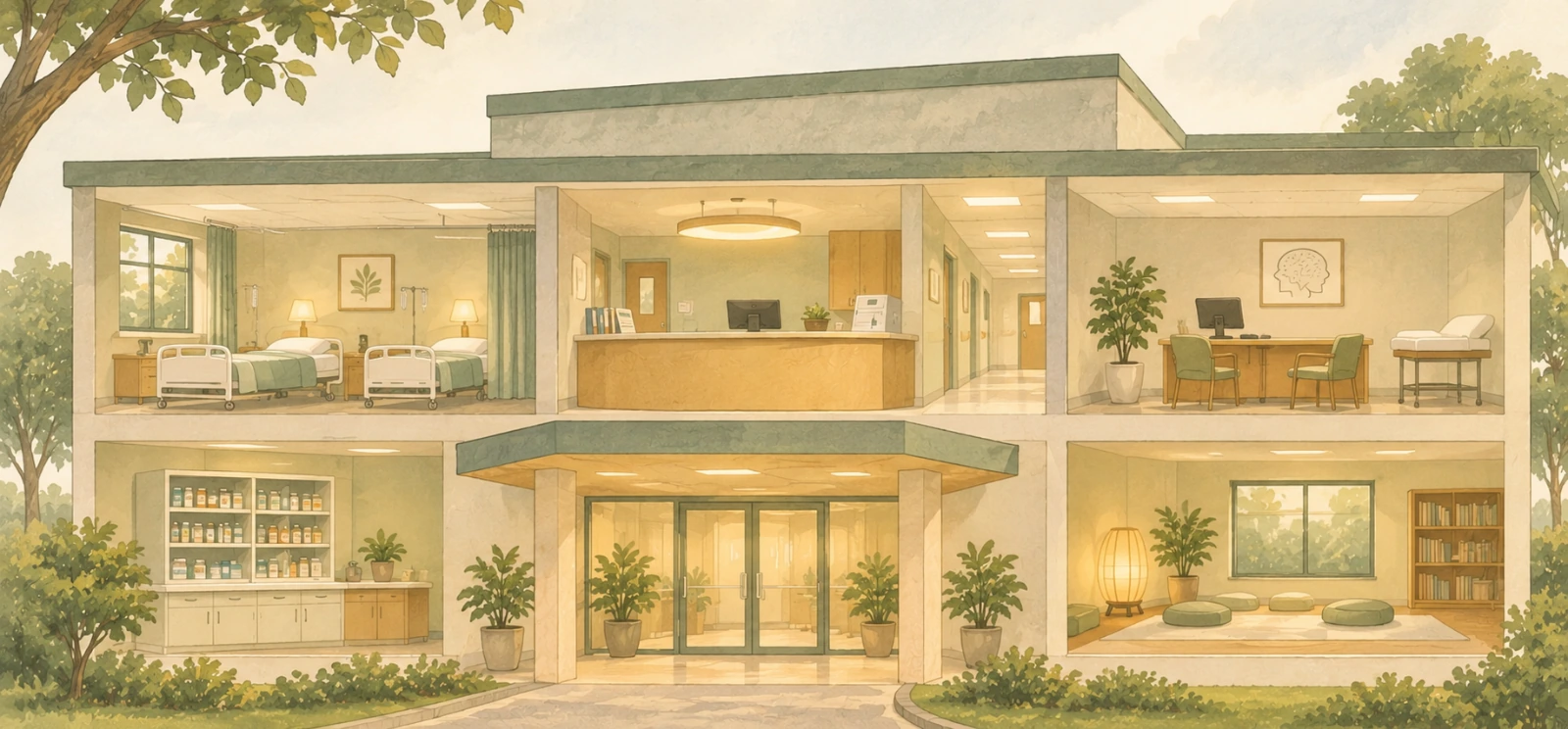
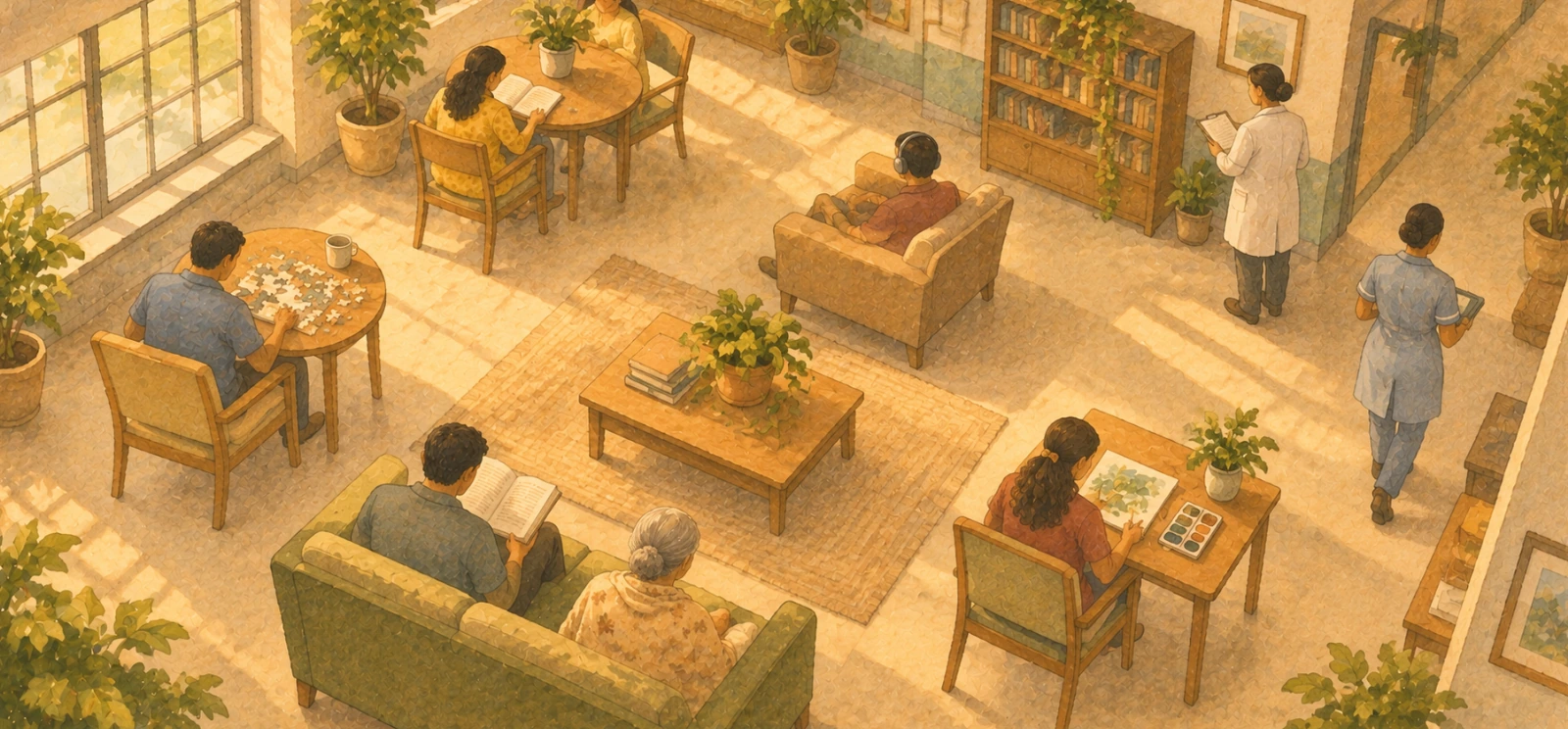
Forget the old images. A well-run ward looks a lot like a medical ward, with more routine.
Routine is part of the treatment. Severe illness scrambles sleep, meals and time. A steady day helps the brain settle.
The team is wider than most families expect. Under the Act, these roles need set training (Source: Mental Healthcare Act, 2017, Section 2 — qps.nhsrcindia.org).
Psychiatrists find the diagnosis, prescribe and lead the plan.
Clinical psychologists test, assess and give therapy.
Mental health nurses give medicine and watch for changes day and night.
Psychiatric social workers link the patient with family, work and support.
A day runs roughly like this, though each hospital has its own plan.
Wake up, wash and take morning medicine.
Eat breakfast, then a nurse checks sleep and mood.
Meet the doctor on the ward round.
Go to one-on-one or group therapy.
Have lunch and rest.
Do something active, like art, games, yoga or a walk.
See or call family, if that is part of the plan.
Have dinner, take night medicine and go to bed on time.
At our own centres, a day often starts with yoga or meditation. Doctor and therapy sessions then run through the day (Source: Ganaa FAQ, 2026 — ganaa.in).
Treatment is usually a blend. Medicine calms the worst symptoms. Therapy helps the person make sense of them. Family sessions get the home ready.
Some severe cases need ECT, a treatment that uses a brief electric current. Done right, it is given with anaesthesia and a muscle relaxant. The old way without these is now banned (Source: Mental Healthcare Act, 2017, Section 95 — qps.nhsrcindia.org).
What about daily life? The law goes into more detail here than most people know.
Patients have the right to wear their own clothes. They cannot be forced into uniforms. Forced head shaving is not allowed. No one can be made to work (Source: Mental Healthcare Act, 2017, Section 20 — qps.nhsrcindia.org).
Those details matter. They were once a common part of life in these places.
One more thing is special to India. In general hospital units, a family member often stays with the patient (Source: General hospital psychiatry in India, Indian Journal of Psychiatry, 2018 — pmc.ncbi.nlm.nih.gov).
Some mental hospitals do the same (Source: Chadda, BJPsych International, 2019 — ecoi.net).
Q: Can family visit someone in a mental hospital?
A: Yes, in most cases. The law gives patients the right to receive or refuse visitors and calls at reasonable times, within each hospital's norms (Source: Mental Healthcare Act, 2017, Section 26 — qps.nhsrcindia.org). Early on, a team may advise a slow start.
Mental Hospital vs Rehab vs Psychiatric Ward
These three words get mixed up all the time. The gaps between them are real, and they shape what you should look for.
Mental hospitalRehab centrePsychiatric wardWhat it isHospital only for mental illnessLive-in plan for longer recoveryUnit inside a general hospitalBest forSevere illness, crisis, risk of harmRebuilding routine, skills and sobrietyShort stays, and body illness tooMain focusSafety and calming symptomsTherapy, habits and life skillsQuick care and reviewUsual lengthDays to monthsWeeks to monthsDays to weeksFamily roleVaries by hospitalFamily sessions are commonA relative often stays on the ward
The lines blur in real life. Many centres now do more than one of these jobs. A hospital may have a rehab wing. A rehab may run an acute unit.
Units in general hospitals are now a main source of mental health care in India (Source: General hospital psychiatry in India, Indian Journal of Psychiatry, 2018 — pmc.ncbi.nlm.nih.gov).
They have one clear plus. They sit beside other doctors, so a heart or liver problem can be treated at the same time.
They have a limit too. They are built for short stays. Someone who needs months of steady work may need a different place.
So do not choose by the name on the board. Choose by what the person needs next.
Here is a simple way to think about it.
If the person is in danger today, they need acute care now.
If the crisis has passed but life has not restarted, they may need rehab.
If they can stay safe at home, a clinic may be enough.
A: No. Rehab also helps people recovering from conditions like schizophrenia and bipolar disorder. It helps them rebuild daily routines, confidence and work skills once the crisis ends.
How Admission, Rights and Going Home Work
Under the Act, a patient is not just a case file. Patients in mental hospital care now have rights, and a hospital must respect them.
Admission comes in two main types.
Independent admission. The adult agrees to come in. The law says stays should be of this kind as far as possible (Source: Mental Healthcare Act, 2017, Section 85 — qps.nhsrcindia.org).
Supported admission. The person is too unwell to decide, and there is serious risk. Two people must examine them separately, and one must be a psychiatrist. This kind of stay is limited to thirty days at first (Source: Mental Healthcare Act, 2017, Section 89 — qps.nhsrcindia.org).
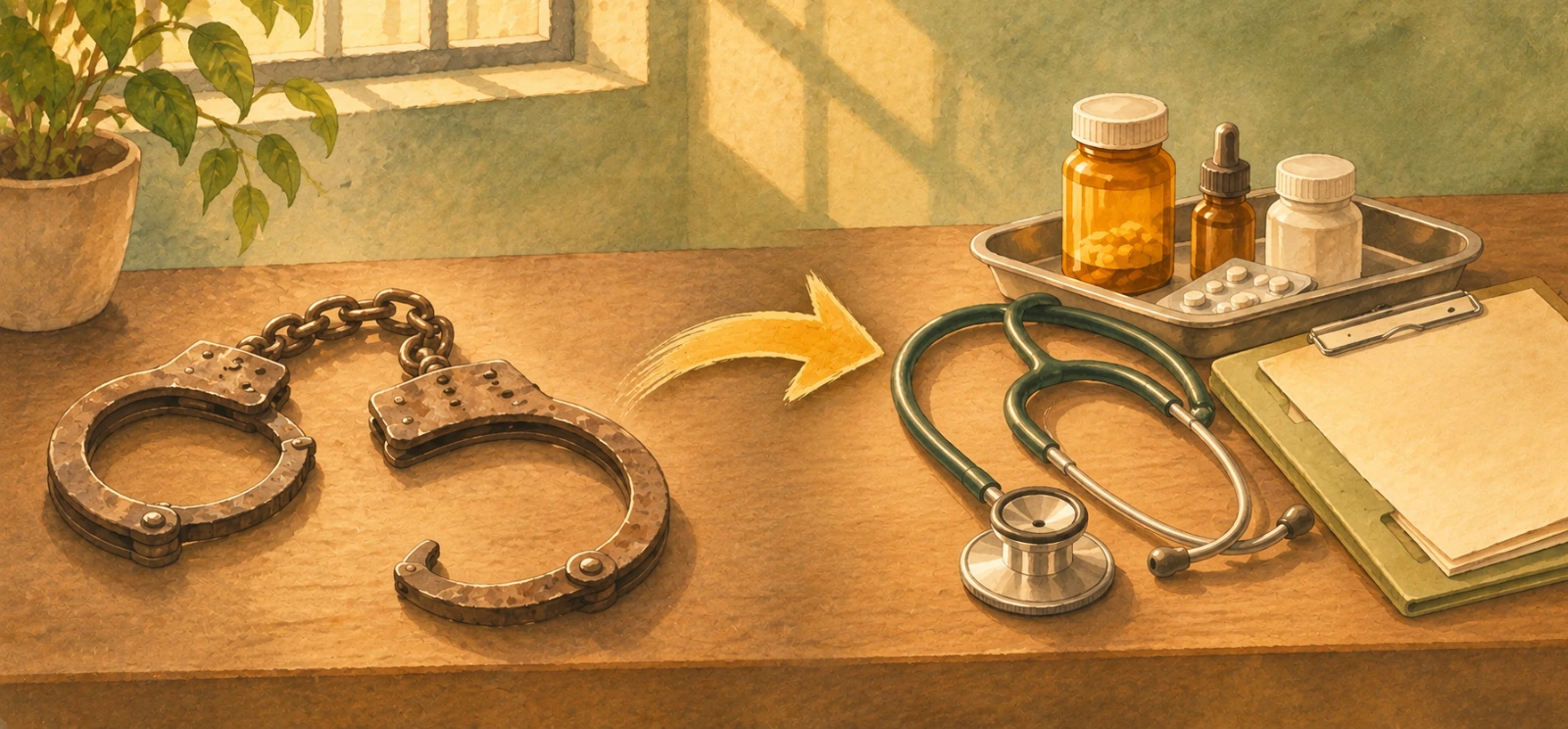
Chaining is banned in any form (Source: Mental Healthcare Act, 2017, Section 95 — qps.nhsrcindia.org).
Solitary confinement is banned too (Source: Mental Healthcare Act, 2017, Section 97 — qps.nhsrcindia.org).
Physical restraint is allowed only as a last resort, to stop harm right now. A psychiatrist must approve it, and it can never be a punishment (Source: Mental Healthcare Act, 2017, Section 97 — qps.nhsrcindia.org).
The person's nominated representative must be told within twenty-four hours (Source: Mental Healthcare Act, 2017, Section 97 — qps.nhsrcindia.org).
Patients also have the right to know their diagnosis and plan, in a language they can follow (Source: Mental Healthcare Act, 2017, Section 22 — qps.nhsrcindia.org).
If something goes wrong, there is a route. A complaint can go to the person in charge, then the Review Board, then the State Authority (Source: Mental Healthcare Act, 2017, Section 28 — qps.nhsrcindia.org).
Each hospital must put up the Board's contact details (Source: Mental Healthcare Act, 2017, Section 72 — qps.nhsrcindia.org).
Then comes leaving, which is the point of it all.
An independent patient can ask to leave. Staff can hold that back for up to twenty-four hours, and only if strict risk tests are met (Source: Mental Healthcare Act, 2017, Section 88 — qps.nhsrcindia.org).
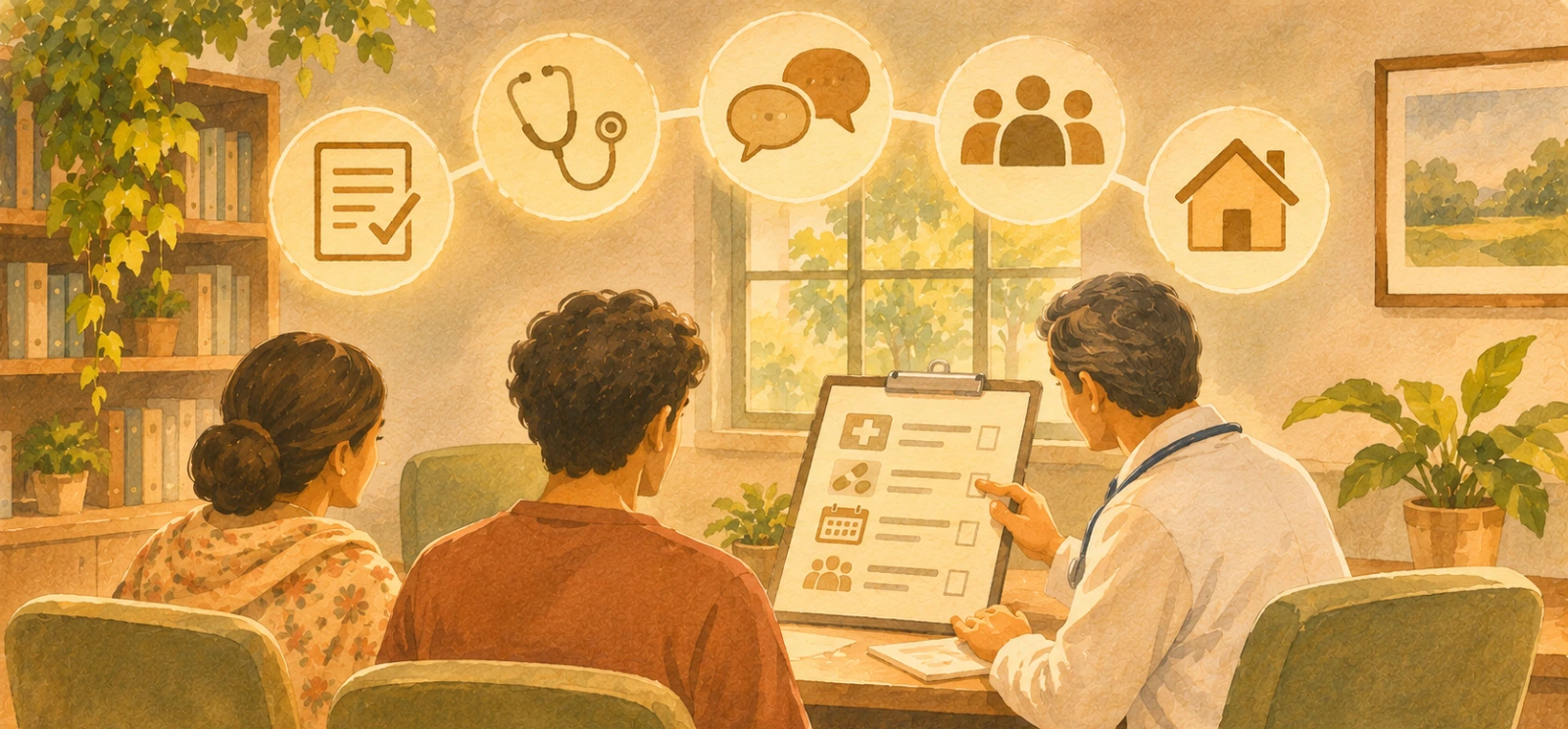
Going home should be planned. The doctor must talk to the patient, the family and whoever will give care at home (Source: Mental Healthcare Act, 2017, Section 98 — qps.nhsrcindia.org).
Aftercare is where a good stay holds or falls apart. That means follow-up visits, medicine, therapy and a watchful family.
Going home is the start of the next stage. It is not the end of treatment.
Q: Can a family leave a patient in a mental hospital forever?
A: It should not happen. The Act says no one should remain in a hospital just because a family will not accept them. The government must also support their return to the community (Source: Mental Healthcare Act, 2017, Section 19 — qps.nhsrcindia.org).
Why Standards Still Vary, and What to Check
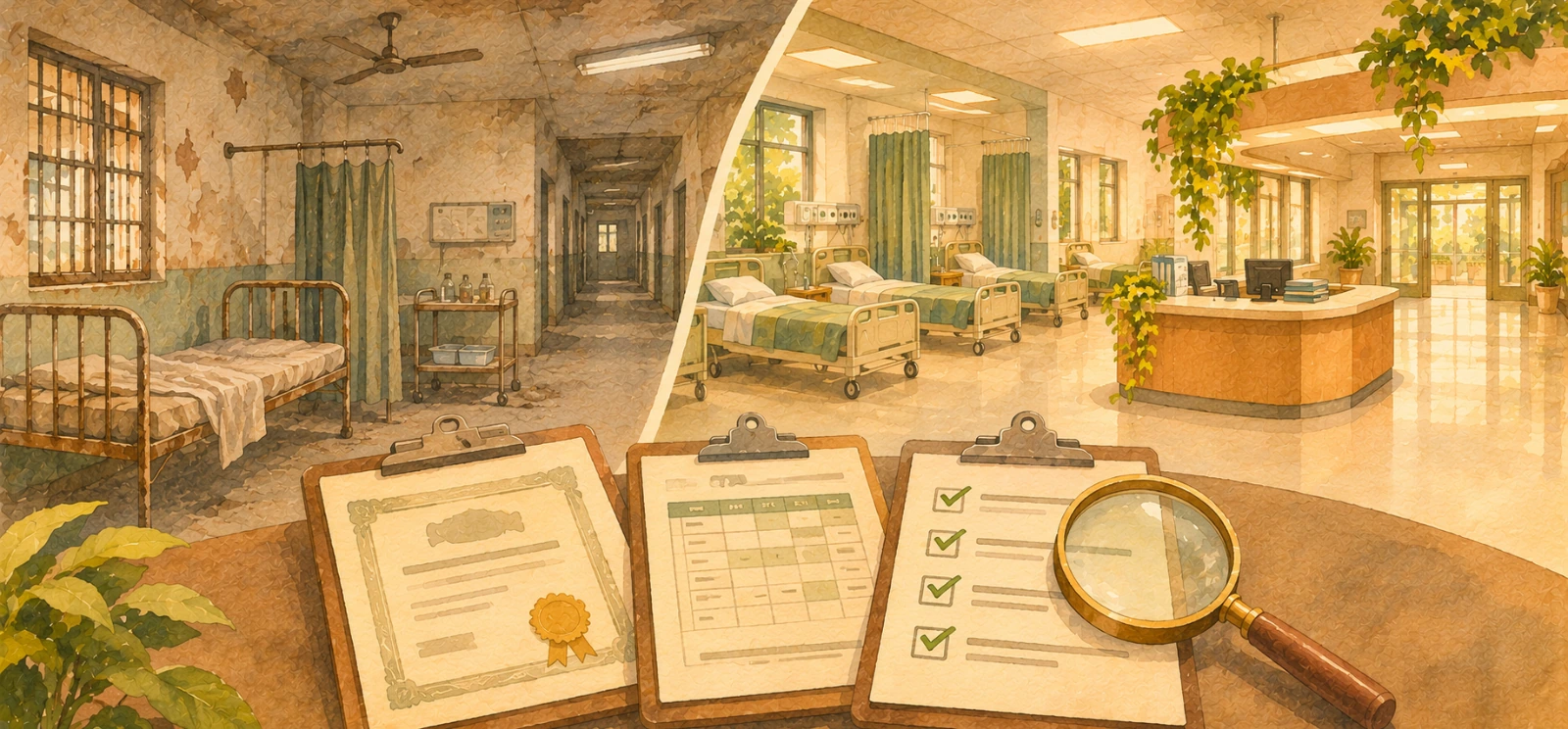
We would mislead you if we said each mental hospital is now a good one. Some are not.
State-run hospitals have improved. A 2016 review counted 47 of them, with 18,307 beds, and saw big gains in many (Source: Murthy et al., Epidemiology and Psychiatric Sciences, 2017 — cambridge.org).
But in 2023 the National Human Rights Commission called all 46 it reviewed inhuman and deplorable (Source: Scroll, 2023 — scroll.in).
It also cited an acute shortage of doctors and staff (Source: Scroll, 2023 — scroll.in).
Its chairperson later said more than 2,000 cured patients were still in mental hospitals (Source: Deccan Herald, 2023 — deccanherald.com).
That is the group we spoke of. They got better, yet they had nowhere to go.
Beds are scarce too. One review put India at 2.15 beds per 100,000 people, against a world ratio of 6.5 (Source: Murthy, Indian Journal of Psychiatry, 2016 — pmc.ncbi.nlm.nih.gov).
And the courts are still watching. In October 2025, the Supreme Court told the Commission to monitor how the Act is carried out (Source: National Herald, 2025 — nationalheraldindia.com).
None of this means you should fear each hospital. It means you should look before you trust.
Start with the basics. Each such place must be registered with the Authority (Source: Mental Healthcare Act, 2017, Section 65 — qps.nhsrcindia.org).
Then ask to visit. Ask how many doctors work there. Ask how restraint is used. Ask how you will get news of your relative.
If you ever see a person in chains, that breaks the law. Please report it.
Q: What should I do if a loved one is in crisis tonight?
A: If there is immediate danger, go to the nearest hospital emergency. You can also call the Tele-MANAS helpline on 14416 (Source: Tele-MANAS, Ministry of Health and Family Welfare, 2026 — telemanas.mohfw.gov.in). Our own helpline is +91 8750075006, at any hour.
Quick Facts: Mental Hospitals in India
Asylums across India were renamed mental hospitals in 1920 — (Source: Daund et al., Indian Journal of Psychiatry, 2018 — pmc.ncbi.nlm.nih.gov).
A 1946 survey covered 19 mental hospitals with 10,181 beds — (Source: Murthy et al., Epidemiology and Psychiatric Sciences, 2017 — cambridge.org).
A 2016 review counted 18,307 beds in 47 state-run institutions — (Source: Murthy et al., Epidemiology and Psychiatric Sciences, 2017 — cambridge.org).
The Mental Healthcare Act bans chaining, in any manner or form — (Source: Mental Healthcare Act, 2017, Section 95 — qps.nhsrcindia.org).
In one South Indian hospital unit, the median stay was 14 days — (Source: Industrial Psychiatry Journal, 2022 — pmc.ncbi.nlm.nih.gov).
How Ganaa Approaches Inpatient Care
We have worked in mental health care in India since 2012 (Source: Ganaa, 2026 — ganaa.in).
Our care is built on one belief. A hospital should feel like a place of healing, not a place to hide.
We run five hospitals and rehabs, in South Delhi, Chattarpur, Gurugram, Greater Noida and South Goa. A sixth is opening soon in Lonavala (Source: Ganaa, 2026 — ganaa.in).
Each centre has its own feel. You can compare them on our centres page.
Our live-in centres have a 2:1 staff-to-client ratio, with 24/7 medical and psychiatric support (Source: Ganaa, 2026 — ganaa.in).
We take both voluntary and involuntary stays, from supervised detox to intensive psychiatric care (Source: Ganaa, 2026 — ganaa.in).
The choice to admit follows a full check by a psychiatrist or clinical psychologist. They look at how severe things are, safety, and the need for structure (Source: Ganaa FAQ, 2026 — ganaa.in).
Families stay in the picture. A psychologist gives regular updates, and you also get daily WhatsApp updates (Source: Ganaa FAQ, 2026 — ganaa.in).
Discharge is planned by the medical team, the patient and the family together (Source: Ganaa FAQ, 2026 — ganaa.in).
Post-care includes regular reviews with a psychiatrist and therapy sessions (Source: Ganaa FAQ, 2026 — ganaa.in).
After a crisis, our psychiatric rehabilitation care helps people rebuild routine, confidence and daily skills.
We also run five clinics, for care that does not need a stay (Source: Ganaa, 2026 — ganaa.in).
They are in Greater Kailash II, Gurugram, Greater Noida, Faridabad and Panaji (Source: Ganaa, 2026 — ganaa.in).
Not all people need to be admitted, and we will tell you if that is the case.
If you are unsure, talk to us before you decide. A short chat can make the next step clear.
Speak to a Ganaa counsellor on +91 8750075006, or write to info@ganaa.in. You can also book a consultation at ganaa.in/booking.
Conclusion: A Place of Care, Not a Place to Hide
So what is a mental hospital today? It is a hospital. People go there when an illness has become too heavy or too risky to manage at home.
The old asylum was built to keep people out of sight. The modern hospital is meant to send them home.
That change took more than a century. It took new laws, court orders and a terrible fire to force it.
The change is not done. Some places still fall short. Some people are still left behind.
But you now know what to expect. You know the rights a patient has. You know that chains are illegal, that restraint has strict limits, and that going home must be planned.
That knowledge protects the person you love.
If someone in your family needs this level of care, please do not let an old word stop you.
The fear is real. The stigma is real. But an illness left alone is often the bigger danger.
Ask questions. Visit first. Stay close.
A stay in hospital is one chapter of a life, not the whole story. Most people who go in come back out. They come back to the people who waited.
Drop the word asylum. Use the word care. Then take the next step.
FAQ
Q: What is the difference between a mental hospital and a mental asylum?
A: A mental asylum was an old, lock-up-first place built to keep people away from the public. A mental hospital is meant to treat people and send them home. The word asylum is now out of date in India.
Q: Who needs to go to a mental hospital?
A: A person may need one when they are at risk of harming themselves or others. It may also help when they cannot care for themselves. A psychiatrist decides after a full check, and many conditions need no stay at all.
Q: How long do people stay in a mental hospital?
A: It depends on the illness and the place. In one long Indian study of a general hospital unit, the median stay was two weeks. Some people need longer, mainly with severe psychotic or mood disorders.
Q: Can someone be admitted to a mental hospital against their will?
A: Yes, but only under strict rules. The Mental Healthcare Act allows a supported stay when a person cannot decide and there is serious risk. Two people must examine them, and one must be a psychiatrist.
Q: Are patients tied up in mental hospitals?
A: Chaining is banned in India, and so is solitary confinement. Physical restraint is allowed only as a last resort to stop harm right now. A psychiatrist must approve it, and it can never be a punishment.
Q: Can patients keep their phones and clothes in a mental hospital?
A: Patients have the right to wear their own clothes and make calls at reasonable times, within the hospital's norms. Phone rules vary by hospital and by how unwell the person is. Ask about this before admission.
Q: Is going to a mental hospital something to be ashamed of?
A: No. Going to hospital for a mental illness is like going for a heart problem. It means someone took the illness seriously and got help.
Psychologist price in India, checked: what 139 public listings show, why fees differ, what a full course costs, and the free and low-cost routes to try first.
Psychologist kya hai? Learn the meaning, what a psychologist does, how to check RCI registration, what a first session is like, and when to see one in India.