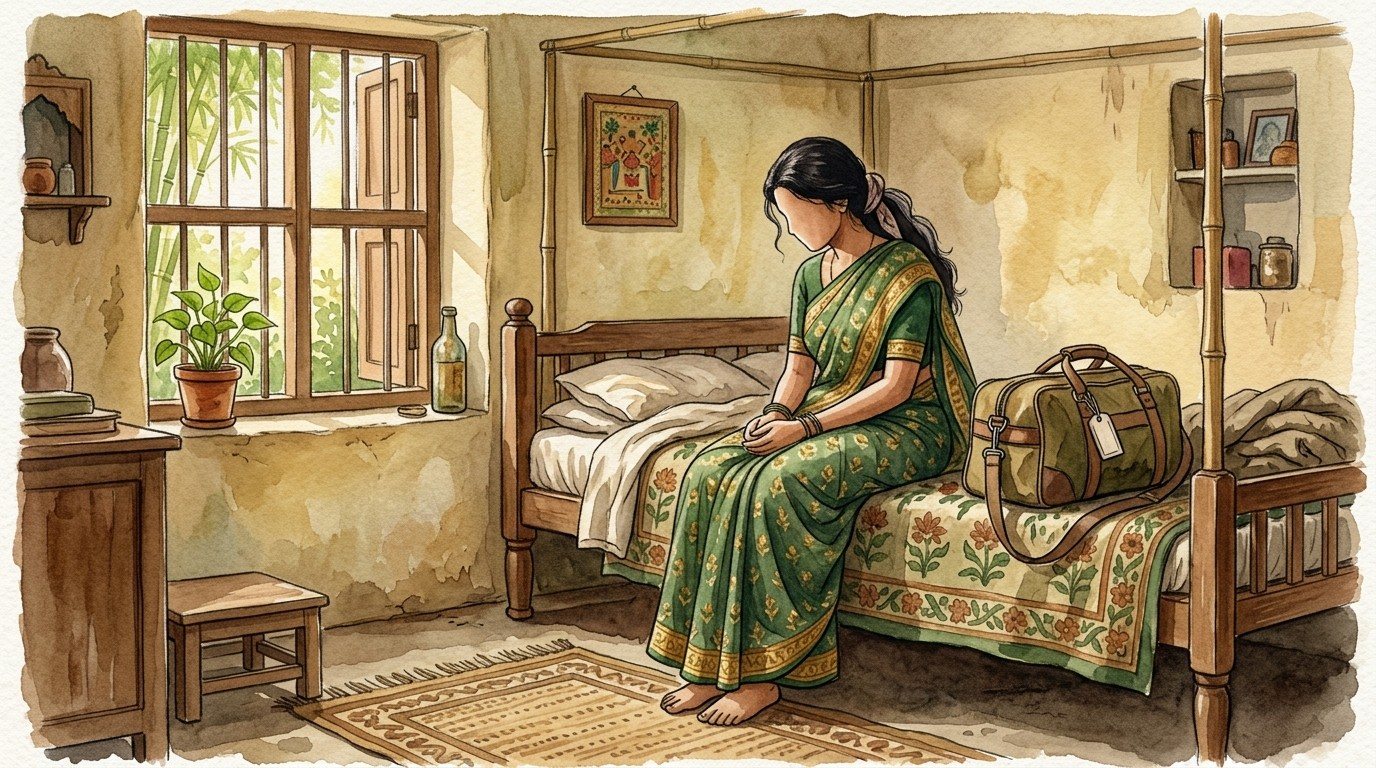
Thinking of leaving rehab early? Learn the real risks, your rights, what AMA discharge means, and safer ways to act on the urge to go home.
The urge to leave rehab early hits almost everyone. One hard day. One bad night. And the door starts to look like the answer.
You are not weak for feeling it. You are human.
But what actually happens if you walk out? That is the real question. And the honest answer matters more than a pep talk.
Leaving rehab early is a medical decision. It is also a legal one. It changes your relapse risk, your money, and your next steps.
This guide walks through all of it. Your rights. The AMA discharge process. The risks backed by data. And safer ways to handle the urge when it comes.
We write this as clinicians, not as a sales pitch. Some people genuinely need to leave. Most who want to leave are simply in a hard moment that will pass.
Let us help you tell the difference.
Can You Leave Rehab Anytime You Want?
Short answer. In most private rehab centres in India, yes.
You are usually an informal, voluntary patient. That means you can ask to leave.
A good centre does not lock you in. It is a treatment facility, not a prison.
But "can you leave rehab anytime" has a few real limits. Knowing them protects you.
The first limit is the law itself. If you were admitted under a court order, the rules change. You cannot simply walk out.
The second limit is capacity. If a doctor judges that you cannot make a safe decision right now, the Mental Healthcare Act, 2017, sets out a careful process. This protects you, not punishes you.
The third limit is age. Rules differ for minors, where a guardian decides.
There is a fourth thing worth naming. Detox.
If you are still in active withdrawal, the team may urge a short delay. Not to trap you. To keep you safe through the riskiest hours.
This is a clinical caution, not a lock on the door. You can still choose to go.
For most adults in a voluntary programme, though, you keep the right to go. That right comes with a process called an AMA discharge.
Think of it as a checkpoint, not a barrier. It slows the decision down. It does not block it.
Q: Can you leave rehab anytime, or do you need permission?
A: As a voluntary adult patient you do not need permission to leave. You do need to complete an AMA sign-out so the team can record the risks and plan your safety. Permission is not the issue. Safety is.
What "Signing Out of Rehab" Actually Means
Signing out of rehab in India usually means an AMA discharge. AMA stands for against medical advice.
It is a formal step. Not a dramatic one.
You tell the team you want to go. They explain the risks. You sign a form saying you understood them.
The form is not a trap. It is a safety record.
It protects you and the centre. It also forces a pause, so the decision is made with a clear head.
Discharge against medical advice is common across Indian hospitals, not just rehabs. One Indian neonatal study put the rate as high as 25.4%, often driven by money worries rather than recovery (Source: Indian Journal of Community Medicine, 2016 — pmc.ncbi.nlm.nih.gov).
That detail matters. Many people sign out for reasons that have a fix, like cost or a family crisis.
A good team will ask why. Then they will look for a solution before you leave.
So what does the sign-out actually involve? A short conversation, then a form.
The clinician explains the risks of going now. They note your reasons. You confirm you understood.
You may also get a safety plan on the way out. Emergency contacts. Warning signs. A number to call.
Take that plan seriously. It is built for the days when the urge to use returns.
Q: Is signing out of rehab in India a complex legal process?
A: For a voluntary adult, no. You complete an AMA form, the team records your reasons, and you go. The paperwork is brief. The conversation around it is the part that matters most.
Your Rights Inside an Indian Rehab
You keep your rights when you enter rehab. You do not hand them at the door.
The Mental Healthcare Act, 2017, sets the floor.
You have a right to know your diagnosis. A right to know your treatment plan. A right to refuse a specific treatment in most cases.
You also have a right to dignity. No abuse. No being kept in secret.
And yes, you have a right to seek discharge. An informal patient can ask to leave at any reasonable time.
There is one important balance here. The same law allows brief, supported admission when someone cannot keep themselves safe. This is rare and tightly controlled.
So your rights are strong. They are not unlimited when life is in danger.
Knowing this calms a lot of fear. You are not stuck. You are also not abandoned.
Ask questions freely. A good centre welcomes them.
What is my diagnosis? What is the plan? How long is the core stay? You deserve clear answers.
It helps to ask for your rights in writing. Most centres will share them.
Read them on day one, not in a crisis. A calm read now saves a panicked one later.
You can also name a nominated representative. This is someone you trust to speak for you.
The Mental Healthcare Act, 2017, gives you that choice. Use it early.
Q: What are my rights if I want to leave a rehab in India?
A: You have the right to seek discharge, to know your treatment plan, and to be treated with dignity under the Mental Healthcare Act, 2017. The main limit is an acute safety risk, where the law allows short, supervised care. Ask the treating psychiatrist to explain how this applies to you.
What Happens to Your Body When You Leave Early
This is the part people skip. They should not.
Leaving rehab early can carry a physical risk. The risk depends on the substance.
With alcohol and some sedatives, the danger is withdrawal. A medically managed detox keeps you safe. Leaving mid-detox removes that safety net.
Alcohol is the most used psychoactive substance in India. About 14.6% of people aged 10 to 75 use it. 2.7% are dependent (Source: National Drug Use Survey, 2019, summarised in IJP — pmc.ncbi.nlm.nih.gov).
Dependence changes everything. The body adapts. A sudden stop, or an unsupervised return to drinking, can swing dangerously.
There is a second hidden danger. Tolerance.
After days without a substance, your tolerance drops. If you leave and use the old amount, the risk of overdose rises sharply.
This is one of the cruellest traps in recovery. Your body is cleaner, so it is more vulnerable.
The dose that felt normal last month can now overwhelm you. That is why a planned exit matters so much.
This is well documented. Studies show leaving care against medical advice links to worse health outcomes and higher mortality over the following year (Source: Journal of General Internal Medicine, 2018 — pmc.ncbi.nlm.nih.gov).
So the body keeps a memory of dependence. But it forgets your old tolerance fast.
That gap is where the harm lives.
There is one more layer. Mental health.
Many people in rehab also carry anxiety, depression, or trauma. This is called dual diagnosis.
Leave early, and those conditions stay raw. The very feelings that drove use are still loud.
That is why a clean detox alone rarely holds. The mind needs care too.
Q: Is it physically dangerous to leave rehab early?
A: It can be, especially with alcohol or sedatives, where withdrawal needs medical cover. A dropped tolerance also raises overdose risk if you return to your old dose. Never act on the urge without telling your clinician first.
The Relapse Risk Nobody Warns You About
Here is the number that changes minds.
Relapse is most likely right after treatment. Roughly 40 to 60% of people relapse within the first weeks of leaving inpatient care (Source: factors-in-relapse review, IJP — pmc.ncbi.nlm.nih.gov).
Now picture leaving before treatment is even done. The skills are half-built. The triggers are still raw.
Early exit stacks the odds against you.
Why? Because the hardest work comes after detox. Detox clears the body. Therapy rebuilds the mind.
You learn to spot a trigger. To sit with a craving. To call for help before you act.
These skills take weeks to set. Leave early, and you leave them behind.
There is also the question of length. Research is blunt here.
For most people, treatment shorter than 90 days is of limited value. Better outcomes come with longer stays (Source: NIDA Principles of Drug Addiction Treatment, 3rd ed — nida.nih.gov).
That does not mean a short stay is worthless. It means the gains are fragile without follow-through.
Aftercare can hold those gains. But only if you stay long enough to build them in the first place.
Q: Does leaving rehab early raise my relapse risk?
A: Yes, sharply. Relapse risk peaks in the weeks after leaving, and an early exit means fewer coping skills are in place. Staying through the core programme, then into aftercare, is what protects the early wins.
Here are the headline numbers worth keeping in view. [internal link: related Ganaa blog on how long rehab takes].
Quick Facts: Leaving Rehab Early
- About 40 to 60% of people relapse within the first weeks after leaving inpatient care. (Source: relapse-factors review, Indian Journal of Psychiatry — pmc.ncbi.nlm.nih.gov).
- Treatment shorter than 90 days is of limited value for most people; longer stays work better. (Source: NIDA Principles of Drug Addiction Treatment, 3rd ed — nida.nih.gov).
- Leaving care against medical advice is linked to worse outcomes and higher one-year mortality. (Source: Journal of General Internal Medicine, 2018 — pmc.ncbi.nlm.nih.gov).
- In one Indian study, discharge against medical advice reached 25.4%, often driven by cost. (Source: Indian Journal of Community Medicine, 2016 — pmc.ncbi.nlm.nih.gov).
- India's treatment gap for mental disorders runs as high as 70 to 92%, so dropping out widens an already wide gap. (Source: National Mental Health Survey 2016, NIMHANS — pmc.ncbi.nlm.nih.gov).
The Money Question: Refunds and AMA Discharge
Money drives more early exits than people admit.
In one large Indian review of AMA discharge, cost was a leading reason families chose to leave (Source: Indian Journal of Community Medicine, 2016 — pmc.ncbi.nlm.nih.gov).
So let us be practical about it.
What happens to your money when you sign out of rehab early? It depends on the contract.
Many programmes do not refund unused days. You paid for a block. You used part of it. The rest may not come back.
Some centres run a payment plan. Leaving early can make the full balance due at once.
This is not meant to trap you. It reflects how a residential bed is reserved and staffed.
But it is fixable. Talk to the counsellor first.
Ask about a step-down to a cheaper level of care. Ask about a shorter inpatient block plus outpatient follow-up. Ask about a payment timeline.
A day-clinic option may also exist. You sleep at home and attend by day.
This costs less than a residential bed. For some people, it is a real middle path.
Put every option on the table before you sign out. Money rarely needs to be the reason you relapse.
Most centres would rather adjust your plan than lose you to relapse.
Insurance is worth a check too. Some Indian health plans now cover mental health care.
The Mental Healthcare Act, 2017, pushed insurers in that direction. Ask your centre to help you file.
A delayed claim is not the same as no cover. Money pressure often eases once the paperwork moves.
Q: Will I get a refund if I leave rehab early in India?
A: Often not for the unused days, since the bed and staffing were reserved for you. Some plans also make the full balance due on early exit. Always read the admission agreement and ask about lower-cost step-down options before you decide.
What an AMA Discharge Means for Future Care
People worry that an AMA discharge follows them forever. Let us clear that up.
It is a clinical record. It is not a criminal one.
The centre notes that you left against advice. That note stays in your file.
It does not appear on a police check. It does not block your job, in itself.
But it can matter later, in one specific way. If you seek treatment again, the new team will read it.
That is a good thing, not a punishment. They learn what went wrong last time.
They can then change the plan. Maybe a different setting. Maybe more family support. Maybe a slower start.
Many people return to treatment after an AMA exit. In fact, those who leave substance care early often re-enter within weeks (Source: Discharges Against Medical Advice review, JGIM — pmc.ncbi.nlm.nih.gov).
So an early exit is rarely the end of the story. It is often a chapter, not the close.
The record helps the next chapter go better.
One more worry comes up a lot. Shame.
People fear the team will judge them for leaving. A good team does not.
Relapse and early exit are part of many recovery journeys. Clinicians know this well.
You can always come back. The door that you walked out of is rarely locked behind you.
Q: Does signing out of rehab in India affect my future treatment?
A: It stays in your clinical file but not on any public record. A future care team will use it to plan a safer, better-fitted approach. Treat it as information, not a black mark.
Safer Ways to Handle the Urge to Leave
The urge to leave is a signal, not an order. Treat it that way.
Here is a simple, clinician-backed sequence to use in the moment.
Name it out loud. Tell a counsellor you want to leave. Say it plainly.
Ask for a 24-hour pause. Agree to make no decision until tomorrow.
Find the real trigger. Was it a phone call? A craving? A fight? Name the spark.
Write two lists. One for why you came. One for what leaving costs.
Call your support person. Family, sponsor, or a trusted friend.
Most urges fade once the trigger is named. The panic peaks, then it drops.
Cravings work in waves. They rise, crest, and fall.
The crest rarely lasts beyond twenty minutes. Ride it out, and it passes.
This is why the 24-hour pause works so well. It outlasts the wave every time.
Try a grounding step too. Slow breathing. A short walk. A glass of water.
These are not tricks. They buy your thinking brain time to come back online.
A simple breath count helps. Breathe in for four. Hold for four. Out for four.
Do it for two minutes. The body softens. The urge loses its grip.
You can also name five things you see. Then four you can touch. Then three you can hear.
This pulls you out of the spiral. It anchors you in the room, not the craving.
Keep one more rule in mind. Do not decide alone.
A craving lies. It tells you that leaving is the only relief. A second voice breaks that spell.
If the urge is about something fixable, fix that. Homesickness, boredom, a clash with a roommate, money fears. Each has a path that is not the exit.
And if you still feel you must go, go through the team. Never slip out unsupervised, especially during detox.
A supported, planned discharge is far safer than a midnight exit.
Q: What is the safest thing to do when I want to leave rehab right now?
A: Pause, tell your counsellor, and agree to wait 24 hours before deciding. Name the trigger and call your support person. If you still choose to go, do it through the team with a safety and aftercare plan in place.
How Ganaa Helps When You Want to Walk Out
At Ganaa, we treat the urge to leave as a clinical event. Not a failure.
When it shows up, our team leans in. We do not lock doors. We open conversations.
Ganaa runs five residential centres across India. Ganaa Delhi I and Ganaa Delhi II in Chhatarpur. Ganaa Gurugram, with a women-only wing. Ganaa Goa, by the river in the south. And Ganaa Greater Noida.
We also run three day clinics. Ganaa Mental Health Clinic in Faridabad, in Greater Kailash, and in Greater Noida.
This spread matters for early-exit worries. If the inpatient level feels too heavy, we can step you down. A shorter residential block. Then outpatient follow-up close to home.
Our programmes blend modern clinical care with calm, nature-based settings. CBT, DBT, and neurofeedback sit alongside yoga, meditation, and Ayurvedic support.
We build a tailored plan with you, not at you. If money is the trigger, we look at options together. If homesickness is the trigger, we widen family contact.
Our care runs across 30, 60, and 90-day residential tracks, plus structured aftercare. That aftercare is the bridge that holds early gains.
We treat dual diagnosis too. So the anxiety or depression under the use gets care, not just the use itself.
Families are part of the work here. We coach them to support, not to police.
That matters when the urge to leave strikes. A calm family call can hold a wobble.
You stay an adult with rights here. You also stay supported, day and night.
Speak to a Ganaa admissions counsellor before you act on the urge to leave. Visit ganaa.in to learn how our programmes work.
Conclusion: A Pause Beats a Door
Leaving rehab early is your right. It is also a real risk worth pausing for.
The urge to go is normal. Almost everyone feels it. Acting on it without a plan is where the danger lies.
You now know the picture. Relapse risk peaks right after leaving. Withdrawal and dropped tolerance can harm the body. Money rules vary, and an AMA note stays in your file.
But none of that has to decide for you. A 24-hour pause often does.
Name the trigger. Talk to your team. Fix what can be fixed. Then choose with a clear head.
If you must leave, leave safely and through the team, with aftercare in place. A planned exit beats a midnight one every time.
And if you are ready to stay, stay long enough to build the skills that hold. That is where lasting recovery is made.
Recovery is not a straight line. There will be hard days inside treatment too.
The goal is not to feel good every hour. The goal is to stay safe while the work gets done.
When you need a steady hand, reach out to a Ganaa clinician. The next right step is rarely the door.
FAQ
Q: Can you leave rehab anytime you want? A: In most private rehab settings in India, yes. You usually cannot be held against your will. You sign out against medical advice, called an AMA discharge. The main exception is treatment under a court order or certain provisions of the Mental Healthcare Act.
Q: What does AMA discharge from rehab mean? A: AMA stands for against medical advice. It means you chose to leave before your care team felt it was safe. You sign a form stating you understand the risks. The centre keeps a record of it.
Q: What happens to your money if you leave rehab early? A: It depends on the contract you signed. Many programmes do not refund the days you did not use. Some run on a payment plan that becomes due in full. Read the admission agreement and ask the counsellor before you decide.
Q: Is leaving rehab early dangerous? A: It can be. Relapse risk is highest in the first weeks after leaving. For alcohol and some drugs, an unsupervised return to use can be physically risky. Always talk to your clinician before you act on the urge to go.
Q: Can my family force me to stay in rehab in India? A: Usually not for an informal adult admission. An adult with capacity can sign out. Involuntary admission has strict legal limits under the Mental Healthcare Act, 2017. Speak to the treating psychiatrist about your specific situation.
Q: What should I do if I want to leave rehab right now? A: Pause. Tell your counsellor exactly what you feel. Ask for a 24-hour delay before any decision. Most urges to leave pass once the trigger is named and the panic settles.
Q: Does leaving rehab early go on a permanent record? A: The centre keeps a clinical record of your AMA discharge. It is not a public criminal record. It may matter if you seek admission again, since the new team will want to understand what happened.
Bipolar misdiagnosed as depression is common, and the delay runs close to nine years. Learn the clues, why hypomania is missed, and how to get a better review.
Adolescent mental health in India is under-treated. Learn 11 warning signs parents miss, what the data shows, how to start the talk, and when to seek help.
Gaming disorder in teens is a real diagnosis, not a phase. Learn the WHO criteria, how common it is, the signs parents miss, and what actually works at home.