How Long Does Postpartum Depression Last, and When to Worry?
How long does postpartum depression last, and when should you worry? Learn PPD symptoms, the baby blues timeline, and when a new mother needs help in India.
How Long Does Postpartum Depression Last, and When to Worry?
Having a baby is meant to feel joyful.
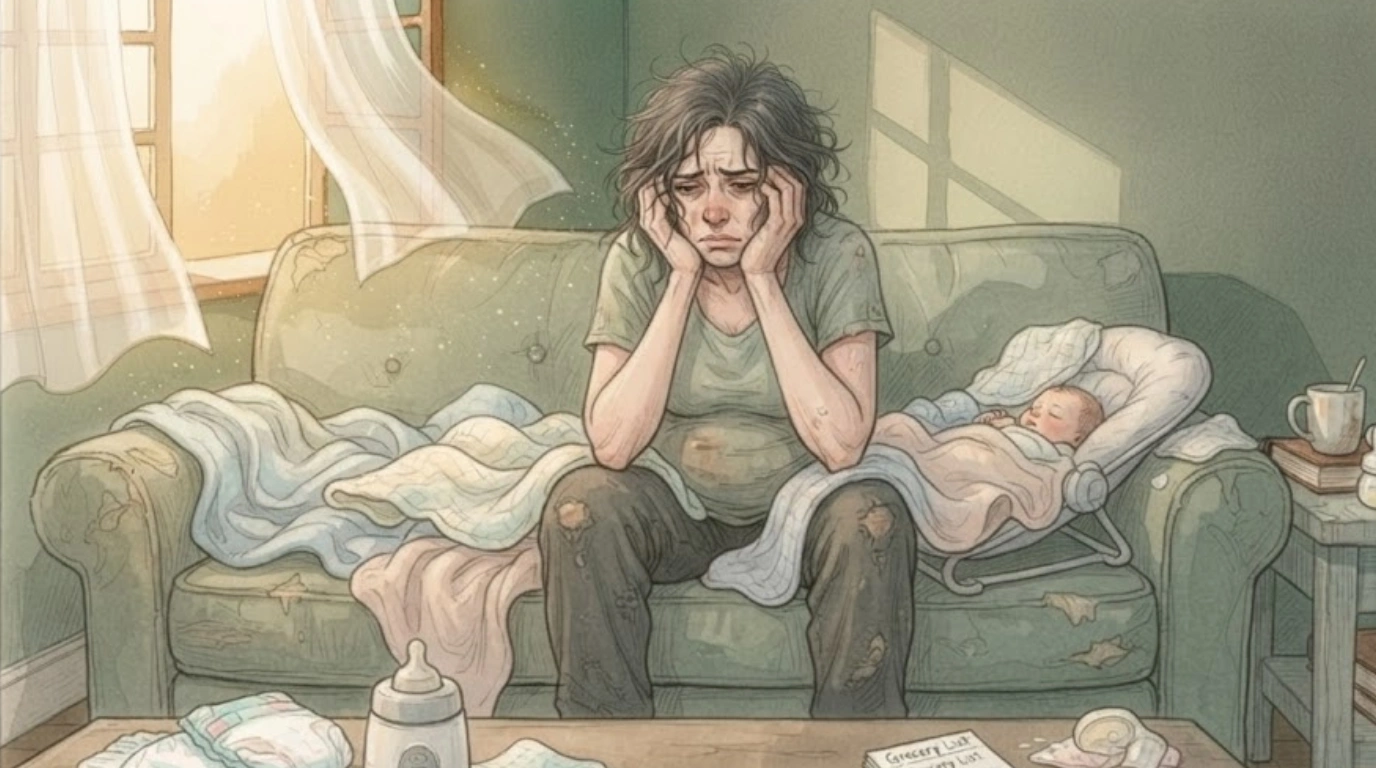
For many new mothers, it also feels heavy. Tearful. Exhausting in a way sleep does not fix. When that heaviness lingers, it may be postpartum depression.
The most common question is simple. How long does postpartum depression last? The honest answer depends on one thing above all: whether it gets treated.
With care, many mothers feel better within a few months. Without care, it can stretch across the whole first year, and sometimes beyond.
This guide explains the timeline in plain terms. How it differs from baby blues. When it starts. What the symptoms look like.
Most of all, it explains when to worry. Because postpartum depression is common, treatable, and never a mother's fault.
If you are a new mother reading this while tired and scared, take a breath. You are not broken. And you are not alone.
What Postpartum Depression Actually Is
Postpartum depression is a real medical condition.
It is a form of depression that follows childbirth. It is not weakness. It is not bad mothering.
The causes are physical and emotional. Hormones drop sharply after birth. Sleep collapses. Life changes overnight.
For some mothers, that mix tips into depression. This is new mother depression, and it is far more common than most families think.
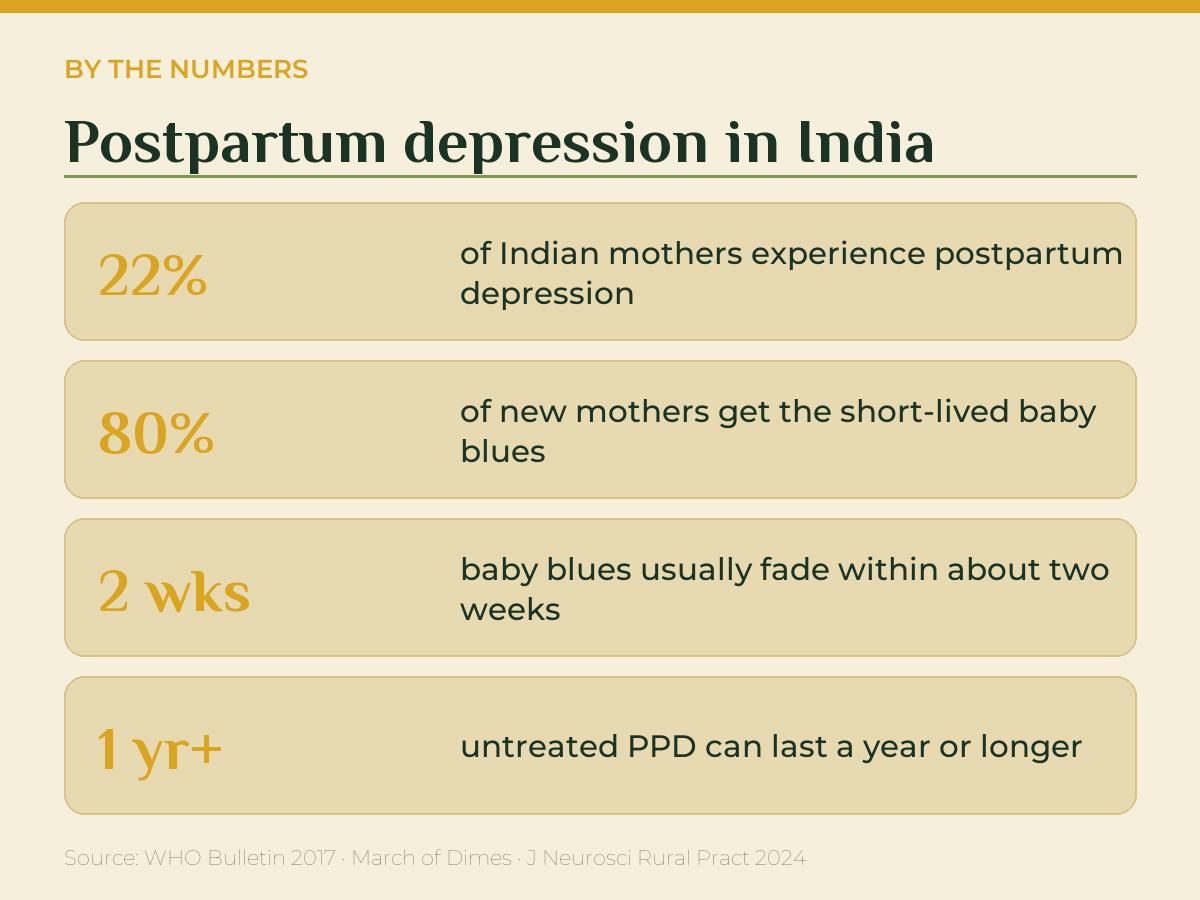
In India, the numbers are striking. A pooled review found postpartum depression in about 22% of Indian mothers (Source: WHO Bulletin / PMC, 2017 — pmc.ncbi.nlm.nih.gov).
That means roughly one in five. It is not rare. It is not shameful.
The problem is silence. Many mothers hide it. They fear being judged as ungrateful or unfit.
It can affect any mother. First-time or not. A smooth birth or a hard one. Money and status do not protect against it.
So the condition goes unnamed and untreated. And that silence is exactly what makes it last longer.
Postpartum depression is also different from anxiety after birth. Some mothers feel gripped by constant worry. Others feel low and flat. Many feel both at once.
There is a rarer, severe form too. It is called postpartum psychosis. It brings confusion, strange beliefs, or seeing things. This is a medical emergency and needs help at once.
The good news holds through all of it. Every form of this condition responds to treatment. None of it means you have failed.
Q: Is postpartum depression the mother's fault? A: No. It is a medical condition driven by hormones, sleep loss, and stress. It is not caused by weakness or by being a bad parent.
Baby Blues vs Postpartum Depression
Not every low mood after birth is depression.
Most new mothers feel weepy and fragile in the first days. This is called the baby blues. It is normal and very common.
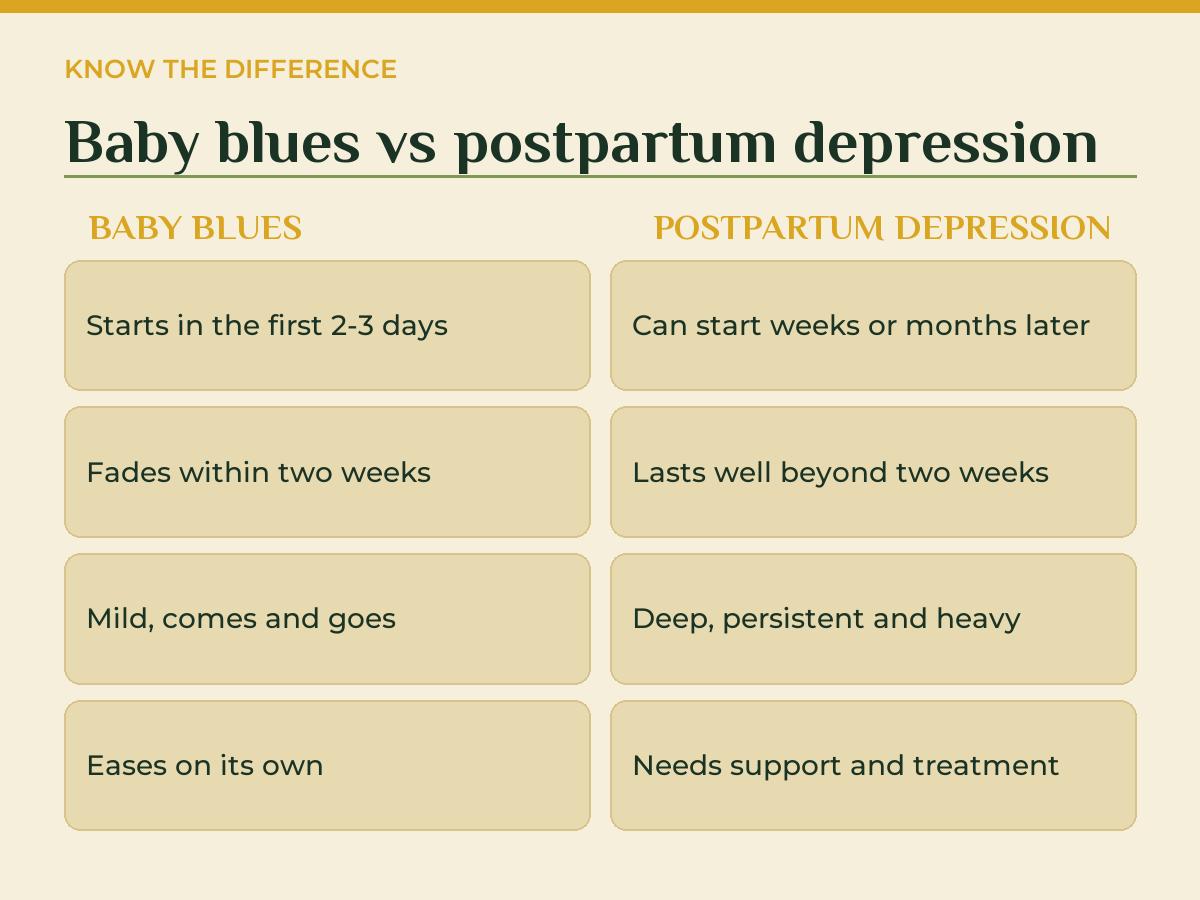
The baby blues affect up to 80% of new mothers. They start within the first two to three days and fade within two weeks (Source: March of Dimes, 2024 — marchofdimes.org).
Baby blues are mild. Tears one moment, calm the next. They pass on their own.
They come from the sharp hormone shift after birth. Add broken sleep and a huge new role. A few weepy days makes sense.
Postpartum depression is different. It runs deeper. It lasts longer. And it does not lift on its own.
The two-week mark is the key line. If low mood, crying, or hopelessness go past two weeks, think beyond baby blues.
Severity matters too. Baby blues do not stop you caring for yourself or the baby. Postpartum depression can.
So watch the calendar and the weight of it. Short and mild points to baby blues. Long and heavy points to something more.
When in doubt, ask a doctor. A short screening can tell the difference quickly.
A common tool is a simple questionnaire. It takes only minutes. Many doctors and clinics use it after birth.
There is no harm in checking early. A screening that says "baby blues" brings peace of mind. One that flags depression opens the door to help.
So never feel silly for asking. Checking is wise, not weak.
Q: How do I know if it is baby blues or postpartum depression? A: Baby blues fade within two weeks and stay mild. If symptoms last longer or feel severe, it is likely postpartum depression and worth a check.
How Long Does Postpartum Depression Last?
Here is the answer most mothers search for.
How long does postpartum depression last? It varies, and treatment is the biggest factor.
With good care, many mothers improve within a few months. Therapy, support, and sometimes medicine speed recovery.
Without care, the picture changes. A large share of untreated mothers still have symptoms a full year after birth (Source: Journal of Neurosciences in Rural Practice, 2024 — ruralneuropractice.com).
Some cases stretch even longer. Untreated postpartum depression can slide into long-term depression.
The timeline is not fixed. It bends toward recovery when help arrives early. It drags on when help is delayed.
That is the real message. You cannot always control how it starts. You can control how soon you act.
Onset varies too. Postpartum depression often begins in the first few weeks. But it can appear any time in the first year.
Some mothers feel it late, at six or nine months. Others feel low even during pregnancy. Awareness needs to last the whole year.
What shortens the timeline? A few things make a real difference.
Early support is the biggest one. The sooner a mother is heard, the sooner she heals.
Sleep helps too. Broken nights feed depression. Even small blocks of protected rest support recovery.
Talking therapy speeds things up. So does the right medicine, when a doctor advises it.
What lengthens it? Silence, isolation, and untreated symptoms. Also heavy stress at home, or a lack of support.
So the timeline is not luck. It is shaped by how early and how well a mother is supported.
Q: Can postpartum depression last more than a year? A: Yes, if untreated. Many untreated mothers still have symptoms at one year. Early treatment shortens it and lowers the risk of long-term depression.
The Symptoms to Watch For
Postpartum depression is more than sadness.
It shows up across mood, body, and thoughts. Knowing the PPD symptoms helps you name it sooner.
Watch mood first. Lasting sadness. Frequent crying. A low that does not lift with rest or good news.
Watch for loss of joy. Things you loved feel flat. Even the baby may not bring the warmth you expected.
Watch the body. Deep fatigue beyond normal newborn tiredness. Changes in sleep and appetite in either direction.
Watch the thoughts. Guilt. A sense of failing as a mother. Feeling worthless or numb.
Some mothers feel distant from their baby. Others feel anxious and unable to switch off. Both fit the picture.
Irritability and anger count too. Postpartum depression does not always look like tears. Sometimes it looks like a short fuse.
Trouble bonding is another quiet sign. Some mothers feel little warmth toward the baby at first. This is a symptom, not a verdict on your love.
The most serious signs are thoughts of self-harm, or of harming the baby. These are medical emergencies. They need help the same day.
None of these symptoms mean you do not love your child. They mean an illness is present. And that illness responds to treatment.
Symptoms can also come and go. A good day does not mean it is over. A hard day does not mean you are back to zero.
Track how you feel across weeks, not hours. A simple note each day helps you see the real trend.
Bring that note to a doctor. It turns a vague worry into a clear picture they can act on.
Q: What are the early PPD symptoms in new mothers? A: Lasting sadness, frequent crying, deep fatigue, guilt, and feeling distant from the baby. Changes in sleep and appetite are common early signs.
When to Worry and Seek Help
Worry is not weakness. It is information.
So when should you act on postpartum depression? A few clear signals make it simple.
Act if low mood lasts more than two weeks. That crosses the line from baby blues.
Act if symptoms feel severe at any point, even in the first week. Severity matters as much as time.
Act if you cannot care for yourself or the baby. Struggling with basic tasks is a real red flag.
Seek help urgently if there are thoughts of self-harm. Or any thought of harming the baby. Do not wait, and do not stay silent.
Urgent help means the same day. Call a doctor, go to a hospital, or reach a mental health helpline.
Keep a trusted number saved. Share it with your partner or family too. In a hard moment, quick access matters.
You do not need permission to ask for help. You do not need to prove you are struggling enough.
New mother depression is common and treatable. The earlier you reach out, the faster you recover.
Tell someone you trust today if any of this fits. Saying it out loud is often the hardest and most important step.
Untreated postpartum depression carries real costs. It can affect bonding with the baby. It can strain the whole family.
It can also raise the risk of long-term depression. That is why waiting rarely helps.
Getting help is not giving up. It is protecting yourself and your baby. It is one of the strongest things a mother can do.
Q: When is postpartum depression an emergency? A: When there are thoughts of self-harm or of harming the baby. Also when a mother cannot function or care for the baby. Seek help the same day.
Why It Often Lasts Longer in India
Postpartum depression is universal. But some things make it last longer here.
Silence is the first. In many Indian homes, low mood after birth is dismissed. New mothers are told to simply be grateful.
So symptoms go unspoken. The mother suffers quietly. And untreated depression lasts far longer than treated depression.
Stigma is the second barrier. Mental health still carries shame in many families. Seeking help can feel like admitting failure.
Pressure is the third. There are strong expectations around motherhood. A struggling mother may fear being judged harshly.
Support gaps make it worse. Depression across India often goes untreated, with wide treatment gaps in the national data (Source: NMHS / NIMHANS, 2016 — indianmhs.nimhans.ac.in).
None of this is the mother's fault. It is a system that keeps her quiet.
The fix starts at home. Families who talk openly help mothers heal faster. A single supportive question can change the timeline.
Ask the new mother how she really feels. Then listen without judgement. That alone can open the door to help.
Culture is shifting, slowly. More families now talk about mental health openly. More mothers now feel able to ask.
You can be part of that shift. Naming postpartum depression out loud removes its power to hide.
If you are a mother reading this, know one thing. Speaking up is brave, not shameful. Help is your right, not a favour.
Q: Why do Indian mothers often stay silent about postpartum depression? A: Because of stigma, pressure to seem grateful, and fear of judgement. Silence delays help, which makes the depression last longer.
How Partners and Family Can Help
Recovery is rarely a solo effort.
The people around a new mother shape how fast she heals. Small, steady support does real work.
Start by watching for the signs. Notice lasting sadness, withdrawal, or exhaustion that never lifts.
Ask direct, gentle questions. "How are you really feeling?" beats "You are fine, right?"
Share the load at night. Broken sleep fuels depression. Taking a feed or a shift helps more than words.
Protect her rest and her meals. Basic care creates space for the mind to recover.
Do not rush her or shame her. Avoid "snap out of it." That deepens guilt and slows healing.
Help her reach a doctor. Offer to book the visit, or to go with her. Practical help removes real barriers.
And keep going after the first hard weeks. Postpartum depression can last months. Support should last just as long.
Watch your own words too. Comparing her to other mothers hurts. So does telling her others manage fine.
Every mother and every birth is different. Her struggle is real, whatever anyone else went through.
Small acts add up. A warm meal. A quiet hour. A promise that she is not alone in this.
Q: How can a partner help with postpartum depression? A: Watch for the signs, share night duties, protect her rest, and avoid blame. Help her reach a doctor, and keep supporting her for months, not days.
- About 22% of Indian mothers experience postpartum depression — . - Baby blues affect up to 80% of new mothers and fade within two weeks — . - A large share of untreated mothers still have symptoms one year after birth — . - Risk factors and prevalence of PPD in India are well documented in recent reviews — . - Depression across India carries wide treatment gaps — .
How Ganaa Supports New Mothers
Reaching out is the turning point. What follows is safe, caring treatment.
Ganaa is a mental health and rehabilitation brand in India. We support adults facing depression, including new mother depression.
Our care blends modern clinical science with calm, restful settings. Therapy, psychiatric support, and daily structure work together.
For postpartum depression, gentle and steady care matters most. Talking therapy like CBT helps mothers process guilt and low mood. Any medication is reviewed carefully by our psychiatrists.
We treat the whole picture, not just symptoms. Sleep, routine, and family support all form part of the plan. Each plan is tailored to the mother, never generic.
Family is welcome in the work. We help partners and relatives understand the condition. That support continues at home, where recovery really lives.
Ganaa runs five residential centres across India, in Delhi, Gurugram, Goa, and Greater Noida. Three OPD clinics offer outpatient care in Faridabad, Greater Kailash, and Greater Noida.
Outpatient support suits many new mothers who want to stay close to their baby. Care can flex around the family's needs.
Our teams include psychiatrists and therapists. They understand the pressures new mothers face in Indian homes.
There is no judgement here. Only care built around getting you well. And getting you back to enjoying your baby.
If you are struggling after childbirth, please reach out. Speak to a Ganaa counsellor, or visit ganaa.in to learn about our programmes.
Conclusion: You Do Not Have to Wait It Out
Postpartum depression is common, real, and treatable.
How long it lasts is not fully in your hands. But how soon you act is. And that changes everything.
With care, many mothers recover within months. Without it, symptoms can last a year or more. Early help shortens the road.
Know the two-week line. Baby blues fade fast. Anything longer or heavier deserves a check.
Watch for the warning signs. Lasting sadness. Deep fatigue. Guilt. Feeling distant from your baby.
And treat any thought of self-harm as urgent. Reach out the same day, every time.
You are not ungrateful. You are not failing. You are a mother facing an illness that responds to treatment.
Ask for help while it still feels hard to ask. That first honest conversation is the start of feeling like yourself again.
Recovery does not mean loving your baby more. You already do. It means lifting the fog so you can feel it fully.
That fog can clear. With support, most mothers come back to themselves. Give yourself the chance to get there.
You deserve care as much as your baby does. Reaching for it today is a gift to you both.
FAQ
Q: How long does postpartum depression last? A: With treatment, postpartum depression often improves within a few months. Without treatment, it can last much longer. Studies show that a large share of untreated women still have symptoms a year after birth. The length depends heavily on how early support begins.
Q: What is the difference between baby blues and postpartum depression? A: Baby blues are common and short. They affect most new mothers, start in the first few days, and fade within two weeks. Postpartum depression is deeper and lasts longer. If low mood, crying, or hopelessness go past two weeks, it is likely more than baby blues.
Q: When does postpartum depression usually start? A: It often begins within the first few weeks after birth. But it can appear any time in the first year. Some mothers feel it during pregnancy. There is no single fixed start point, which is why ongoing awareness matters.
Q: What are the main symptoms of postpartum depression? A: Common PPD symptoms include lasting sadness, frequent crying, and deep fatigue. Many mothers feel guilt, worthlessness, or distance from the baby. Sleep and appetite often change. Any thoughts of harming yourself or the baby need urgent medical help.
Q: When should I worry about postpartum depression? A: Worry if low mood lasts more than two weeks, or feels severe at any point. Seek help if you cannot care for yourself or the baby. Get help urgently if there are thoughts of self-harm or harming the baby. You do not need to wait for it to pass.
Q: Can postpartum depression go away on its own? A: Mild cases sometimes ease as routines settle. But postpartum depression is a medical condition, not a weakness. Left untreated, it can deepen and last well over a year. Treatment is safe, effective, and speeds recovery, so it is always worth seeking help.
Bipolar misdiagnosed as depression is common, and the delay runs close to nine years. Learn the clues, why hypomania is missed, and how to get a better review.
Adolescent mental health in India is under-treated. Learn 11 warning signs parents miss, what the data shows, how to start the talk, and when to seek help.
Gaming disorder in teens is a real diagnosis, not a phase. Learn the WHO criteria, how common it is, the signs parents miss, and what actually works at home.