Codependency in Families: When Loving Becomes Enabling
Codependency in families can quietly fuel addiction. Learn the signs, why it happens in Indian homes, and how to set boundaries that support real recovery.
Codependency in Families: When Loving Becomes Enabling
You wanted to help. You always did.
So you paid the debt. You made the excuse to the boss. You stayed up, again, waiting at the door.
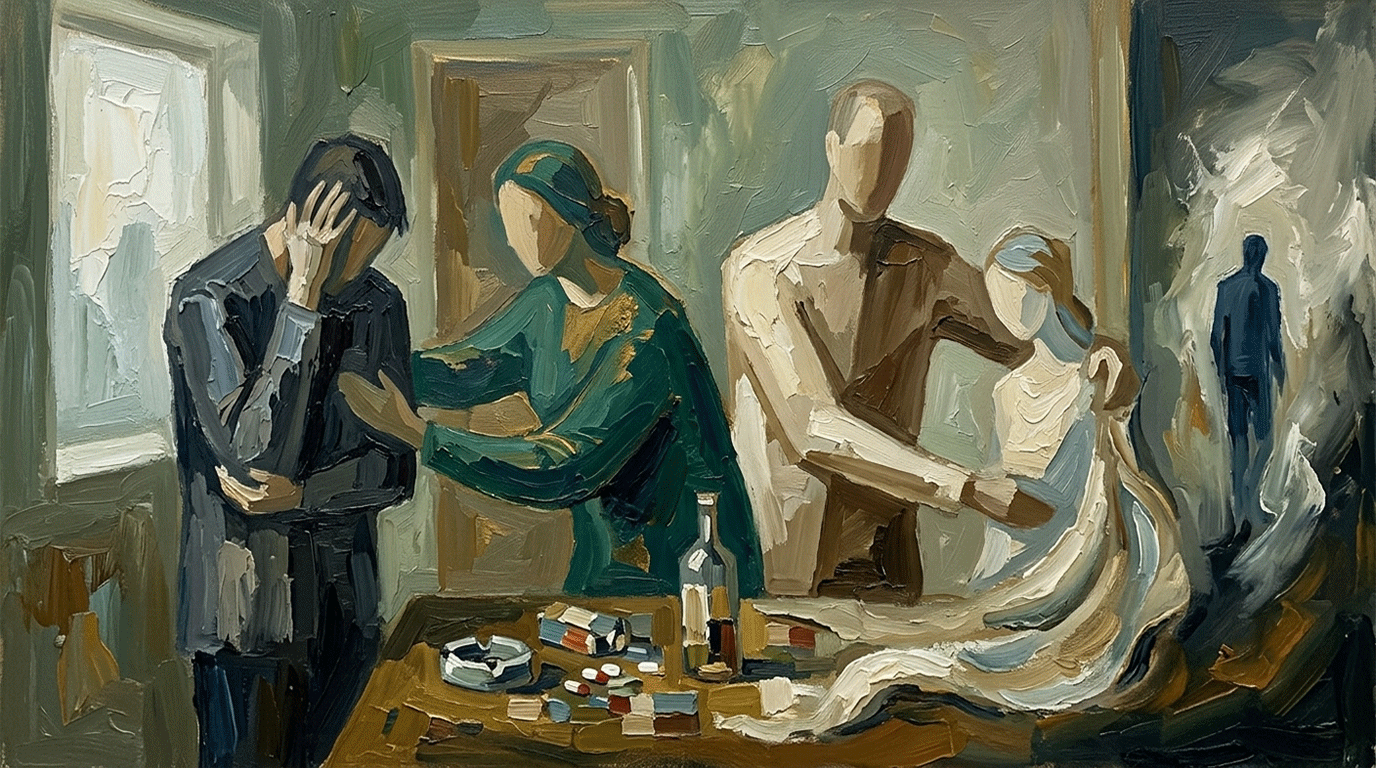
Codependency in families starts here. It begins with love and ends with exhaustion. Slowly, the help stops helping. It starts to shield the very behaviour you fear.
This is how a caring family can keep an addiction alive without meaning to. Not through neglect. Through too much rescue.
In many Indian homes, this pattern hides in plain sight. We call it loyalty. We call it duty. We rarely call it what it can become.
Codependency is not weakness. It is a learned response to long stress. You can unlearn it.
This guide is for the worn-out parent, the anxious spouse, the older sibling who holds it all together. We will name the signs of a codependent relationship. We will show how family enabling addiction works. And we will map a path to codependency recovery, for you and for them.
You will leave with clear steps. Real boundaries. And hope.
What Codependency in Families Really Means
Let us define it simply.
Codependency in families is a pattern. One person's wellbeing leans entirely on managing another person's behaviour.
The codependent member organises life around a loved one's drinking, drug use, or illness. Their mood rises and falls with that person's state. Their own needs go quiet.
It is not the same as caring. Caring fills you up sometimes. Codependency mostly drains you.
The word grew out of addiction treatment. Workers noticed that spouses of people with alcohol use disorder shared a pattern. They controlled, rescued, and absorbed every shock. Mental Health America still describes codependency as a learned behaviour that can be passed down across generations (Source: Mental Health America — mhanational.org).
So this is learned. And learned things can change.
A codependent relationship has a shape. One person over-functions. The other under-functions. The harder one rescues, the less the other has to grow.
Over time, roles harden. The caregiver becomes the manager, the fixer, the apologiser. The loved one stays stuck.
You may not see yourself as codependent. Most people do not. You just see someone you love in trouble, and you act.
Q: Is codependency a mental illness? A: No. Codependency is not a formal diagnosis. It is a relationship pattern linked to chronic stress and learned coping. It can still cause real anxiety, low mood, and burnout, so it is worth treating with support.
How Family Enabling Addiction Actually Works
Enabling rarely looks like harm. It looks like help.
That is what makes it so hard to see.
Family enabling addiction means shielding a loved one from the results of their use. You remove the pain that might push them to change.
Picture it. He drinks and misses work. You call his office and make an excuse. The hangover passes. Nothing changes. Tomorrow looks the same.
Each rescue sends a quiet message. You can keep using. We will absorb the cost.
The codependent family member often does this from love, and from fear. There can be a hidden worry too. If they get well, will they still need me?
Common enabling acts show up again and again.
The harm is real. By softening every fall, the family removes the natural alarm that drives a person toward care.This matters in India, where help often arrives late. Across mental disorders, the treatment gap ranges from about 70% to 92%. For alcohol use disorders it sits near 86% (Source: National Mental Health Survey of India, NIMHANS, 2016 — pmc.ncbi.nlm.nih.gov). Families that cushion every blow can widen that gap at home.
Q: Am I enabling or just being a good parent? A: Ask one question. Does this act protect them from a consequence, or move them toward change? Booking a deaddiction assessment is support. Paying a bar tab is enabling.
The Signs You Are in a Codependent Relationship
You may sense something is off. You just cannot name it.
Here is how a codependent relationship feels from inside.
Your peace depends on their state. A sober day is a good day. A relapse ruins yours. You scan their face for clues, always.
You say yes when you mean no. Saying no feels unsafe, or cruel.
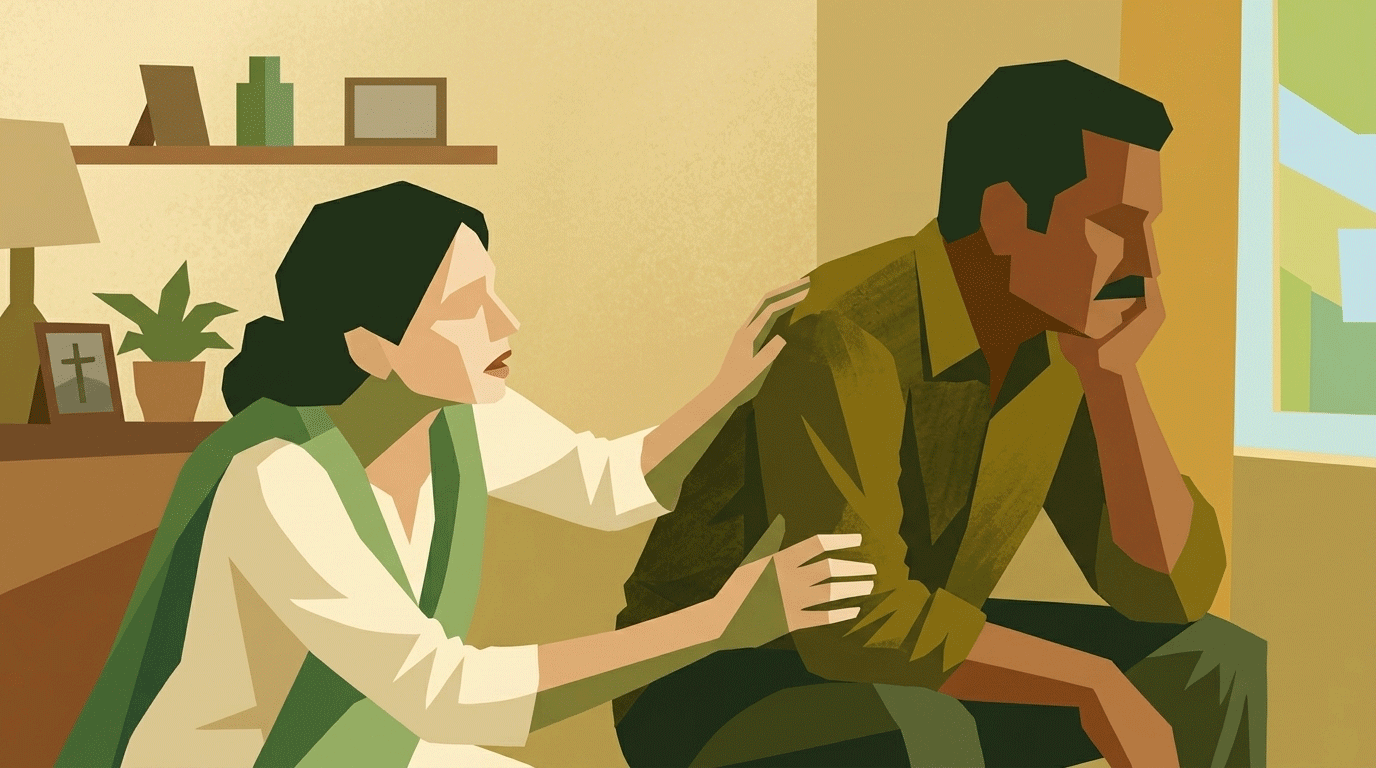
You feel responsible for an adult's choices. When they fail, you feel it is your fault. When they hurt, you rush to fix it.
You have lost yourself. Hobbies faded. Friends drifted. You cannot recall what you want.
You feel guilty resting. Caring for yourself feels selfish. So you keep pouring from an empty cup.
You keep secrets too. You hide the truth from relatives and friends. The strain of pretending wears you down.
You walk on eggshells at home. You manage their moods all day. One wrong word can spark a storm.
These signs cluster. They feed each other.
Indian research shows how heavy this load becomes. In a study of caregivers of people with substance dependence in Chandigarh, 45.8% reported severe burden and another 52.5% reported moderate burden (Source: Indian Journal of Medical Research, 2013 — pmc.ncbi.nlm.nih.gov). A later study of caregivers of people with alcohol dependence found 58% with severe burden (Source: Journal of Addiction, 2017 — pmc.ncbi.nlm.nih.gov).
Read that again. Most caregivers carry a heavy load. You are not weak. You are tired.
Q: Can codependency cause health problems? A: Yes. Long codependency links to anxiety, low mood, poor sleep, and burnout. Your body keeps the stress score. That is why your own care matters, not just theirs.
Why Codependency Runs Deep in Indian Families
Codependency grows where closeness meets shame. India has both in plenty.
Our families live close. We value loyalty over privacy. That bond is a gift, and a trap.
When one member struggles, the whole family rallies. That is beautiful. But it can blur the line between support and rescue.
Shame plays a big role. Addiction and mental illness still carry deep stigma here. Many families hide the problem to protect honour.
So they cover up. They delay care. They manage at home long past the point of safety.
Duty adds weight. Caregiving is seen as sacred, especially for women. A wife who sets limits may be called heartless. A son who steps back may be called ungrateful.
These pressures make boundaries feel like betrayal. So enabling feels like love, and love feels like duty.
The scale of need is large. About 5.7 crore Indians are affected by harmful or dependent alcohol use, with roughly 16 crore people aged 10 to 75 using alcohol (Source: AIIMS, NDDTC, Magnitude of Substance Use in India, 2019, via Press Information Bureau — pib.gov.in). Behind many of those numbers sits a family quietly holding things together.
Marriage shapes the pattern too. In Indian studies, spouses often carry the burden in silence to protect the family name.
Q: Is it wrong to support my family member? A: Not at all. Support is healthy and needed. The aim is not to stop caring. The aim is to care in ways that help them grow, not stay stuck.
How Codependency and Addiction Feed Each Other
Codependency and addiction often grow as a pair. They lock together.
One cannot easily heal while the other stays fed.
Think of it as a loop. The addicted person uses. The family rescues. The fallout fades. The use continues.
Each turn of the loop tightens the bond. The user leans harder. The rescuer rescues harder.
The family's identity can fuse with the crisis. Managing the problem becomes the family's whole job. Calm feels strange, even unsafe.
Children learn roles early in such homes. One becomes the little helper. One acts out. One disappears. These roles can follow them for life.
The family also learns to walk on eggshells. Everyone watches the user's mood. Plans bend around their needs. Joy gets put on hold.
Secrecy deepens the loop. The family hides the problem from the world. That secrecy blocks the very help they need.
Trust erodes slowly too. Promises break. Apologies repeat. Hope rises and falls with each cycle. The whole home grows tired.
Globally, the burden of harmful use is huge. The WHO estimates that about 400 million people live with alcohol use disorders. Harmful alcohol and drug use is linked to over 3 million deaths a year (Source: World Health Organization, 2024 — who.int). Each case sits inside relationships that bend around it.
Here is the hopeful part. Loops can break.
When the family stops cushioning the fall, the real cost arrives sooner. That cost, felt clearly, often becomes the reason a person seeks care.
This is not punishment. It is honesty. You let the truth do its work.
Q: If I stop enabling, will my loved one get worse? A: It can feel that way at first. They may be angry or distressed. But removing the cushion lets them feel the real impact, which often pushes them toward treatment, not away from it.
Setting Boundaries Without Losing Love
Boundaries are not walls. They are doors with locks you control.
A good boundary protects the relationship. It does not end it.
Start small. Pick one limit you can actually keep.
State what you will do, not what they must do. Try this. No money from you while they are using. That is a boundary. A demand to quit is not.
Say it plainly and calmly. No long speech. No threats. Just a clear line.
Then follow through. Every single time. A boundary you abandon teaches the opposite lesson.
Here are three concrete boundaries families can adapt:
Expect pushback. Guilt will rise. They may accuse you of not caring. This is the hardest stretch.
You do not have to hold the line alone. A therapist or counsellor can coach you. Support groups for families exist across India, online and in person.
Remember the goal. You are not abandoning them. You are stopping the rescue that keeps them stuck.
Q: How do I stay firm when guilt takes over? A: Plan your response before the moment comes. Write your boundary down. Lean on a counsellor or a family group. Guilt is a feeling, not a command. You can feel it and still hold your limit.
What Codependency Recovery Looks Like
Codependency recovery begins with you. Not with fixing them.
That is the shift that changes everything.
You stop trying to control another adult. You turn attention back to your own life.
The first sign of healing is small. You notice your own needs again. You rest without guilt. You say no and survive it.
Therapy helps a lot here. Cognitive behavioural therapy, or CBT, links your thoughts, feelings, and habits. It helps you spot the rescue reflex and choose differently.
Support groups add strength. Many families find relief in groups built for relatives of people with addiction. You hear your own story in others. You stop feeling alone.
Small daily habits help too. Move your body. Sleep on a schedule. Eat real meals. These basics rebuild the self that caregiving wore down.
Reconnect with people outside the crisis. Call an old friend. Return to a hobby you dropped. Each link reminds you that you exist beyond this role.
Be patient with yourself. Old habits creep back under stress. A slip is not failure. Notice it, and choose again.
Recovery brings steady changes over time:
This work helps even if your loved one is not ready. You heal on your own track.
And often, your healing shifts the system. When you stop over-functioning, space opens for them to step up.
Q: Where does codependency recovery start if my family member refuses help? A: It starts with you. Begin therapy or a family support group. Set one boundary and keep it. You cannot force their recovery, but you can reclaim your own life and stop feeding the cycle.
- About 5.7 crore Indians are affected by harmful or dependent alcohol use, out of roughly 16 crore who use alcohol.
- The treatment gap for alcohol use disorders in India is about 86%.
- In a Chandigarh study, 45.8% of caregivers of substance-dependent patients reported severe burden.
- A study of caregivers of people with alcohol dependence found 58% with severe burden.
- About 400 million people worldwide live with alcohol use disorders.
How Ganaa Supports Families, Not Just Patients
You do not have to carry this alone. Help exists, and it works.
At Ganaa, we treat the family, not just the person who uses. Recovery sticks better when the whole system heals.
Ganaa is a residential mental health and rehabilitation provider in India. We were founded in 2012. In 2026 we merged with Mindvriksha to widen our care.
We run five residential centres. Two sit in Chhatarpur, as Ganaa Delhi I and Ganaa Delhi II. Ganaa Gurugram is in Sector 46. Ganaa Goa lies in South Goa. Ganaa Greater Noida rounds out the five. We also run three OPD clinics. They are in Faridabad, Greater Kailash, and Greater Noida.
Our care blends modern clinical science with calm, nature-based settings. We use CBT, DBT, and neurofeedback alongside yoga, meditation, and Ayurveda.
For families, this means real support. Family counselling helps you spot enabling and learn boundaries. You learn to support recovery without losing yourself.
We offer 30, 60, and 90-day residential programs, plus aftercare. Care is round the clock, with a women-only wing at Ganaa Gurugram.
Treatment plans are tailored to the person and the family. No two stories are the same, so no two plans should be.
If a loved one is struggling, you can act today. Reach out for the patient. Reach out for yourself too.
Speak to a Ganaa admissions counsellor, or visit ganaa.in to learn about our programs. One honest call can start the change.
Moving From Rescue to Real Support
Loving someone with an addiction is one of the hardest jobs there is. You did not get a manual. You did your best with what you knew.
Codependency in families is not a failure of love. It is love that lost its way under long stress. And it can find its way back.
The work is steady, not sudden. You name the pattern. You set one boundary. You hold it. You rebuild your own life, piece by piece.
Family enabling addiction can stop. Codependency recovery is real, and it can start with you alone. You do not need permission. You need support and a first step.
Remember the signs of a codependent relationship. Watch for the rescue reflex. Choose support that helps your loved one grow, not stay stuck.
You are allowed to rest. You are allowed to have needs. Caring for yourself is not selfish. It is the ground that real help stands on.
If today feels heavy, reach out. A counsellor, a support group, or a Ganaa clinician can walk this road with you. The cycle can break. And a calmer home is possible.
FAQ
Q: What is codependency in families? A: Codependency in families is a pattern where one person's wellbeing depends on managing another person's behaviour. The codependent member often props up a loved one's addiction or illness. They lose track of their own needs in the process. It is a learned response to chronic stress, not a character flaw.
Q: How is enabling different from helping? A: Helping supports a person to do what they can do for themselves. Enabling does the work for them and removes the natural fallout. Paying off a debt caused by drinking is enabling. Helping someone book a deaddiction assessment is support. The test is simple. Does the action protect the person from consequences, or move them toward change?
Q: What are the signs of a codependent relationship? A: Common signs include feeling responsible for another adult's choices and mood. You may say yes when you mean no. Your sense of worth rides on whether they are sober or calm. You hide their behaviour from others. You feel anxious, drained, and guilty most of the time.
Q: Why is codependency common in Indian families? A: Indian families often live close and value loyalty above privacy. Shame around addiction and mental illness is strong, so families cover up rather than seek care. Caregiving is seen as duty, which makes boundaries feel like betrayal. These pressures make enabling feel like love.
Q: Can a family recover from codependency without the addicted person? A: Yes. Codependency recovery starts with you, not the other person. Therapy, support groups, and clear boundaries help you heal even if your loved one is not ready. Often, when the family stops cushioning the fallout, the addicted member feels the real cost sooner.
Q: How do I set boundaries with an addicted family member? A: Pick one limit you can keep. Say it plainly and calmly. State what you will do, not what they must do. For example, no money during active use. Follow through every time. A counsellor can help you hold the line when guilt rises.
Q: When should a family seek professional help for codependency? A: Seek help when fear, guilt, or exhaustion run your days. Seek it if your health, sleep, or work are slipping. Seek it if children in the home are affected. A psychiatrist or therapist can guide both the addicted person and the family toward recovery.
Eating disorders in India hide behind praise for discipline and thinness. Learn the early warning signs, what to say, and how treatment actually works.
High functioning anxiety hides behind good work and a calm face. Learn the hidden signs, what the body does, and when coping turns into the problem itself.
The cost of mental health rehab in India is rarely published openly. Here is what moves the price, what insurance must cover by law, and what to ask first.