Burnout vs depression: learn the clear signs, when work stress crosses into clinical depression, and how to get help in India.
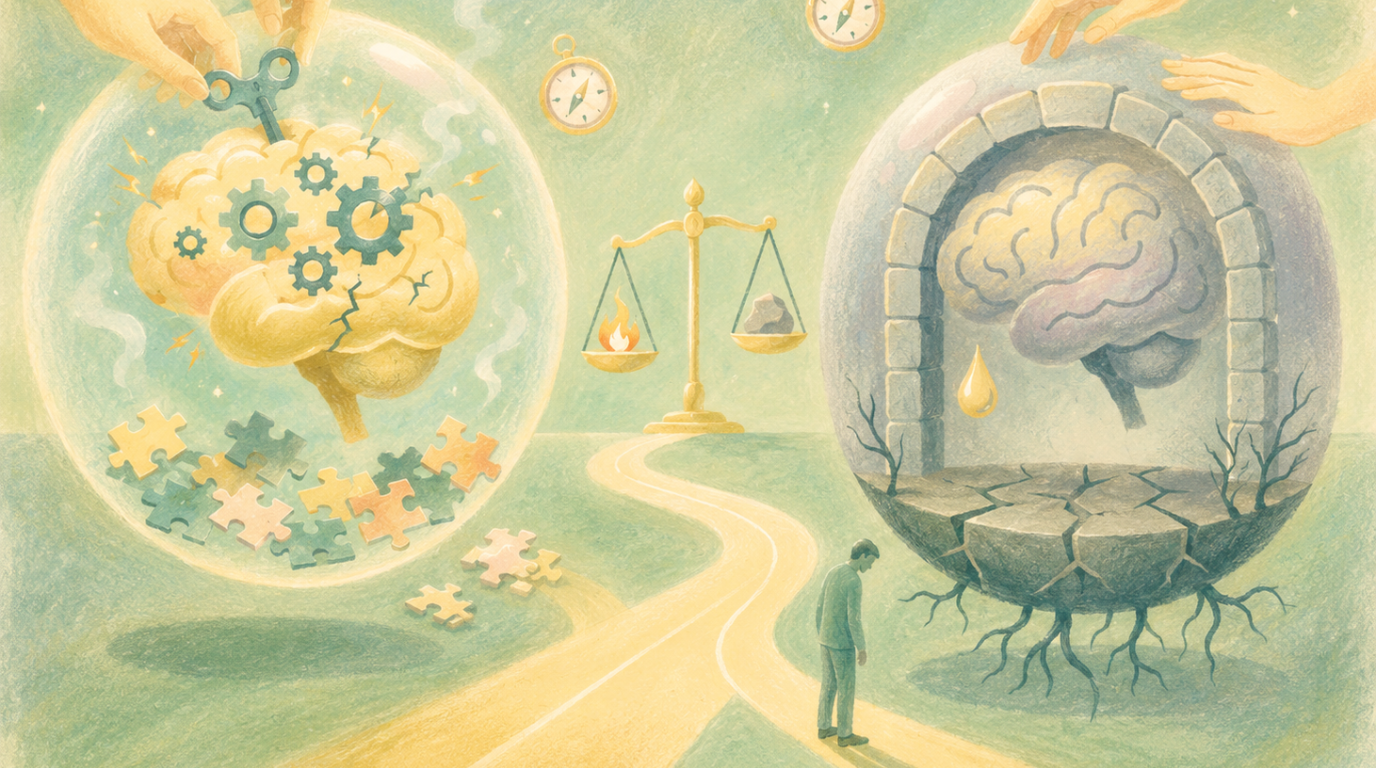
Burnout vs Depression: How to Tell the Difference
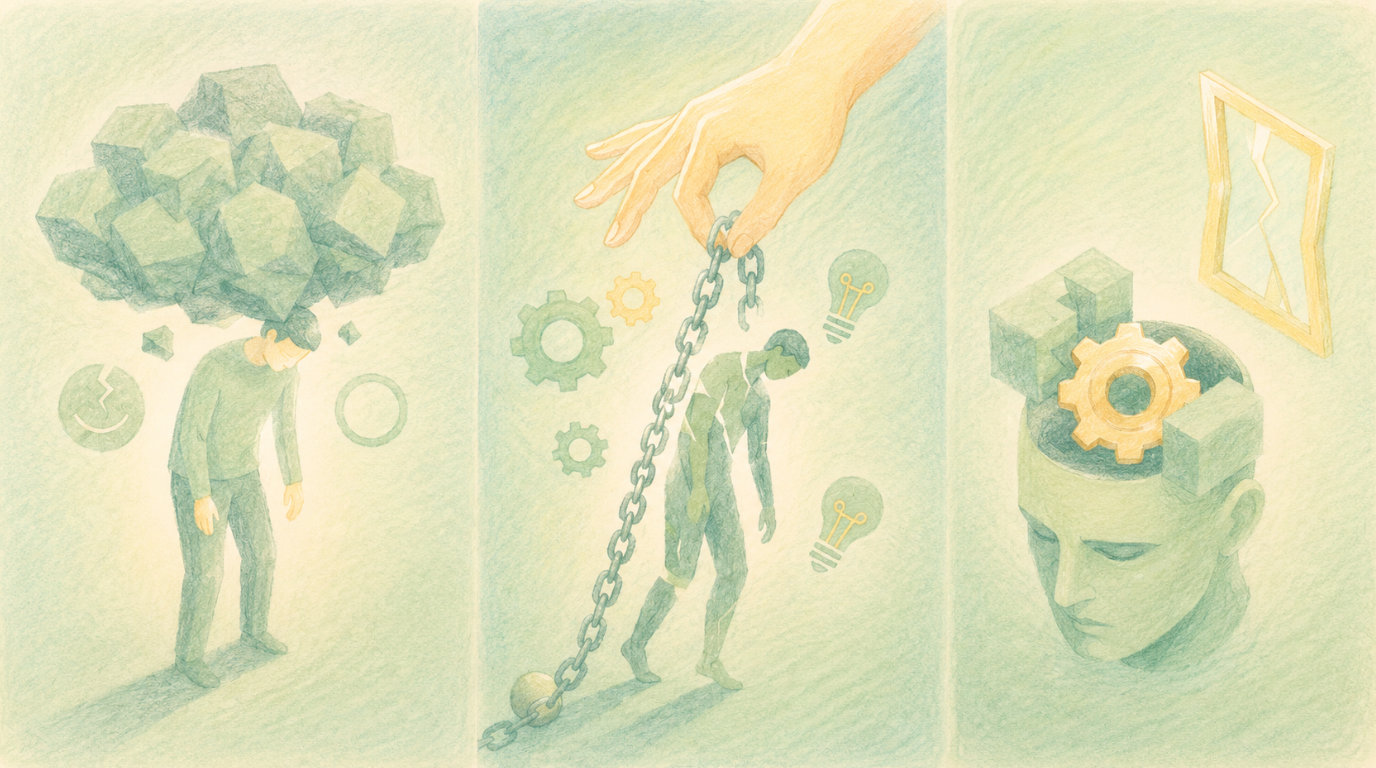
You wake up tired. You drag yourself to the desk. The work feels heavy, then meaningless, then impossible.
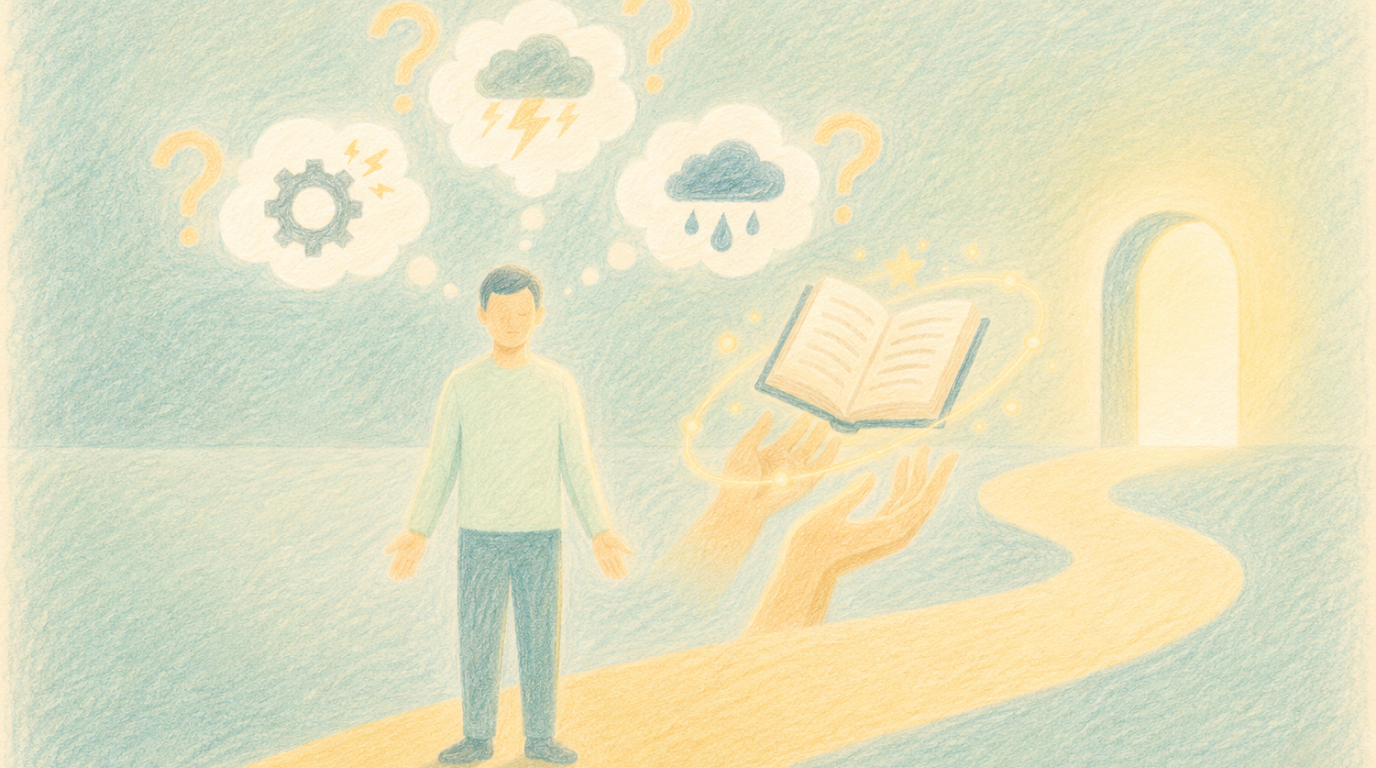
Is this burnout? Or is this clinical depression?
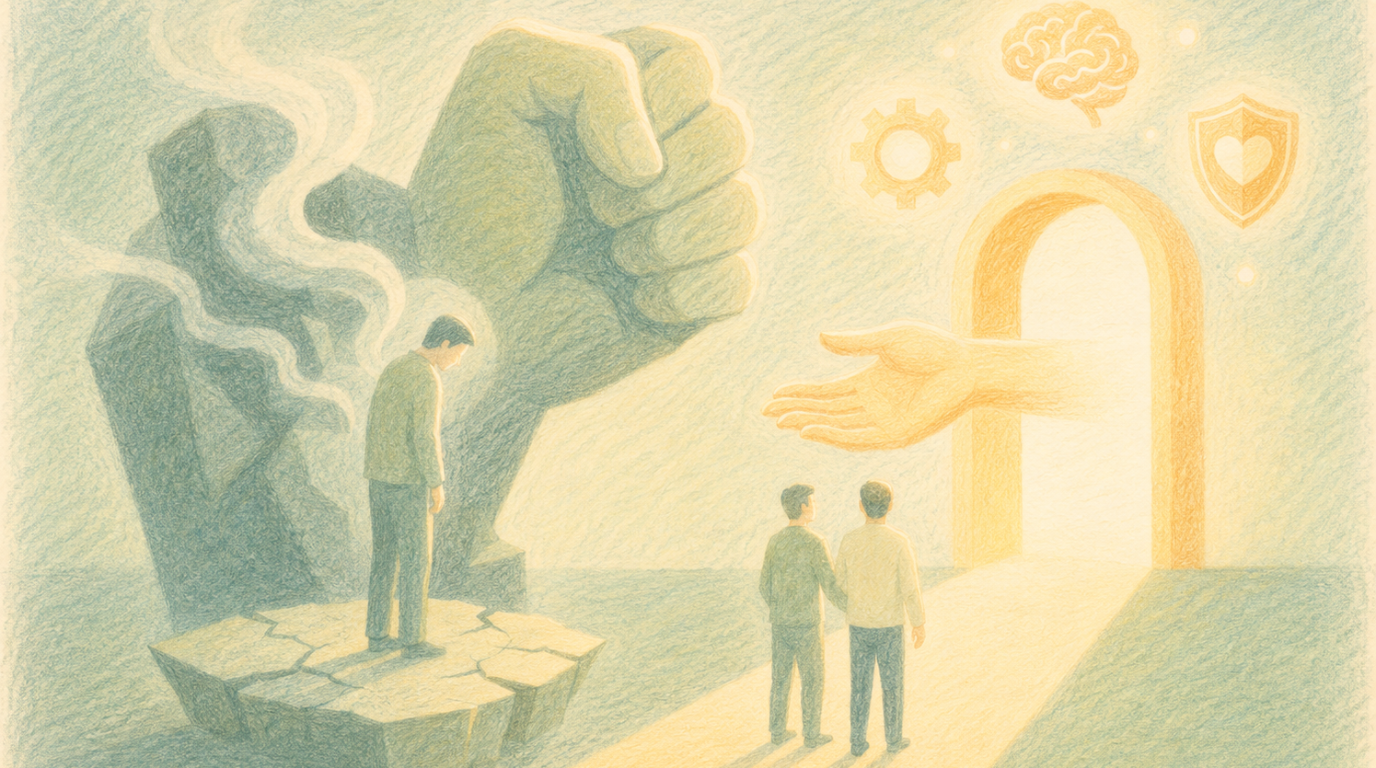
The two can look almost the same from the inside. But they are not the same thing. And the path out is different for each.
This guide is for the Indian professional caught between deadlines, family duty, and a quiet sense that something is wrong. We will map the clear signs of burnout vs depression. We will show you the line where work stress crosses into a medical illness. And we will tell you when to stop coping and get help.
You will learn how the WHO defines burnout. You will see the clinical depression symptoms India clinicians watch for. You will read about the burnout signs professional India teams now see at scale. You will get a simple self-check you can use tonight.
If you have asked yourself "am i burnt out or depressed" more than once, this read is for you.
What Burnout Really Means
Burnout is not just "I am tired".
The WHO added burnout to its ICD-11 in 2019 (Source: WHO, 2019 — who.int). It is not a medical diagnosis. It is an occupational phenomenon. That is a key word.
The WHO defines burnout by three signs: energy depletion, mental distance from work, and lower professional output. All three must show up. All three must come from chronic, unmanaged workplace stress.
That definition borrows from the Maslach Burnout Inventory. The tool is the most-used measure of burnout in clinical research.
Burnout is tied to a place. A role. A schedule. Step away, and the signs often ease.
But burnout also has weight. It bends sleep. It dulls joy. It eats into Sunday evenings.
Q: Is burnout an official medical diagnosis in India? A: No. The WHO calls it an occupational phenomenon, not a disease. Indian psychiatrists use it as a clinical label, but it does not appear in the formal disease list. Depression, by contrast, is a recognised medical illness.
There is one more nuance worth holding. Burnout has a clear pattern of three signs. It is exhaustion plus cynicism plus a sense of doing less good work. A tired engineer who still loves the code is not yet burnt out. A tired engineer who has started to hate the work, and feels useless at it, is.
This three-part rule matters in India because we often label any work tiredness as burnout. The real condition is sharper. It eats your sense of meaning, not just your sleep.
The risk is when burnout is left to run for months. Then the line to clinical depression starts to blur. That is the line this blog will help you spot.
What Clinical Depression Looks Like
Clinical depression is a medical illness. It is also called major depressive disorder.
It is not sadness. It is not a bad week. It is a state of low mood and loss of joy that lasts two weeks or more.
Indian psychiatrists check for nine core signs, drawn from the DSM-5 and ICD-11:
Five or more of these, for two weeks or more, point to clinical depression. The diagnosis needs a trained clinician.
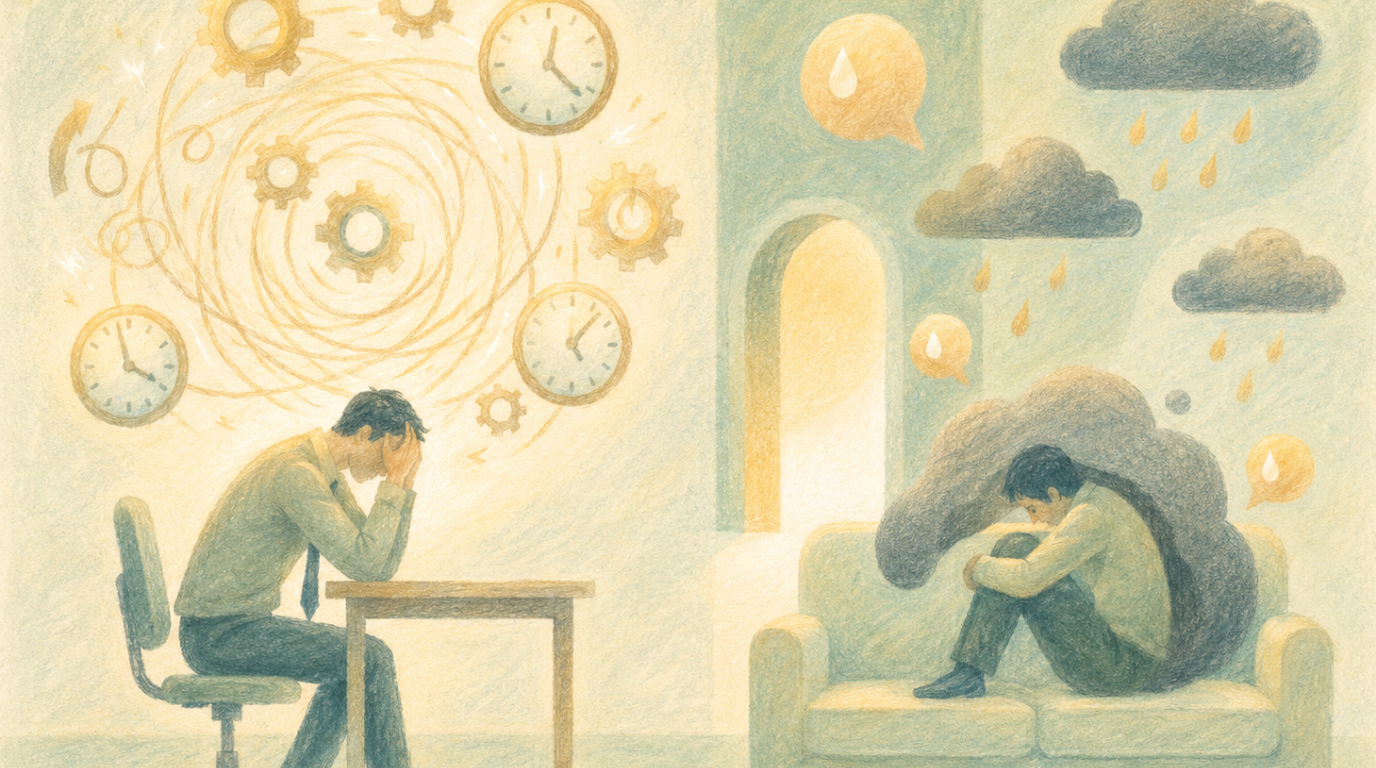
Here is the key split from burnout: depression does not stay at the office. It follows you home. It sits beside you at dinner. It wakes you at 3 a.m.
A weekend off helps burnout. A weekend off rarely shifts clinical depression.
Depression also brings what clinicians call somatic signs. These are body signs. Stomach pain. A heaviness in the chest. Aches with no clear cause. Many Indian patients first arrive at a GP for these, not for low mood. The mood story comes later, when the doctor asks.
This is one reason depression is missed in India. The body talks first. The mind talks later. A good clinician listens for both.
Q: Can a person have both burnout and depression? A: Yes. They often overlap. Studies show people with high burnout scores have a real, raised risk of meeting full criteria for clinical depression within a year. The two can stack.
How to Tell the Difference: A Side-by-Side Guide
Most people confuse the two because both bring tiredness and low mood. But the texture is different.
Here is a quick map across eight key markers.
Trigger. Burnout is set off by chronic work stress. Depression often has no clear trigger.
Scope. Burnout stays work-bound. Depression spreads to every part of life.
Joy outside work. With burnout, joy at home is often still there. With depression, joy goes flat almost everywhere.
Sleep. Burnout breaks sleep on work nights. Depression breaks sleep most nights, often with early-morning waking.
Self-worth. Burnout makes you feel you are bad at your job. Depression makes you feel you are bad as a person.
Suicidal thoughts. Rare in pure burnout. Possible in depression. A clinician must screen for them.
Time off. Burnout often eases with a real break. Depression rarely lifts on its own with rest.
Treatment lead. Burnout responds to boundaries, rest, and role change. Depression needs therapy, medicine, and at times clinical care.
Two simple questions can sort the two for most people.
Burnout asks one question. Is my job ruining me.
Depression asks a different one. Is anything still worth it.
If you can still laugh with your kids on a Saturday, the issue is likely burnout. If Saturday feels as grey as Monday, ask about depression.
The key word is "spread". When the heaviness stays at the office, you are likely in burnout territory. When it leaks into every room of your home, you are likely past the line.
Q: I love my kids but I feel nothing watching them play. Is that burnout? A: That flatness with people you love is a red flag. Pure burnout usually spares your home joy. When joy at home also dims, talk to a psychiatrist about possible depression.
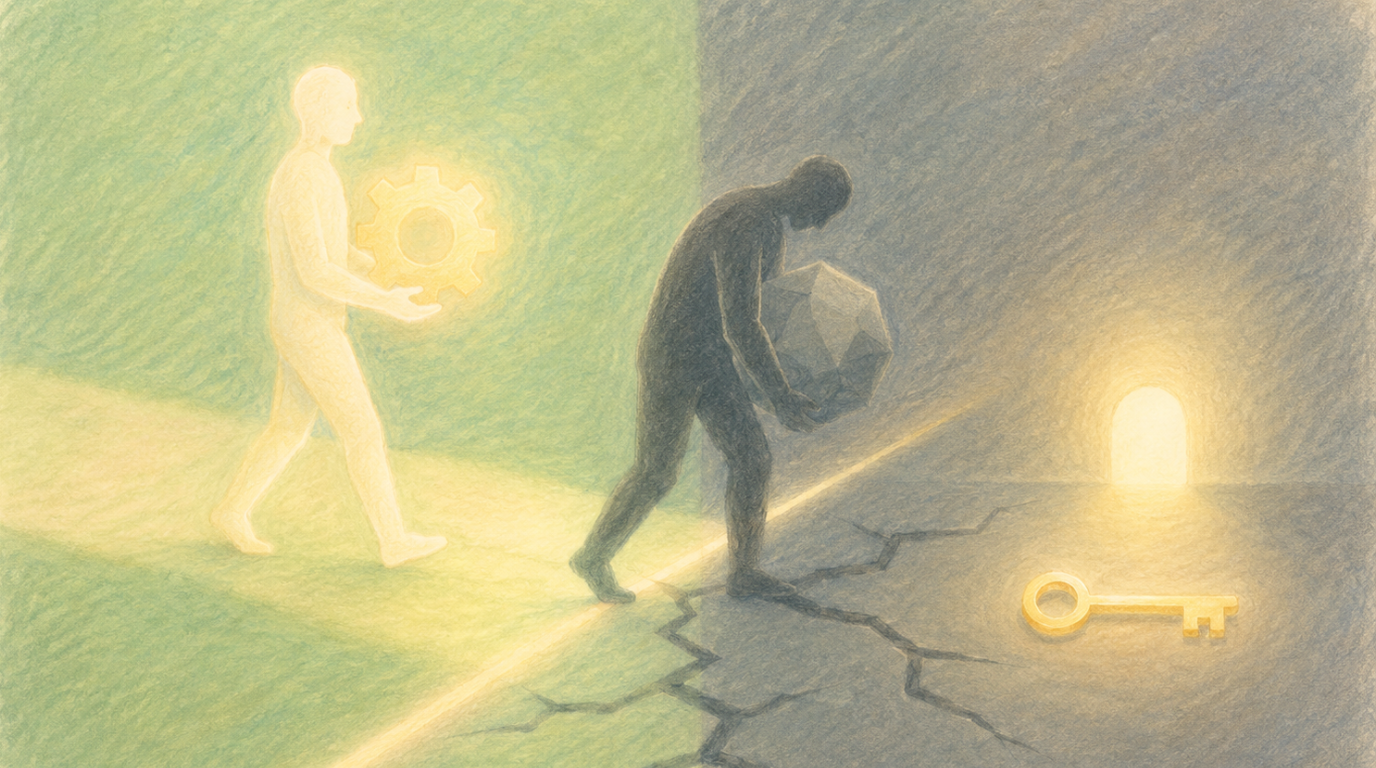
When Burnout Crosses the Line
Burnout slides into depression slowly. It is rare to spot the day it crossed.
Watch for these crossover signs. They mean the line is close, or already crossed:
Any one of the last two is a medical urgency. Call iCall on 9152987821 or Vandrevala Foundation on 18602662345. Both are free, India-based, and confidential.
A systematic review and meta-analysis in Frontiers in Psychology found a strong, statistically significant link between burnout and depression scores (Source: Koutsimani et al., Frontiers in Psychology, 2019 — pmc.ncbi.nlm.nih.gov). People with severe, unmanaged burnout face a real, raised risk of meeting criteria for major depression. The pathway is documented. The clock matters.
Indian context adds two extra risks. The first is stigma. People hide signs longer here. The second is family load. Many adults in India are the sole earner for a parent or sibling. That makes "rest" feel like a luxury they cannot afford.
Both pressures push the line closer. Both make early help more important, not less.
Q: How long can burnout safely run before I need help? A: Six to eight weeks of clear burnout signs without change is the practical ceiling. Past that, the slide risk grows. Most Indian clinicians advise a check-in by then, not later.
Burnout Signs Professional India Teams Now See
The Indian workplace has changed. So have the burnout signs professional India HR teams report.
A 2023 McKinsey Health Institute survey put the share of Indian employees showing burnout signs at 59 percent (Source: McKinsey Health Institute, 2023 — theprint.in). That is one of the highest figures in the world.
The drivers are familiar:
The signs show up early, often by month three or four in a role:
Q: Are remote workers in India more at risk of burnout? A: Yes. Indian occupational health data shows remote and hybrid workers report higher emotional exhaustion than fully on-site staff. The blur between bed, desk, and dinner table is the main cause.
The fix is rarely "try harder". The fix is changing the load.
Clinical Depression Symptoms India Clinicians Track
When you walk into a psychiatry OPD in Delhi, Mumbai, or Bengaluru, the doctor will not just ask "are you sad". They will screen for the full picture.
The standard tools are the PHQ-9 and the HAM-D. The PHQ-9 is a nine-item self-report scale. A score of 10 or more flags moderate depression. A score of 20 or more points to severe (Source: PHQ-9 validation guide, National HIV Curriculum — hiv.uw.edu).
The clinical depression symptoms India psychiatrists track include:
The NMHS 2015–16, the largest mental health survey in India, found the lifetime prevalence of depressive disorders at 5.25 percent (Source: NMHS, NIMHANS, 2015–16 — indianmhs.nimhans.ac.in). In urban metros, the figure crosses 8 percent. The treatment gap for depression in India is over 85 percent (Source: NMHS, NIMHANS, 2015–16 — pubmed.ncbi.nlm.nih.gov).
That last number is the heart of the problem. Most people with clinical depression in India never get the care they need.
Two other markers help. The first is mood that is worse in the morning. Many patients describe a heavy 6 a.m. that lifts a little by evening. The second is loss of libido. It is common in depression but rare in pure burnout.
A clinician will also ask about family history. A close relative with depression or bipolar disorder raises your risk. None of these markers, on their own, give a diagnosis. Together, they paint the picture.
Q: Do I need a blood test to confirm depression? A: No. Depression is a clinical diagnosis. Blood tests rule out other causes such as thyroid issues, low vitamin D, or anaemia. The diagnosis itself rests on history, symptom pattern, and validated scales.
Here are the key India-context numbers to anchor what we have covered so far.
- 59 percent of Indian employees show burnout signs — among the highest in the surveyed world.
- The lifetime prevalence of depressive disorders in India is 5.25 percent, and over 8 percent in urban metros.
- The treatment gap for common mental disorders in India is over 85 percent.
- The average Indian worker logs about 45.7 hours per week, one of the longest in the G20.
- The WHO classifies burnout as an occupational phenomenon, not a medical illness, in ICD-11.
Each stat above is verified at the time of writing. The numbers are large. They are also a call to act, not a reason to panic.
A Six-Step Self-Check You Can Do Tonight
You do not need a clinic to start asking the right questions. Try this tonight.
Step 1 — Map the timeline. When did the heaviness start? Tie it to a project, a role, or a life event. Burnout has a work-shaped start. Depression often does not.
Step 2 — Test the weekend. Last Saturday and Sunday, did mood lift? Did joy return for an hour? Real lift hints at burnout. Flat days hint at depression.
Step 3 — Run the two-week rule. Have low mood, low joy, broken sleep, or low energy lasted two weeks or more? If yes, this is past stress. This needs a clinician.
Step 4 — Score the PHQ-9. Search "PHQ-9 self-test" and answer the nine items. Total under 5 is minimal. 5–9 mild. 10–14 moderate. 15 or more, see a psychiatrist this week.
Step 5 — Check the safety line. Any thought of self-harm or that life is not worth it? Stop. Call iCall (9152987821) or Vandrevala (18602662345) now. Tell one trusted person tonight.
Step 6 — Pick the right help. Mild burnout: boundaries, rest, a coach or HR. Moderate or severe: a psychiatrist or clinical psychologist. Severe and stuck: residential care.
Q: What if I score "mild" but feel like I am drowning? A: Trust the feeling. Self-report scales miss masked depression, common in high-functioning Indian professionals. Book a clinical session anyway. It is cheaper than another lost year.
Treatment Paths: What Actually Works
The treatment for burnout vs depression is not the same. Mixing them up wastes months.
For burnout, the load has to change. No therapy fixes a 70-hour week.
Evidence-backed steps include:
For clinical depression, the treatment is medical.
First-line care in India follows global guidelines:
Adjuncts that help, used in good Indian centres, include yoga, mindfulness, neurofeedback, and tailored exercise plans. None replace therapy or medicine. All can speed recovery.
Q: How long does treatment for clinical depression take? A: Most people feel real shift in six to eight weeks of consistent treatment. Full recovery often takes six to twelve months. Stopping medicine early is a common cause of relapse.
How Ganaa Supports Burnout and Depression Care
Ganaa is a residential mental health and rehabilitation provider in India. We were founded in 2012. In 2026, we merged with Mindvriksha to expand outpatient care.
We run five residential centres: Ganaa Delhi I, Ganaa Delhi II, Ganaa Gurugram, Ganaa Greater Noida, and Ganaa Goa. We also run three OPD clinics: Ganaa Mental Health Clinic – Faridabad, Ganaa Mental Health Clinic – Greater Kailash. Ganaa Mental Health Clinic – Greater Noida.
What we treat:
Our care blends modern clinical science with ancient practice. CBT, DBT, neurofeedback, and tailored medicine plans sit beside yoga, meditation, and Ayurveda. Programs run for 30, 60, or 90 days, with aftercare to hold the gains.
If you are a working professional who can step away, our Goa, Greater Noida, or Delhi II centres are a strong fit. They offer calm, nature-wrapped settings to reset.
If you cannot step away yet, our OPD clinics in Faridabad, Greater Kailash. Greater Noida give you weekly therapy plus psychiatry in a private setting.
You do not need to know what you have to call us. Our intake team can help you decide if this is burnout, depression, or both. Speak to a Ganaa admissions Support Team member, or visit ganaa.in to learn more.
When to Stop Reading and Get Help
You do not need to be in crisis to seek care. Most people who walk into a Ganaa OPD are not in crisis. They are tired. They are scared. They are smart enough to ask early.
Ask early if:
The last one is a medical emergency. Call iCall on 9152987821 or Vandrevala Foundation on 18602662345 now. Tell one trusted person tonight.
The choice is not "burnout or depression". The choice is "wait, or get help". The data, the science, and the law all support the second.
The Mental Healthcare Act, 2017 protects your right to care without stigma. Most workplace insurance plans in India now cover outpatient mental health. The cost of waiting is higher than the cost of a session.
Whatever this is, you do not have to name it before you ask for help. A trained clinician can do that with you, in one hour.
FAQ
Q: How do I know if I have burnout vs depression? A: Burnout eases when you step away from work. Depression follows you home. If a week off restores you, it is burnout. If low mood, no joy, and broken sleep stay for two weeks or more, ask a psychiatrist about clinical depression.
Q: Can burnout turn into clinical depression? A: Yes. Ignored burnout can slide into clinical depression. The shift often starts when low mood and loss of joy spread beyond work into family, hobbies, and sleep. Early help blocks that slide.
Q: What are the early signs of burnout in Indian professionals? A: Dread on Sunday night. A short fuse with family. Skipped meals. Broken sleep. Tasks that took an hour now take three. Many Indian professionals push through these signs for months before they stop.
Q: Do I need a psychiatrist or a coach for burnout? A: Start with a psychiatrist or clinical psychologist. They can tell burnout, depression, and anxiety apart. A coach can help with boundaries and habits, but only after a clinician rules out a mood disorder.
Q: How is clinical depression treated in India? A: Treatment blends talk therapy and, often, medicine. CBT, IPT, and behavioural activation are first-line. SSRIs or SNRIs may be added for moderate or severe cases. Residential care helps when symptoms block daily life.
Q: When should I take a break from work for mental health? A: Take a clinical break when sleep, appetite, focus, and mood stay broken for two weeks. Or when a doctor advises one. India's Mental Healthcare Act, 2017 supports your right to care without stigma.
Q: What is the difference between stress, burnout, and depression? A: Stress lifts when the trigger ends. Burnout builds from months of unmanaged work stress and three core signs: exhaustion, cynicism, and lower output. Depression is a clinical illness that touches every part of life, not just work.
Compulsive pornography use has a clinical definition, and it is not what most people assume. Learn where the line sits, what drives it, and what treatment works.
Online therapy matches in-person results for most conditions. Here is what the trials found, where each format wins, and how to choose for your own situation.