rTMS vs Ketamine vs Neurofeedback: Treatment-Resistant Depression
Confused between rTMS vs ketamine for depression in India? Compare efficacy, safety, cost and regulatory status of rTMS, ketamine and neurofeedback for TRD.
rTMS vs Ketamine vs Neurofeedback: Treatment-Resistant Depression
You have tried the pills. Maybe two. Maybe more.
The sadness still sits there. Heavy. Familiar. Unmoved.
If that sounds like you, you are not failing. Your depression may simply be treatment-resistant. And that opens a different set of doors.
This guide compares rTMS vs ketamine depression India options, plus neurofeedback. We look at how well each works. We look at safety. We look at cost and Indian legal status.
We will not tell you which one to pick. That is a clinician's job. But you will walk in better informed. You will ask sharper questions.
Let us start with what "treatment-resistant" really means.
What Counts As Treatment-Resistant Depression?
The label sounds frightening. It is not a verdict.
Treatment-resistant depression usually means this. Your low mood has not lifted after two adequate antidepressant trials.
"Adequate" matters here. The right dose. The right length of time. Often six to eight weeks each.
Many people stop a drug too early. That is not true resistance. A clinician checks this first.
Real resistance is common. Up to 20% of people with depression do not respond to standard antidepressants and progress to treatment-resistant depression (Source: Indian Journal of Anaesthesia / SAGE, 2024 — pmc.ncbi.nlm.nih.gov/articles/PMC10958069/).
So many never reach the right care. By the time they do, simpler options may already have failed.
That is where these three treatments enter the picture.
A: No. It means standard antidepressants alone were not enough. Several other proven and emerging options remain. Many people improve once care moves beyond first-line pills.
When standard treatment resistant depression options India families consider stall, the next layer of care begins. Let us meet each one.
What Is rTMS Therapy And How Does It Work?
rTMS stands for repetitive transcranial magnetic stimulation.
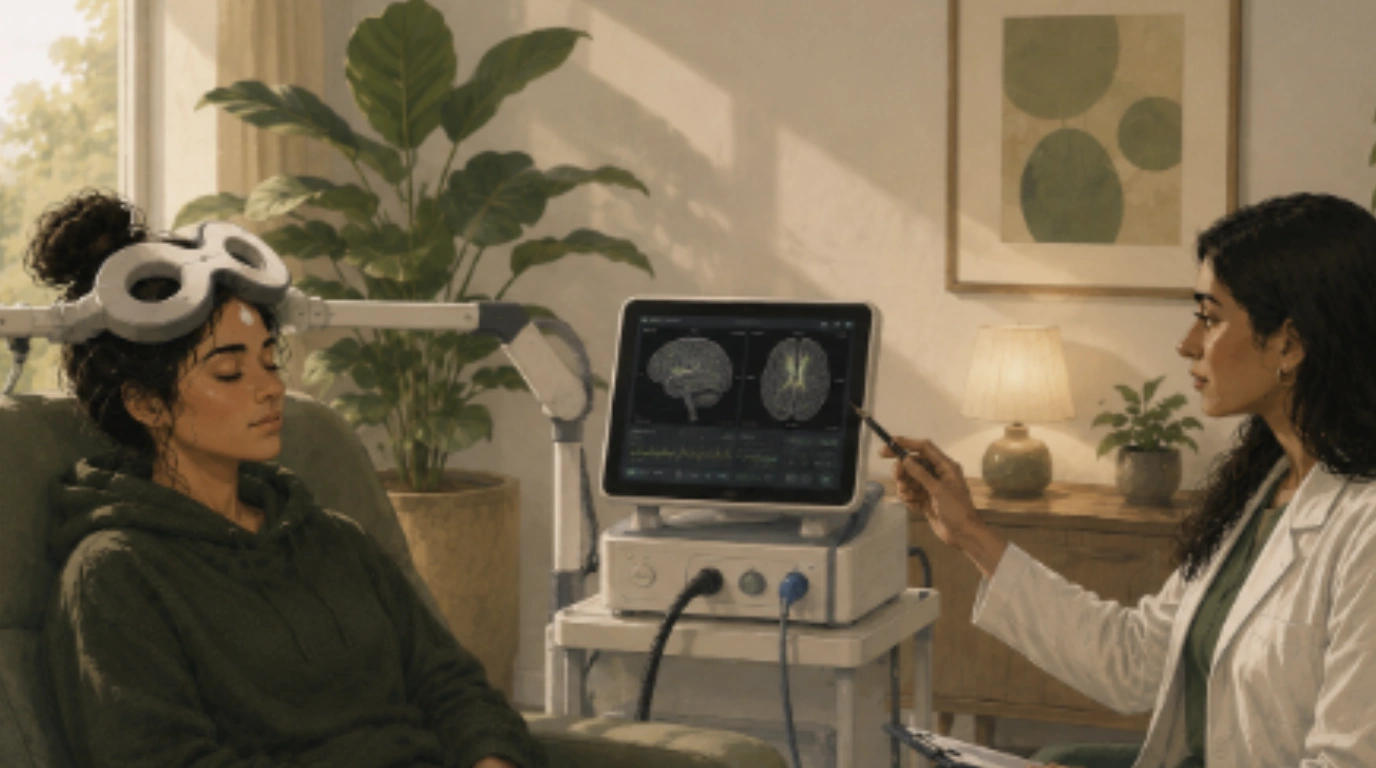
It uses magnetic pulses. These reach a mood-linked part of the brain. No surgery. No anaesthesia.
You sit in a chair. A coil rests near your scalp. Each session lasts under an hour.
You stay awake the whole time. You can drive home after. That alone draws many people in.
A typical course runs across several weeks. Often four to six. Sometimes daily on weekdays.
How well does it work? Trials vary. One pivotal study showed about 30% remission with rTMS versus 16% on sham (Source: Concerns review / SAGE, 2024 — pmc.ncbi.nlm.nih.gov/articles/PMC10958069/).
rTMS therapy India has grown fast. Many large centres now offer it.
Cost sits in a mid range. Sessions often run around 1,000 to 7,000 rupees each, depending on the centre.
The biggest plus is tolerability. Side effects are usually mild. Scalp discomfort. A brief headache. Both fade.
There is another draw. Daily life mostly continues.
You can work around the sessions. You can stay at home.
That suits people who cannot pause everything. It fits busy families too.
But commitment is real. Missing sessions can blunt the benefit.
So plan ahead. Block the weeks. Treat it like physiotherapy for the brain.
A: Most people feel a tapping or knocking on the scalp. It can be odd at first. It is not painful for most, and it eases as sessions go on.
What Is Ketamine Therapy And How Fast Does It Work?
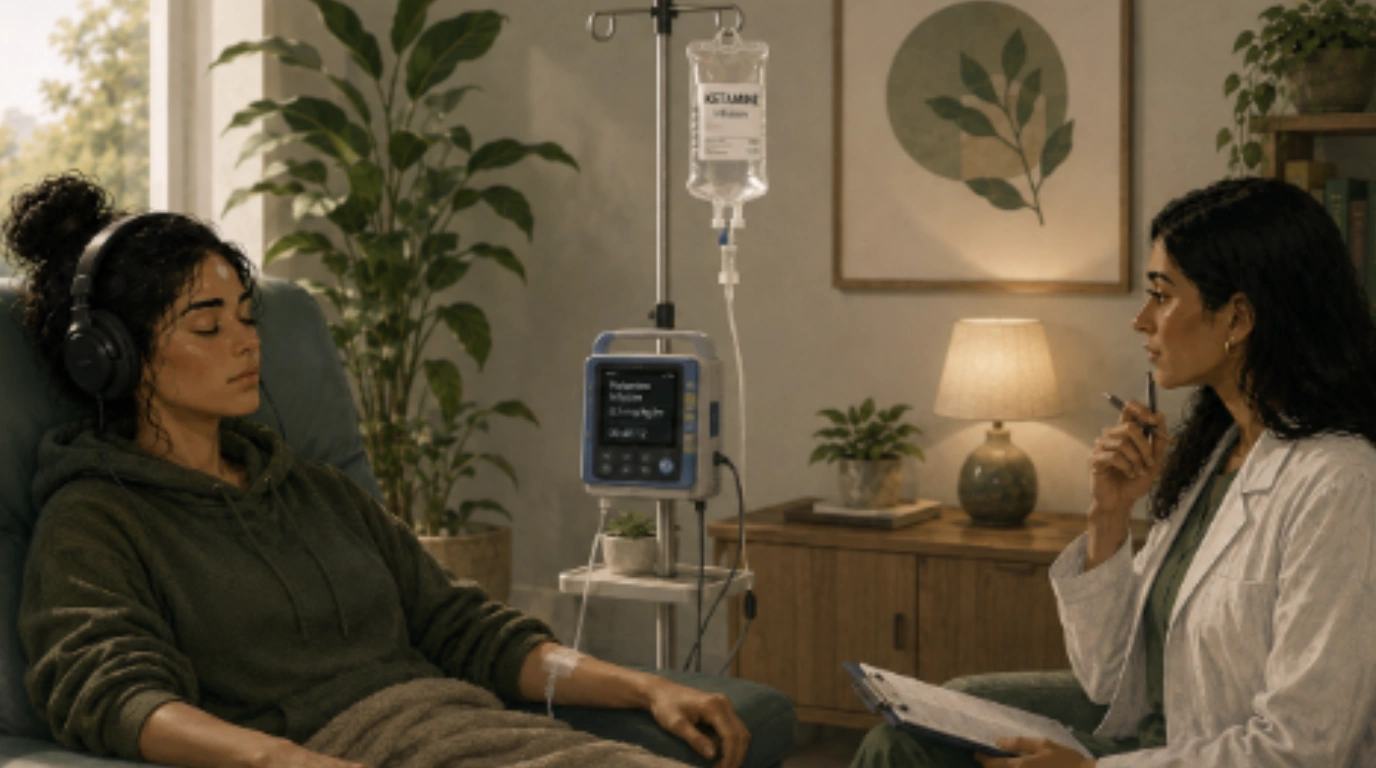
Ketamine is best known as an anaesthetic. At low doses, it acts differently.
It works on the brain's glutamate system. Not the usual serotonin route. That is why it acts fast.
Speed is its headline. The lift can begin within hours.
Research backs this. The antidepressant effect often emerges at 4 hours, peaks near 24 hours, then fades by 7 days after a single infusion (Source: Molecular Psychiatry / Nature, 2022 — nature.com/articles/s41380-022-01757-7).
The numbers are meaningful. A pooled meta-analysis reported response rates peaking around 46% and remission near 27% with ketamine infusions (Source: Molecular Psychiatry / Nature, 2022 — nature.com/articles/s41380-022-01757-7).
There is one striking strength. Ketamine can ease acute suicidal thoughts quickly (Source: Efficacy review / PMC, 2019 — pmc.ncbi.nlm.nih.gov/articles/PMC6767816/).
That can be life-saving in a crisis. But the effect is short. Repeat doses are usually needed.
It is approved as an anaesthetic, not as an antidepressant. So its use for depression is off-label.
Off-label is legal and common in medicine. But it demands a careful, supervised setting.
Indian centres do use it. One tertiary Indian centre reported a year of intravenous ketamine for depression with useful real-world results (Source: Indian J Psychol Med / PMC, 2024 — pmc.ncbi.nlm.nih.gov/articles/PMC12040862/).
What about the nasal spray you may have read about? That is esketamine, branded Spravato.
But esketamine is not approved or sold in India. So ketamine therapy India today means supervised infusions, not the spray.
There is a catch with the speed. The relief can fade.
Often within about a week of one dose. So maintenance is part of the plan.
This shapes how clinics use it. Several sessions. Spaced over weeks.
It also shapes cost. Each session is priced separately.
So ask for a full course estimate. Not just a single price.
Who is ketamine often considered for? Usually severe, urgent cases.
Especially where suicidal thoughts are pressing. Speed can matter most there.
But it is never a casual choice. It is a serious, supervised treatment.
A: It can be, but only under tight medical supervision. It needs monitoring for blood pressure, dissociation and misuse risk. Never seek it outside a proper clinical setting.
What Is Neurofeedback And Does It Work For Depression?
Neurofeedback is the gentlest of the three.
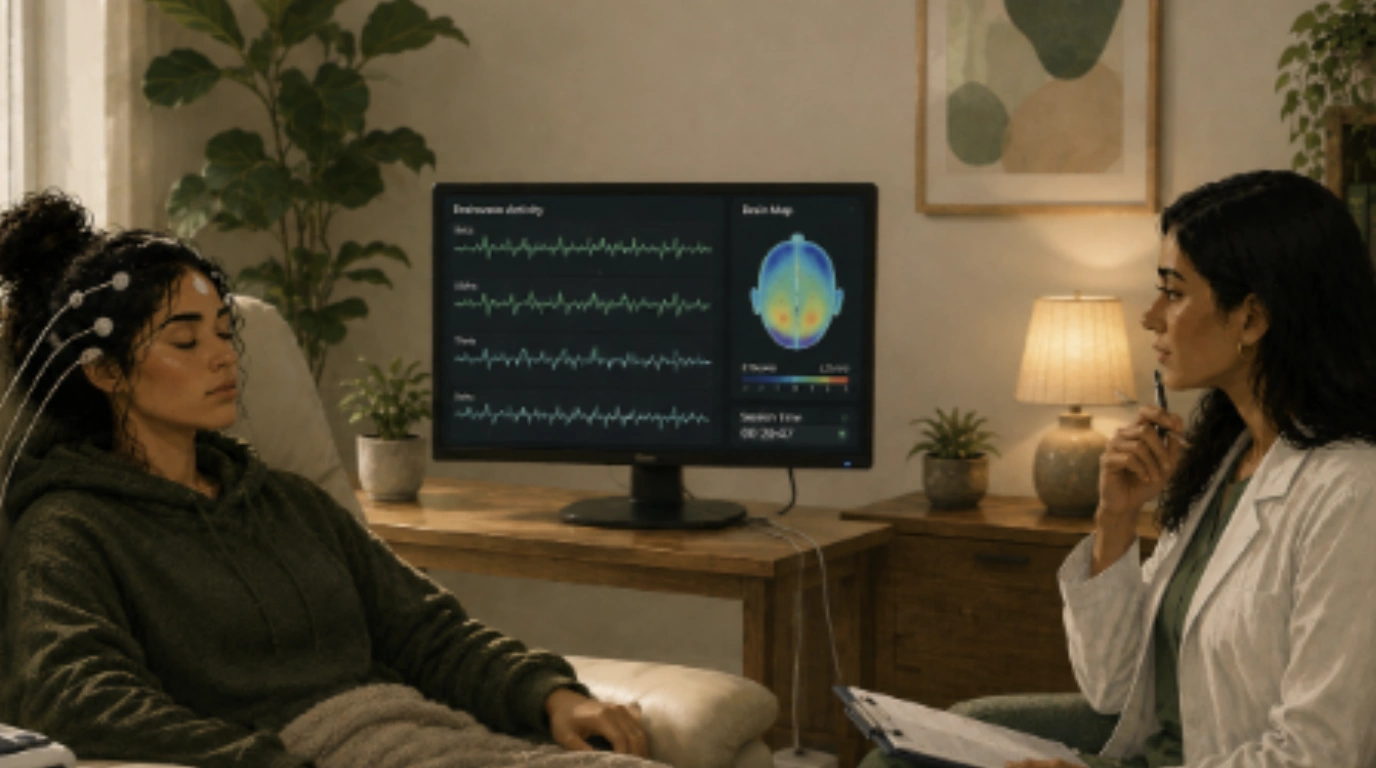
It trains your brain activity. Sensors read your brainwaves. A screen gives real-time feedback.
You learn to nudge certain patterns. Over many sessions. No drugs. No magnetic pulses.
It sounds appealing. Low risk. Non-invasive. Drug-free.
But the evidence is the weakest here. The research base is thinner than for rTMS or ketamine.
Some trials are promising. One controlled fMRI neurofeedback study showed over 40% symptom reduction in the active group (Source: NeuroImage Clinical / PMC, 2018 — pmc.ncbi.nlm.nih.gov/articles/PMC6186421/).
That is encouraging. But study quality and methods vary widely.
So where does that leave neurofeedback? Think of it as support, not a sole rescue.
It may help alongside therapy. It may suit milder cases. It is rarely the first answer for severe, urgent depression.
Who might it suit? People wanting a gentle add-on.
Those already in therapy. Those with milder symptoms.
It may also appeal if you fear drugs or devices. The low-risk profile is real.
But set honest expectations. Progress can be slow.
Many sessions are needed. Often over many weeks. Results vary person to person.
So treat it as a helper. Not a rescue for a crisis.
A: Not for most people with severe depression. It is best used as an add-on, decided with your psychiatrist. It is not a proven standalone cure.
rTMS vs Ketamine vs Neurofeedback: A Side-By-Side Comparison
You have met all three. Now see them together.
This table sums up the core differences. It is a starting point, not a prescription.
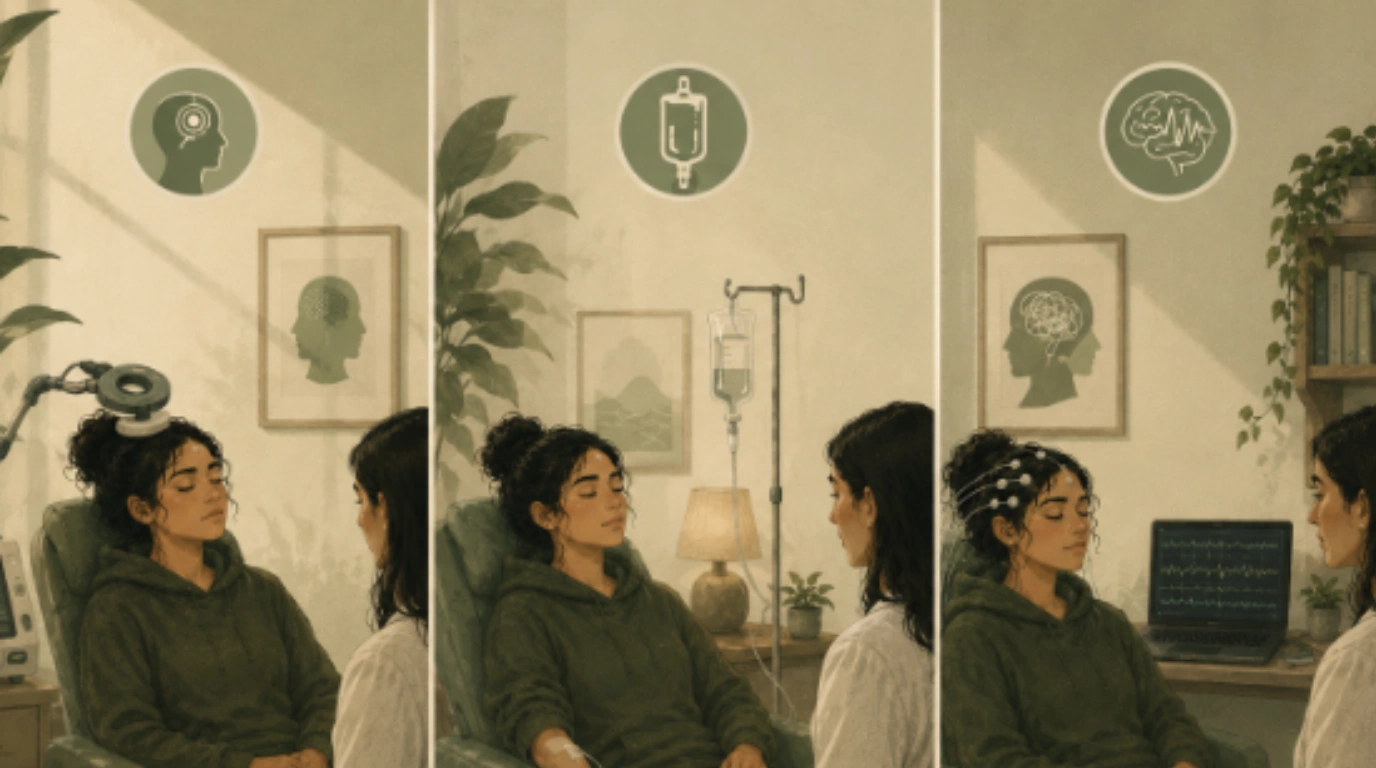
FactorrTMSKetamine (IV, off-label)NeurofeedbackHow it worksMagnetic pulses to mood circuitsActs on brain glutamate systemTrains brainwave patternsSpeed of effectWeeksHours to daysSlow, many sessionsEvidence strengthStrong, FDA-cleared 2008Strong for rapid effectLimited, mixed qualityTypical response data~30% remission vs 16% shamResponse peaks ~46%Modest, varies by trialSuicidal-thought reliefSlowerRapid, can be acuteNot establishedMain strengthGentle on the bodyFast actingNon-invasive, drug-freeMain limitSlower onsetEffect fades in ~7 daysWeaker evidenceIndia statusWidely availableOff-label, supervised onlyAvailable, supportive roleIndia regulatory noteDevice-based, in clinicsNDPS-controlled drugNo drug regulation issue
One pattern stands out. rTMS and ketamine are broadly comparable on overall response and remission. They differ on speed and side-effect profile.
Read the table as a map, not a verdict. It shows trade-offs.
Speed sits on one side. Ketamine wins there. Relief can come in hours.
Durability sits on the other. rTMS has stronger relapse data.
Evidence depth matters too. rTMS and ketamine both have solid backing. Neurofeedback lags.
Then there is the India layer. rTMS is a device, freely used in clinics.
Ketamine is a controlled drug. So access is narrower and more supervised.
No row alone decides for you. The right pick balances all of them.
A: Network analyses suggest similar overall response and remission. They differ mainly in speed and tolerability, not in raw success rate. A clinician matches the right one to your needs.
Which Treatment-Resistant Depression Option Should You Try First?
Here is the honest answer. It depends on you.
We cannot rank them for your case. No blog can. But we can show how a psychiatrist thinks.
First, urgency and safety. Are you in crisis? Are there active suicidal thoughts?
If yes, faster-acting choices may be weighed first. Ketamine's rapid anti-suicidal effect can matter here (Source: Efficacy review / PMC, 2019 — pmc.ncbi.nlm.nih.gov/articles/PMC6767816/).
Second, your treatment history. How many drugs have you tried? At what doses?
Third, physical health. Heart issues. Blood pressure. Seizure risk. These shape what is safe.
Fourth, tolerability and lifestyle. Can you attend many weekday sessions? rTMS asks for that commitment.
Fifth, cost and access. What can you sustain over a full course?
Notice what is missing. Your own guess. This is not a self-service menu.
A combination may even be discussed. In one case report, rTMS plus ketamine led to sustained remission after each alone fell short (Source: PMC, 2022 — pmc.ncbi.nlm.nih.gov/articles/PMC8792891/).
Sixth, your own preferences. Comfort matters in long care.
Some people dread daily clinic visits. Others fear a dissociative infusion.
A good clinician listens to that. The plan should fit your life.
So the smartest first step is not a treatment. It is an assessment.
Book a full evaluation with a psychiatrist. Bring your medication history. Bring your questions from this page.
A: You can ask, but a proper centre will assess you first. The right treatment follows a full clinical review. Skipping that step is risky, especially with a controlled drug.
What To Ask Before You Start Any Treatment
Knowledge protects you. So does the right question list.
Bring these to any centre you visit. Their answers tell you a lot.
Ask about credentials. Who supervises the treatment? What is their training?
Ask about safety. What monitoring happens during and after each session?
Ask about the full plan. How many sessions? Over how many weeks?
Ask about cost upfront. What is the total, written out? Any hidden add-ons?
Ask about evidence. Why this option for me, specifically?
Ask about ketamine's legal status if it is offered. A good centre will explain the off-label, NDPS-controlled position clearly (Source: SAGE, 2024 — pmc.ncbi.nlm.nih.gov/articles/PMC10958069/).
Ask about aftercare. What happens once the course ends?
A trustworthy centre welcomes these questions. It does not rush you.
Write the answers down. Compare two or three centres.
Notice how they treat your doubts. Patience is a good sign.
Bring a family member if you can. A second set of ears helps.
Depression can cloud focus. Support makes decisions clearer.
A: Pressure to start fast without assessment is a warning sign. So is a refusal to put costs in writing. Good care moves at a safe, clear pace.
Side Effects And Safety: What Each Treatment Asks Of You
Every option carries trade-offs. Knowing them helps you choose calmly.
Start with rTMS. Its side effects are usually mild and short.
The most common is scalp discomfort. A tapping feeling. Sometimes a brief headache.
Rarely, a seizure can occur. This risk is very low in screened patients.
That is why screening matters. A clinic should check your seizure history first.
rTMS asks for time, not bravery. Many sessions. Over several weeks.
Now ketamine. The picture is more intense.
During an infusion, dissociation is common. The world can feel distant or dreamlike.
Blood pressure can rise. Heart rate can climb. So monitoring is essential.
There is also misuse potential. Ketamine can be habit-forming if unsupervised.
That is one more reason for tight control. It should never be self-administered.
The effect also fades. Often within about 7 days after one infusion (Source: Molecular Psychiatry / Nature, 2022 — nature.com/articles/s41380-022-01757-7).
So repeat sessions are usually needed. That shapes cost and planning.
Now neurofeedback. Its safety profile is reassuring.
Side effects are few and usually minor. Mild fatigue. Occasional headache.
The bigger risk is different. It is the risk of relying on weak evidence.
Choosing neurofeedback alone for severe depression may delay stronger care.
A: Ketamine demands the closest monitoring of the three. rTMS is gentler, and neurofeedback is the mildest. But mildness does not equal strength of effect.
Now think about how all this fits Indian care.
Indian clinicians do not pick treatments in a vacuum.
They start with your full story. Symptoms. History. Safety.
They also weigh access. Not every centre offers every option.
rTMS is now widely available across Indian cities. Many large hospitals run it.
Indian centres are building real-world experience. One reported a full year of intravenous ketamine for depression (Source: Indian J Psychol Med / PMC, 2024 — pmc.ncbi.nlm.nih.gov/articles/PMC12040862/).
Cost also enters the room. Many families pay out of pocket.
Insurance for these treatments is patchy in India. So budget is a real factor.
Clinicians also think long-term. Will the gains hold?
rTMS has growing relapse-prevention data. Ketamine's effect is rapid but brief.
So a plan may layer options over time. Stabilise first. Then maintain.
This is why one-size advice fails. Your plan is yours alone.
There is one more piece. Combination care.
Sometimes one option alone is not enough. So clinicians may layer them.
That is not routine. But it shows flexibility exists.
Therapy still sits at the core. CBT and DBT matter alongside any of these.
So think of these treatments as tools. Not magic switches.
The best results often come from a blend. Medicine, therapy and the right add-on.
A psychiatrist coordinates that mix. They adjust as you respond.
A: rTMS uses a device and is now common in big cities. Ketamine needs controlled-drug handling and is offered in fewer places. A psychiatrist can point you to safe, equipped centres.
- Up to 20% of people with depression progress to treatment-resistant depression. . - The treatment gap for common mental disorders in India is about 85%. . - rTMS showed about 30% remission versus 16% on sham in a pivotal trial. . - Ketamine response peaks near 46% and remission near 27% in pooled data. . - Esketamine was FDA-approved in 2019 but is not approved or sold in India.
How Ganaa Can Help You Choose Wisely
Choosing between these options can feel lonely. It should not be done alone.
At Ganaa, care starts with a full assessment. Not a sales pitch.
We are a residential mental health and rehabilitation provider in India. We have served people since 2012.
Our psychiatrists review your history first. Past medicines. Doses. Response. Safety.
Only then is a treatment path discussed. It is built around your needs, not a fixed script.
We blend modern clinical science with calm, restful settings. CBT. DBT. Medication review. Supportive therapies.
Care is available across our centres. Ganaa South Delhi and Ganaa Chattarpur in South Delhi. Ganaa Gurgaon in Sector 46.
There is also Ganaa Greater Noida and the riverside Ganaa Goa. Our women-only wing sits within Ganaa Gurgaon.
Prefer outpatient care? We run OPD clinics too. Faridabad. Greater Kailash. Greater Noida.
You get 24/7 support during residential stays. You get families looped in, not shut out.
We do not promise miracle cures. We do not quote invented success rates. We offer honest, evidence-led care.
We also walk with families. Caregivers carry a heavy load too.
So we explain each step in plain words. No jargon. No pressure.
Our programs run as residential stays. Thirty, sixty or ninety days. Aftercare follows.
The aim is steady recovery. Not a quick fix that fades.
If standard antidepressants have not worked, talk to us. We will explain your real options plainly.
Speak to a Ganaa admissions counsellor today. Or visit ganaa.in to learn more about our programs.
Conclusion: Knowledge First, Then The Right Hands
Treatment-resistant depression is hard. It is not the end of the road.
You now know the three main options. rTMS works slowly but gently. Ketamine works fast but briefly, and is off-label in India. Neurofeedback is gentle but less proven.
You also know the truth about choosing. There is no one winner for everyone.
The rTMS vs ketamine depression India question has no blanket answer. It has your answer, found through proper assessment.
So do not self-prescribe from this page. Use it to ask better questions instead.
Bring your history to a psychiatrist. Ask about safety, cost and evidence. Then decide together.
Keep your expectations honest. No option works for everyone.
But the odds improve once you act. Doing nothing rarely helps depression heal.
You have already done the hard part. You kept looking for help. That matters.
Hold one idea close. Treatment-resistant is a label, not a sentence.
Many people improve once care moves past first-line pills. Newer options exist for a reason.
The next step is simple. Reach out. Let trained hands guide what comes next.
FAQ
Q: Is rTMS or ketamine better for treatment-resistant depression?
A: Network analyses show broadly comparable response and remission rates between the two. Ketamine works faster, often within 24 to 72 hours. Helps acute suicidal thoughts. rTMS is slower but gentler on the body and has stronger relapse-prevention data. The right first step depends on your history, urgency and safety, so a psychiatrist should decide.
Q: Is ketamine therapy legal for depression in India?
A: Ketamine is a controlled substance under the NDPS Act, 1985, and is approved as an anaesthetic. Its use for depression in India is off-label, meaning a psychiatrist prescribes it outside the original approval. It must be given under medical supervision in a proper clinical setting. The nasal-spray form esketamine is not approved or sold in India yet.
Q: What is treatment-resistant depression?
A: It usually means your depression has not lifted after two or more antidepressants. Each must be tried at the right dose and duration. Up to one in five people with depression may reach this stage. It does not mean your case is hopeless. It means standard pills alone are not enough.
Q: How effective is neurofeedback for depression?
A: The evidence for neurofeedback in depression is still limited and weaker than for rTMS or ketamine. Some small trials report meaningful symptom drops, but study quality varies. It is best seen as a supportive add-on, not a standalone first-line treatment for severe cases. Discuss realistic expectations with a clinician before starting.
Q: How much does rTMS therapy cost in India?
A: Each rTMS session in India often costs roughly 1,000 to 7,000 rupees, and a full course runs across many sessions. Total cost depends on the centre, city and number of sittings advised. Ketamine infusions are priced per session too and need clinical monitoring. Ask any centre for a clear, written cost plan before you begin.
Q: Which treatment-resistant depression option should I try first?
A: There is no single answer that fits everyone. A psychiatrist weighs your symptoms, suicide risk, past treatments, physical health and budget. If urgency is high, faster options may be considered first. The safest path is a full assessment, not a self-chosen treatment from a blog.
Eating disorders in India hide behind praise for discipline and thinness. Learn the early warning signs, what to say, and how treatment actually works.
High functioning anxiety hides behind good work and a calm face. Learn the hidden signs, what the body does, and when coping turns into the problem itself.
The cost of mental health rehab in India is rarely published openly. Here is what moves the price, what insurance must cover by law, and what to ask first.