Does Neurofeedback Work? An Honest Look at the Science
Does neurofeedback work? We weigh the real evidence and the limits — what the trials show for ADHD, PTSD and anxiety, with India context.
Does Neurofeedback Work? An Honest Look at the Science
Neurofeedback gets sold as a brain workout.
Train your brainwaves. Calm your mind. Skip the pills.
It sounds clean and modern. So a fair question follows. Does neurofeedback work, and how well?
The honest answer is layered. Sometimes, a little, for some people. Not always. Not for everyone.
The question sounds simple. The science behind it is not.
This guide weighs the real evidence. It also weighs the limits.
We look at what the best trials show. We look at where the hype runs ahead of proof. We bring in the India context too.
We offer neurofeedback at Ganaa. That is exactly why we want to be straight with you. Overselling helps no one.
You deserve facts, not a sales pitch. So we will name the wins and the gaps.
Below, we cover what it is, what the data says, and how to judge a clinic.
Read it before you spend money on any package.
What Is Neurofeedback, in Plain Terms?
Neurofeedback is a type of brain training.
It is also called EEG biofeedback. The two terms mean the same thing.
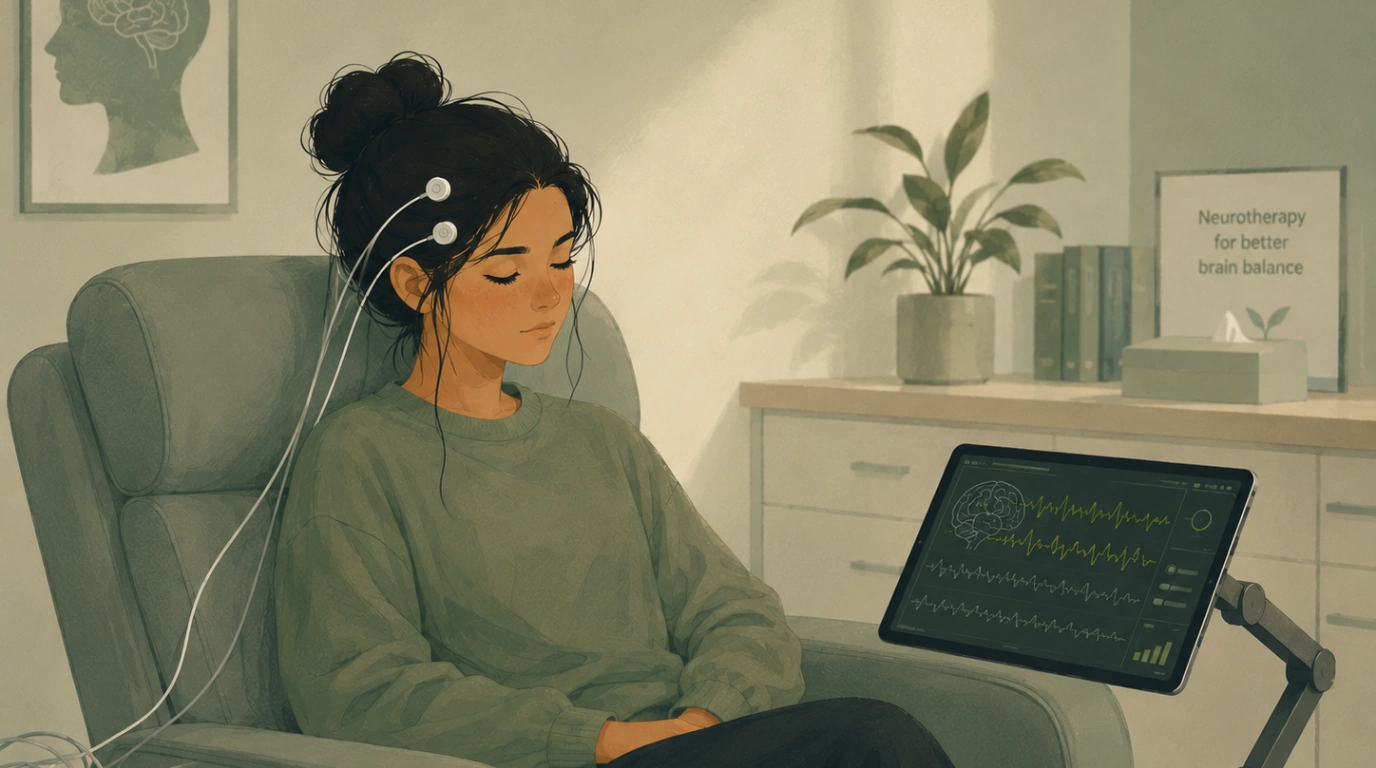
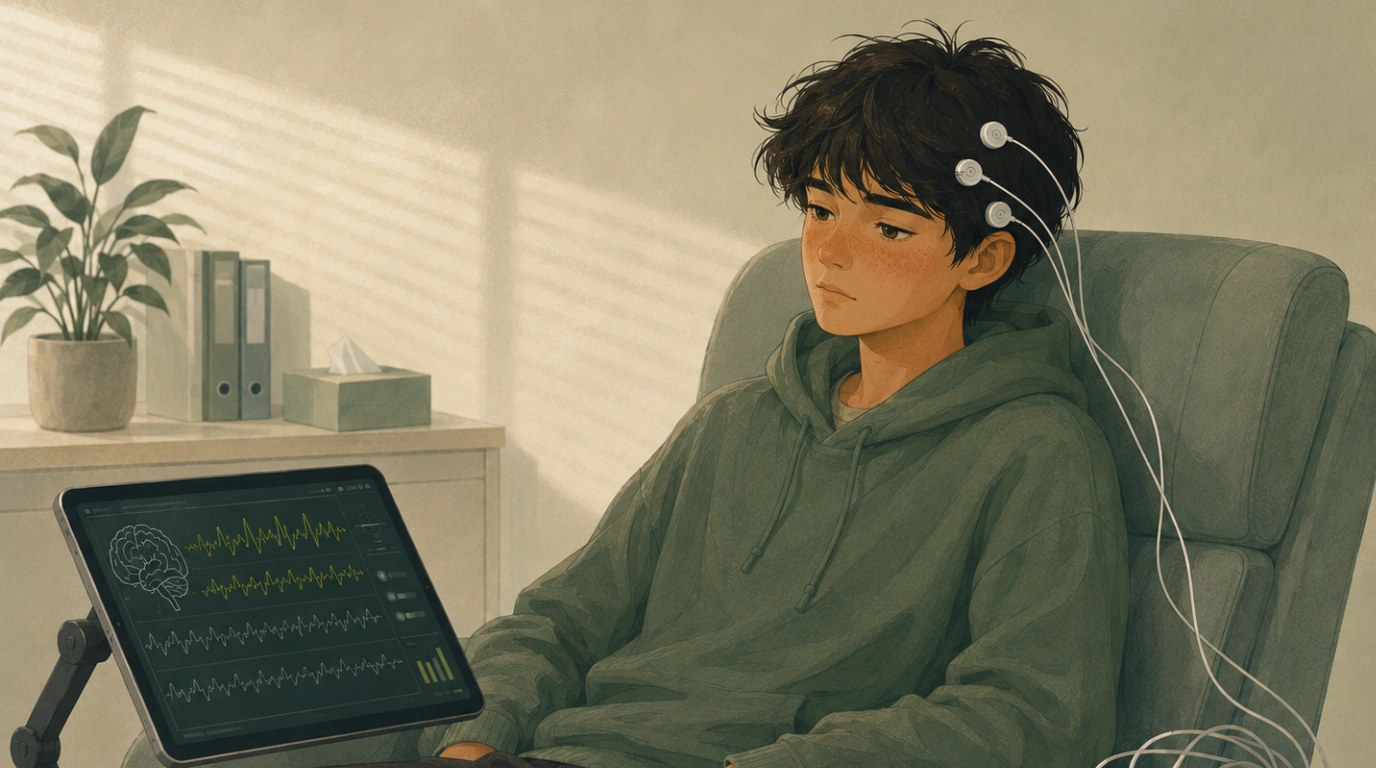
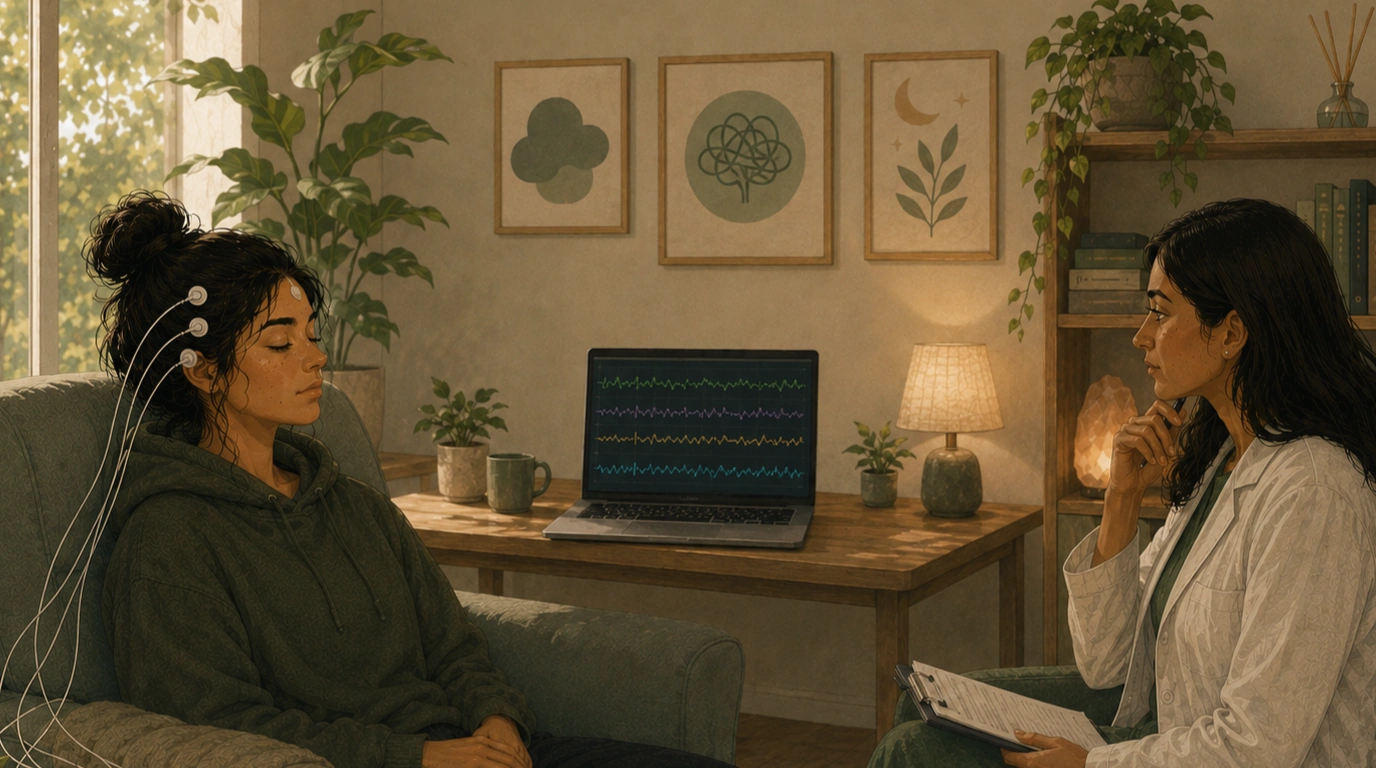
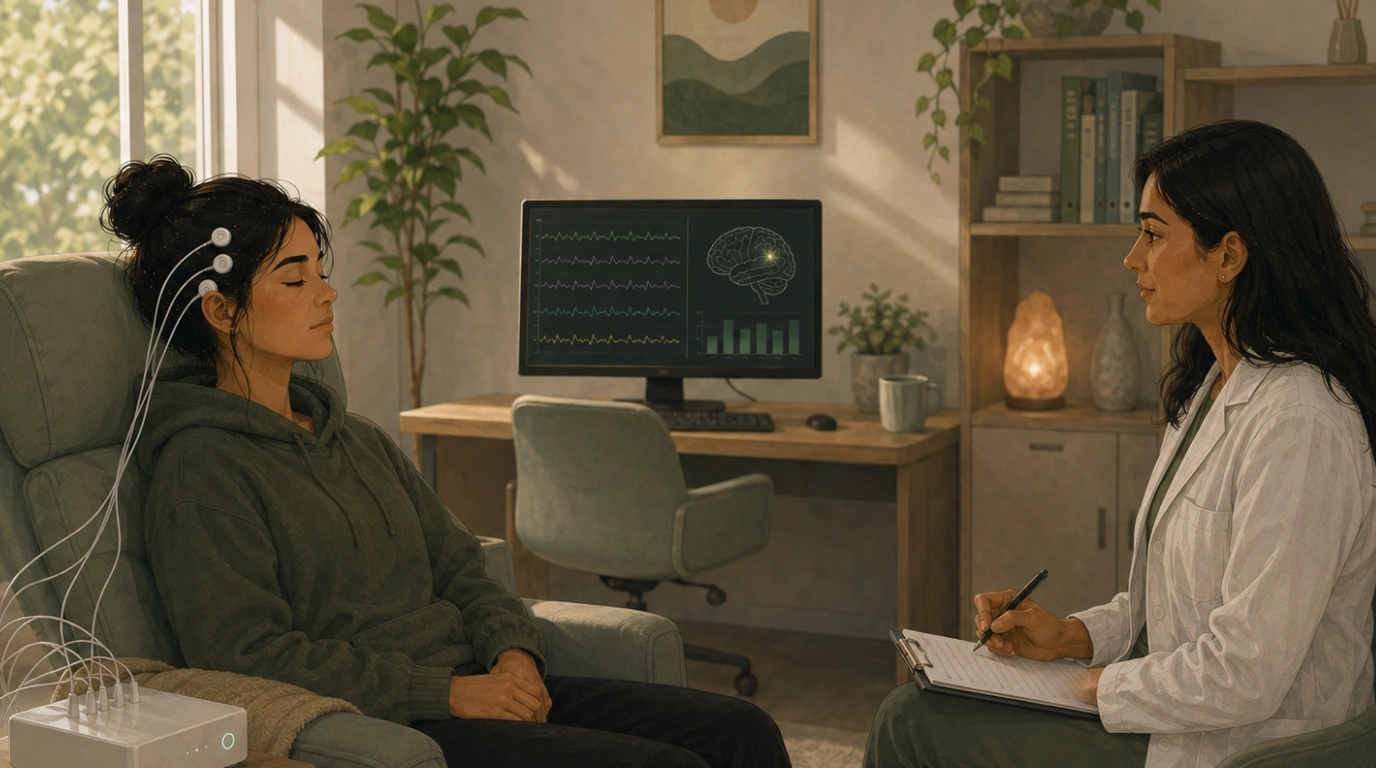
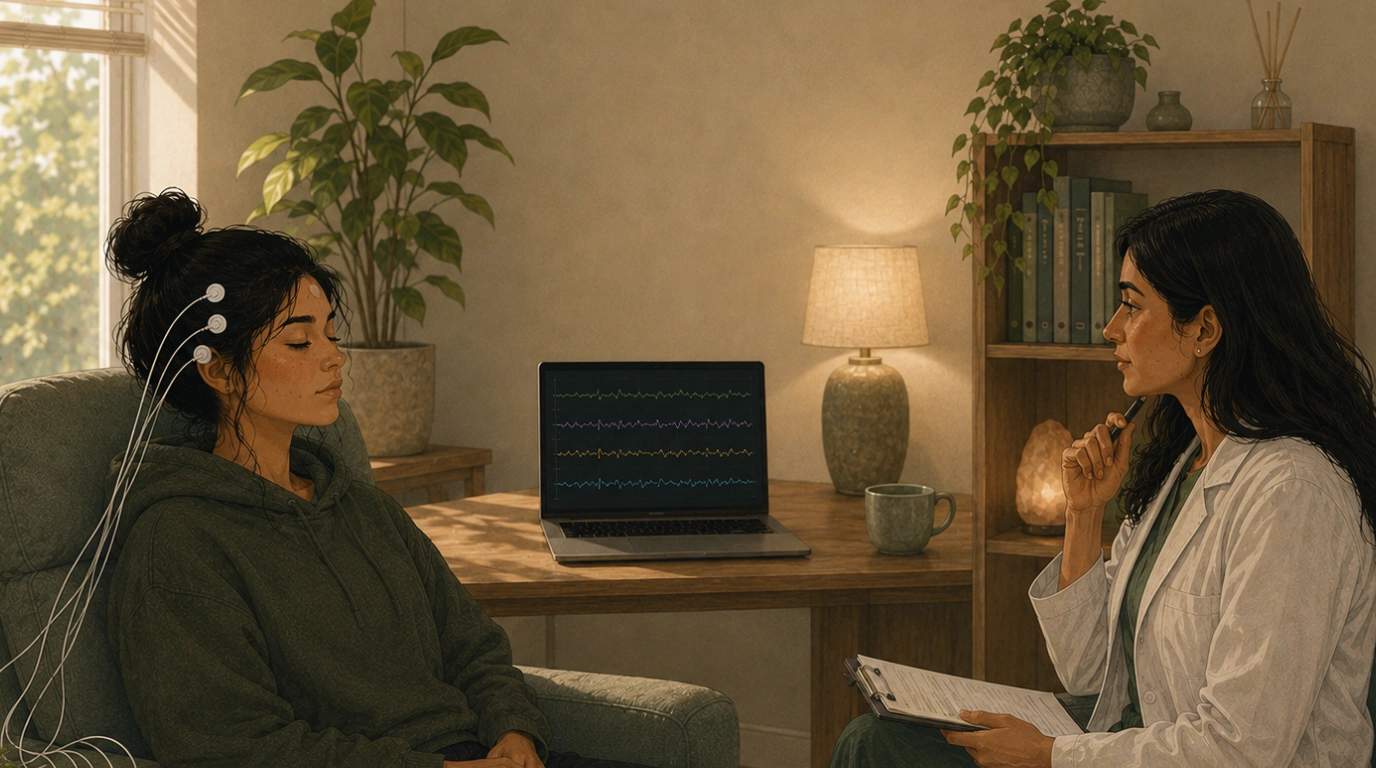
Small sensors sit on your scalp. They read your brain's electrical activity. They do not send any current in.
You watch a screen. A game or a bar moves with your brainwaves. When your brain hits a target pattern, you get a reward signal.
That reward might be a sound. It might be a moving image. The point is simple feedback.
Over many sessions, the idea takes shape. Your brain learns to favour that pattern. This is operant conditioning, applied to brainwaves.
Think of it like a mirror for your mind. You see a signal you cannot normally feel.
The technique is not new. It was first tested in people with ADHD and epilepsy back in the 1970s (Source: Frontiers in Psychiatry, 2024 — PTSD neurofeedback review).
So this is not a fad app. It has a long research history.
But a long history does not equal strong proof. Those are two different things.
A method can be old and still unproven. That is the puzzle we unpack here.
Most sessions last 30 to 45 minutes. A full course often runs 20 to 40 sessions. That is a real commitment of time and money.
A: Yes, the two terms mean the same thing. Sensors read your brain's electrical signals. You get real-time feedback and try to shift those signals over time.
Does Neurofeedback Work for ADHD?
ADHD is where neurofeedback has the most studies. It is also where the debate is sharpest.
Here is the honest tension.
Some meta-analyses look positive. One review of randomised trials found that surface EEG neurofeedback improved sustained attention in ADHD (Source: Child and Adolescent Psychiatry and Mental Health, 2022 — ADHD neurofeedback meta-analysis).
That sounds encouraging. But read on.
The bigger, stricter picture is more sober. A large systematic review pooled 38 randomised trials with 2,472 people aged 5 to 40 (Source: PubMed, 2024. ADHD neurofeedback systematic review).
Its conclusion was blunt. Neurofeedback did not clearly help ADHD at the group level once studies were judged carefully.
Why the gap between studies? Blinding.
In well-blinded trials, the benefit shrinks. Many gains came from trials where people knew they got the real thing. That can inflate results.
There is a hopeful nuance, though. Some teams study it as an add-on.
The framing there is key. It studied an add-on, not a swap.
So neurofeedback may have a supporting role. It is not a proven stand-alone cure.
We do not present it that way to families. We are clear about the uncertainty.
It also helps to know the standard ADHD options. Medication and behaviour therapy have strong, repeated evidence.
Those treatments have decades of large trials behind them. Neurofeedback does not yet match that track record.
So we never frame it as a first choice. It may be a useful extra for some, no more.
A: It may help some people with attention. But the strongest, best-controlled evidence is weak. It is not a proven replacement for established ADHD care.
What Do Sham-Controlled Trials Show?
This part matters most. So we slow down here.
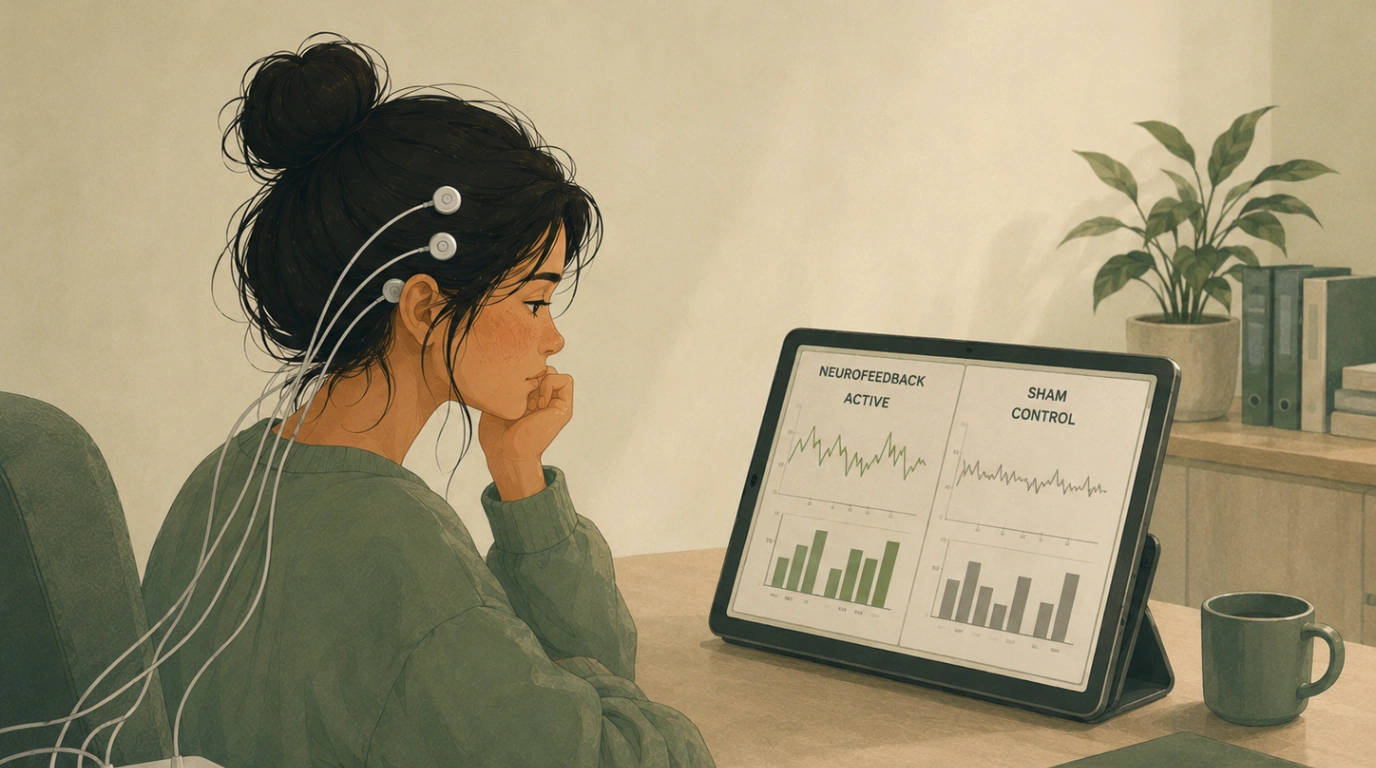
A sham trial gives the control group fake feedback. The setup feels identical. Only the real group trains true brain signals.
This is the gold standard in this field. It separates real brain training from belief and attention.
Why does that matter so much? Because expectation is powerful.
People who pay, travel, and attend tend to improve. That improvement can be real but unrelated to the brainwaves.
The sham design strips that out. The results are humbling.
Real neurofeedback did no better than sham. That held for symptoms and for thinking.
Both groups improved. The training itself added little.
This pattern repeats across the field. When people expect to get better, they often do. That is a placebo effect.
It is not proof the brain training worked.
So why do some clinics show glowing results? Often the studies were not blinded. Or the data came from client reports.
This does not mean neurofeedback is useless. It means we must be careful with claims.
Strong claims need strong, blinded evidence. Right now, that is thin.
This is not a knock on hopeful clients. People feel real change. That feeling is genuine.
The question is what caused it. Was it the brainwaves, or the whole experience?
Care, routine, and attention all help mood. A good clinician helps too.
So a person can improve and still not prove the device worked. That is the heart of the puzzle.
A: Many results come from unblinded studies or client reports. Expectation, attention, and routine can all drive improvement. A sham control strips those out, and the effect usually gets smaller.
Does Neurofeedback Work for PTSD and Trauma?
Here the picture looks more hopeful. We say that with care.
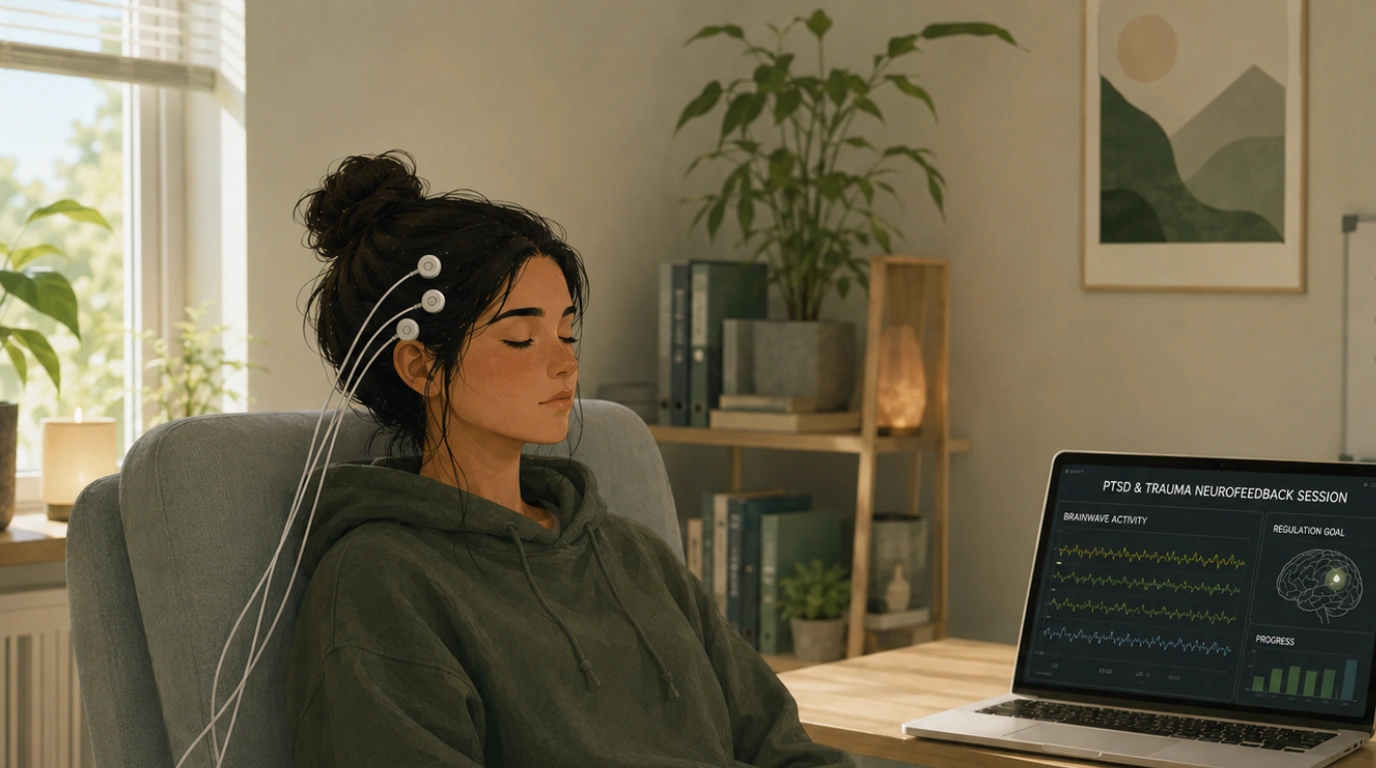
PTSD is one area where neurofeedback shows real promise. The trauma response involves brain regions that may respond to training.
The numbers were striking. Remission reached 79.3% in the neurofeedback groups. It was 24.4% in control groups (Source: PMC, 2024 — PTSD neurofeedback meta-analysis).
That is a large gap. It points to a genuine signal.
But hold the excitement. The same review flags real limits.
The trials were mostly small. The groups were mixed. The quality varied a lot (Source: PMC, 2024 — PTSD neurofeedback meta-analysis).
Small trials can overstate effects. So the headline number needs caution.
A wider review agrees. It found promise for PTSD, but stressed the need for bigger trials (Source: Frontiers in Psychiatry, 2024 — PTSD neurofeedback review).
So the evidence is promising, not settled. We need bigger, tighter studies to be sure.
For now, we frame it as one possible tool. It sits within full trauma care, never alone.
Trauma-focused therapy stays the backbone. Neurofeedback may support it for some.
Why might it help trauma at all? The theory is about calming a hyper-alert brain.
Trauma can leave the brain stuck on high alert. Some training aims to settle that state.
That idea is plausible. The early data fits it. But plausible is not the same as proven.
So we treat the PTSD results as a strong lead, not a final answer.
A: It may be worth discussing as one part of trauma care. It should sit alongside trauma-focused therapy, not replace it. Speak to a psychiatrist before you decide.
What About Anxiety, Depression and Sleep?
People often ask about these next. The answer is gentler here.
The evidence is thinner. It is also more mixed.
Some depression studies use frontal brainwave patterns as a target. A few report reduced symptoms with neural change (Source: Archives of Biological Psychiatry, 2024 — neurofeedback in psychiatry review).
Anxiety studies sometimes show drops in trait anxiety and better sleep (Source: Archives of Biological Psychiatry, 2024 — neurofeedback in psychiatry review).
That is worth noting. But these are early signals.
The protocols differ widely. Sample sizes are small. Blinding is often weak.
So we cannot promise results for anxiety or low mood. Anyone who does is going beyond the data.
This is the heart of an honest read of neurofeedback evidence. Promise less. Verify more.
There are good reasons the picture stays murky. They are worth knowing.
First, protocols vary. Different clinics target different brainwaves. There is no single agreed recipe.
Second, blinding is hard. It is tricky to fake brain training well. So bias creeps in.
Third, many studies are small. Small studies give noisy, unstable results.
The field is honest about this. It still calls for larger, rigorous sham-controlled trials (Source: Frontiers in Psychiatry, 2024 — PTSD neurofeedback review).
That candour is a good sign. It means the science is policing itself.
For sleep, the story is similar. A few studies hint at better rest. The base is small.
So we treat anxiety, low mood, and sleep with care. We do not oversell brain training for them.
If someone has depression, we lean on proven care first. That means therapy and, where needed, medication.
Neurofeedback might sit beside that work. It does not lead it.
A: Not firmly. Some studies suggest it might help. The evidence is too thin to call it a proven treatment for these conditions today.
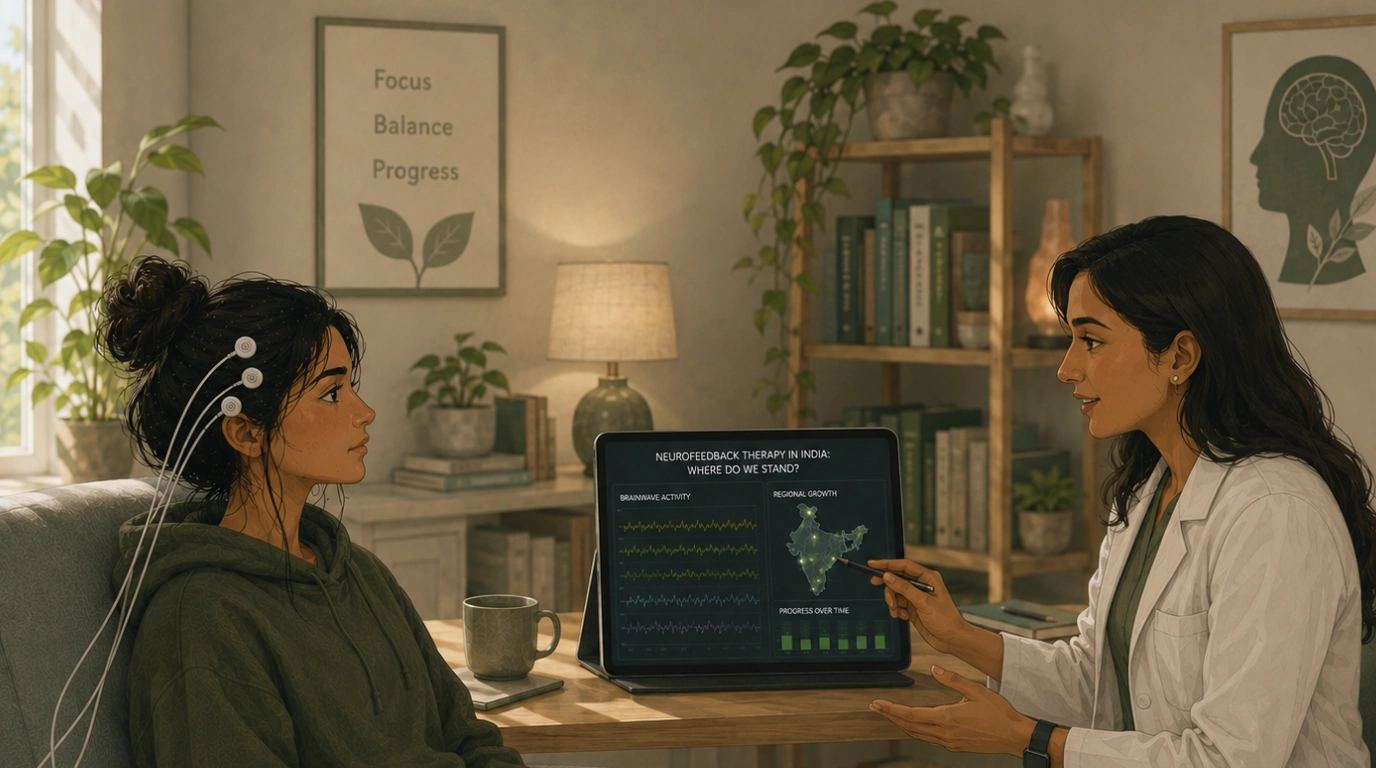
Neurofeedback Therapy in India: Where Do We Stand?
Now to the local picture. This matters for readers here.
Neurofeedback therapy in India uses the same global research base. The science does not change at the border.
Indian institutions have studied it too. NIMHANS in Bengaluru has researched EEG neurofeedback.
That is useful early work. It is not the final word.
There is a wider problem too. India has a huge treatment gap.
For common mental disorders, the treatment gap was about 80% in the National Mental Health Survey (Source: NMHS India, 2016. National Mental Health Survey 2016).
So many people seek any help they can find. That makes honest guidance vital.
It also makes people easy to oversell. A shiny device feels like hope.
On EEG biofeedback effectiveness in India, the same caution applies. Quality of care varies a lot. Always check credentials.
A good clinic will set realistic expectations. A weak one will promise the world.
Cost is another local concern. A full course can run into many sessions.
That is a big spend for many families. So the value question matters even more.
Ask what the plan adds beyond standard care. Ask how success will be judged.
If a clinic cannot answer clearly, pause. Your money and hope deserve a straight reply.
A: There is no single tight standard for it yet. Care quality differs between providers. Choose centres with qualified clinical staff and clear, modest claims.
Can Neurofeedback Replace Medication?
This is where we must be firm. The stakes are high.
The short answer is no. The evidence does not support swapping medication for neurofeedback.
Some studies test it the other way. They add neurofeedback on top of existing care.
The framing there is key. It studied a complement, not a replacement.
That is the safe way to think about it. Neurofeedback may support care. It does not yet stand in for proven treatment.
Stopping medication can be dangerous. It can trigger relapse or withdrawal.
This is true for many conditions. It is true for bipolar disorder, psychosis, and severe depression.
So please, never stop or change a prescription on your own. Talk to your treating doctor first.
If a clinic tells you to quit your medication, walk away. That is a serious warning sign.
We never frame brain training as a way off your medication. That is not our role, and it is not safe.
A: No, not on your own. There is no strong evidence to support that swap. Any change must be guided by the psychiatrist who prescribed it.
How to Judge a Neurofeedback Clinic Honestly
You deserve clear ways to vet a provider. Here are simple, practical checks.
Use these before you pay for any package.
First, check the claims. Honest clinics talk about "may help." They avoid words like "cure" or "guaranteed."
Second, check the staff. Look for qualified psychologists or psychiatrists on the team.
Third, ask about assessment. Good care starts with a proper clinical review, not a sales pitch.
Fourth, ask how progress is tracked. There should be clear, measured check-ins over time.
Fifth, watch the price and the pressure. Be wary of long, costly packages sold up front.
Sixth, ask how it fits your whole care. Neurofeedback should support therapy and psychiatry. It should not replace them.
Seventh, ask about the evidence. A good clinic can talk about limits, not just wins.
A short checklist helps you stay grounded.
- The clinic says "may help," never "cure" or "guaranteed.". - Qualified clinical staff lead the assessment and the plan. - Treatment fits within proper therapy and psychiatric care. - Progress is measured and reviewed, not assumed.
Keep this list on your phone. Pull it up when a clinic makes big promises.
The numbers below set realistic hopes. Each one carries its source.
- A review pooled 38 randomised ADHD trials with 2,472 people and found no clear group-level benefit — . - In double-blind sham-controlled fMRI testing, real neurofeedback did no better than sham in children with ADHD — . - For PTSD, remission reached 79.3% with neurofeedback versus 24.4% in controls, but trials were small — . - The treatment gap for common mental disorders in India was about 80% — . - About 1 in 8 people worldwide lives with a mental disorder — .
These facts set realistic hopes. Promising in places. Far from a miracle.
Neurofeedback at Ganaa: How We Use It
We offer neurofeedback as part of care at Ganaa. We use it with our eyes open.
It is one tool. It is never the whole plan.
At Ganaa, brain training sits inside full clinical treatment. That means psychiatry, therapy, and structured daily care.
We start with a proper clinical assessment. A qualified team reviews each person first. Only then do we plan any care.
We treat psychiatric conditions and substance use, including dual diagnosis. We blend modern clinical science with calm, nature-based settings.
Our approach mixes proven therapies like CBT and DBT. We add practices like yoga and meditation. Neurofeedback can support this work for some people.
We never use it as a stand-alone fix. The core care does the heavy lifting.
We run residential programs of 30, 60 and 90 days, plus aftercare. Care is delivered by qualified clinical teams.
Each plan is tailored to the person in front of us. We review progress as we go.
We have residential centres across India. These include Ganaa South Delhi and Ganaa Chattarpur in South Delhi, Ganaa Gurgaon, Ganaa Goa, and Ganaa Greater Noida.
We also run OPD clinics in Faridabad, Greater Kailash and Greater Noida.
We will never promise a cure from any single technique. We set realistic hopes from day one.
We also keep families informed. Honest expectations help everyone plan better.
It helps to know what a session feels like. There are no needles. There is no current sent into the brain.
You sit in a chair. Small sensors are placed on your scalp with gel or a cap.
A clinician starts the software. A screen shows a game, a bar, or a film.
You relax and watch. When your brainwaves hit the target, the screen rewards you.
You do not have to "try" hard. The brain learns through the feedback itself.
Most sessions last 30 to 45 minutes. A full course often runs 20 to 40 sessions.
That is a real commitment. So we discuss the cost and time upfront.
Side effects are usually mild. Some people feel tired or get a light headache.
Honest progress reviews matter here. We check what is changing and what is not.
If nothing shifts after a fair trial, we say so. We do not keep selling sessions that do not help.
If you or a loved one needs support, reach out. Speak to a Ganaa admissions counsellor, or visit ganaa.in to learn about our programs.
A: No. It is non-invasive and painless. Sensors only read signals, they do not send any current. Most people find the sessions calm and easy.
Conclusion: A Fair Verdict on Neurofeedback
So, does neurofeedback work? Here is the honest summary.
It is a real technique with decades of study. It shows promise for PTSD. It may help some people with attention.
But the strongest, best-controlled trials are sober. Many benefits shrink under tight testing. For anxiety and depression, the data stays thin.
Neurofeedback is not a cure. It is not proven to replace medication or therapy.
Used wisely, it can be one part of broader care. Used as a magic fix, it will likely disappoint.
The right test is simple. Does the clinic match its claims to the evidence?
If you are considering neurofeedback therapy in India, ask hard questions. Check the claims. Check the staff. Keep it inside proper treatment.
At Ganaa, that is how we work. Clear-eyed, careful, and honest.
If you want guidance on what care fits your situation, talk to a Ganaa clinician. The right next step is rarely a single device. It is a plan built around you.
One last thought before you decide. Hope is not the enemy here.
Hope is healthy. It keeps people moving toward help.
The goal is to aim that hope wisely. Match it to what the evidence can support.
That way you spend your time and money well. And you keep your trust where it belongs.
FAQ
Q: Does neurofeedback work for ADHD?
A: The evidence is mixed. Some trials show small gains in attention. But the largest review of 38 trials found no clear benefit at the group level once studies were judged strictly. Blinded, sham-controlled trials tend to show the smallest effects. It may help some people, but it is not a proven first-line fix.
Q: Is neurofeedback evidence-based or a scam?
A: Neurofeedback is a real, studied technique, not a scam. But the evidence is uneven. It looks most promising for PTSD and some ADHD cases. It is weaker and less certain for many other claims. Be cautious of any clinic that promises a cure or guaranteed results.
Q: How long does neurofeedback take to show results?
A: Most protocols run 20 to 40 sessions over several weeks or months. Some people notice changes earlier. Many notice little at all. There is no fixed timeline that works for everyone, so honest clinics review progress as they go.
Q: Is neurofeedback safe?
A: Neurofeedback is non-invasive and has a good safety record in trials. Side effects are usually mild, such as tiredness or headache. The bigger risk is using it instead of proven care. It should sit alongside therapy and psychiatry, not replace them.
Q: Does neurofeedback therapy in India have good evidence?
A: Neurofeedback therapy in India draws on the same global research base. Indian centres such as NIMHANS have studied EEG neurofeedback, including in brain injury. The local evidence is still early. Quality of care varies widely between providers.
Q: Can neurofeedback replace medication?
A: No. The evidence does not support stopping medication for neurofeedback. Some studies test it as an add-on to existing treatment, not a swap. Never change or stop psychiatric medication without your treating doctor.
Eating disorders in India hide behind praise for discipline and thinness. Learn the early warning signs, what to say, and how treatment actually works.
High functioning anxiety hides behind good work and a calm face. Learn the hidden signs, what the body does, and when coping turns into the problem itself.
The cost of mental health rehab in India is rarely published openly. Here is what moves the price, what insurance must cover by law, and what to ask first.