Crying for no reason usually means an unnamed reason. Learn what drives sudden tears, the medical causes people miss, and when to seek real help.
Why Do I Feel Like Crying for No Reason?
It is 1am and your throat tightens. The tears arrive before you understand them.
Nothing bad happened today. Nobody hurt you. Nothing broke.
So the next thought is frightening. What is wrong with me?
Here is the calmer truth. Crying for no reason is far more common than you think.
And in almost every case there is a reason. It is simply one you have not named yet.
Tears are not a glitch. They are your body filing a report.
Sometimes the cause is plain. Too little sleep. Too much pressure. A month that never let up.
Sometimes it is hormonal. Sometimes it is a thyroid problem, low iron, or a new tablet.
Sometimes it is grief you never finished. Sometimes it is one of the early signs of depression.
And sometimes the opposite happens. You feel nothing at all, and that emotional numbness scares you more.
This guide walks through each cause in plain words. What it feels like. Why it happens. What actually helps.
You will also get a short plan for tonight. And a longer plan for this month.
Let us start with the reframe that changes everything.
"No Reason" Usually Means a Reason You Have Not Named
Start here, because this one idea takes the fear out of the rest.
When you say you are crying for no reason, you rarely mean there is no cause. You mean you cannot see one.
Your brain handles far more than you notice. It tracks tone of voice, money worries, sleep, hunger, and old memories.
Most of that work happens below awareness. You only see the output.
So the tears feel like they came from nowhere. They did not. They came from a queue you never checked.
Tears work like a gate under pressure. The trigger is almost never the cause.
A dropped glass. A slow queue. A song in a shop. Any of these can open the gate.
What comes out is everything behind the gate.
This is why the question "what am I even crying about?" often has no clean answer. There is no single thing. There are twenty small things.
Naming them helps more than fixing them. Naming turns a vague dread into a list.
A list can be worked on. A fog cannot.
You are not broken or unstable. You are carrying more than you have admitted.
Q: Does crying for no reason mean something is wrong with me?
A: Usually not in the way you fear. It normally means stress, tiredness, or grief has built up out of sight and found a release. It becomes a medical question only when it lasts for weeks or starts to affect your daily life.
Stress Builds Up, and Tears Let It Out
Crying is not a breakdown. It is a release valve.
Researchers who study crying describe it as a normal human response, not a symptom on its own (Source: APA Monitor on Psychology, 2014 — apa.org).
That single fact takes the shame out of a lot of nights.
Here is how the build-up works.
Each stressful day leaves a small residue. A tense call. A rude reply. A bill you keep postponing.
You handle each one and move on. But handling is not the same as clearing.
The feeling gets parked, not processed. It waits.
Do that for six weeks and the parking lot is full. Then a friend asks if you are okay, and you dissolve.
The question was not the cause. It was the key.
This is also why the crying often feels out of proportion. Ten minutes of tears over a burnt roti makes no sense on its own.
It makes perfect sense as a two-month backlog.
Crying itself does real work. It slows your breathing afterwards. It usually brings a drop in tension.
The trouble starts when the release never comes. Some people hold it in for years.
They call it being strong. The body calls it pressure.
The real work is what comes next. Do you empty the parking lot, or refill it by Monday?
Q: Why do I cry over small things?
A: Because the small thing is rarely the real weight. Stress that was never processed stacks up quietly, and a minor trigger opens the gate on all of it. The size of the tears matches the backlog, not the trigger.
Sleep Debt and Burnout Lower Your Threshold
Some nights you cope well. Some nights you cannot handle a delayed train.
The difference is often not the day. It is your threshold.
Sleep sets that threshold more than almost anything else.
Short sleep weakens the brain's braking system for strong feeling. The alarm part fires faster. The calm part responds slower.
After three bad nights, the same email lands twice as hard.
Sleep loss also drags mood down on its own. Poor sleep and anxiety feed each other in both directions (Source: Sleep Foundation — sleepfoundation.org).
Burnout does the same damage, only slower.
Burnout is not one hard week. It is months of demand with no real recovery.
It has a recognisable shape. Deep tiredness that sleep does not fix. Cynicism about work you once cared about. A sense that nothing you do lands.
Tears are a classic late sign. You hold steady all day, then cry in the car park.
Caregivers know this pattern well. So do new parents, medical staff, and people running a home alone.
None of this is a character flaw. It is arithmetic.
If you take out more than you put back, the balance falls. Tears are one way the shortfall shows.
The fix is unglamorous but real. Protect sleep first for two weeks. Judge your mood after that, not before.
If the tears stay once you are rested, the cause is deeper. Then it is worth a proper check.
Q: Can lack of sleep make you cry for no reason?
A: Yes, and it is one of the most common causes. Short sleep weakens the brain's control over strong feeling, so ordinary setbacks feel unbearable. Two weeks of steady sleep is the fairest test of whether tiredness was the real driver.
Hormones, Pregnancy, and the Weeks After Birth
Hormones do not invent feelings. They change the volume.
That distinction matters. Your sadness is real either way.
Many women notice more tears in the days before a period. Mood, sleep, and irritability often shift with the cycle.
When the low mood is severe and returns every cycle, it deserves medical attention. This is not something to simply endure.
Pregnancy brings its own swings. So does the postpartum period, sometimes sharply.
Short-lived tearfulness in the first week after birth is very common. It usually settles on its own.
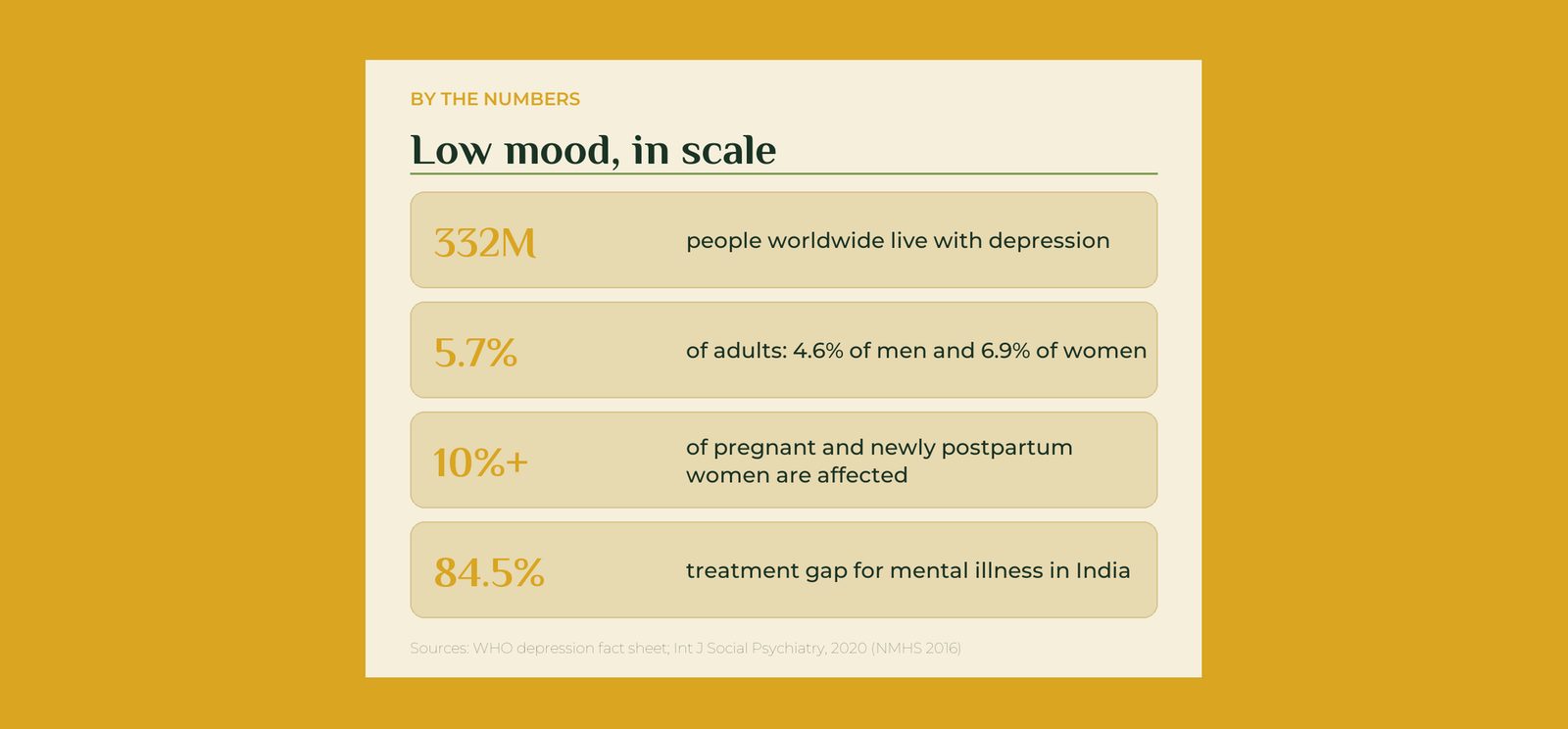
What needs attention is low mood that lasts longer. More than 10% of pregnant women and women who have just given birth experience depression (Source: WHO, 2025 — who.int).
That is a large group of people. Most of them are told they are just tired.
Depression is also more common in women overall. It affects 4.6% of men and 6.9% of women worldwide (Source: WHO, 2025 — who.int).
Perimenopause is another window. Sleep breaks up, hot flushes arrive, and mood can dip with them.
Here is what not to do. Do not let "it is just hormones" close the conversation.
That phrase gets used to dismiss real illness. It has kept many women out of treatment.
Cycle-linked tears and postpartum depression are different problems. Both are treatable. Neither should be waved off.
Q: Are hormonal mood swings the same as depression?
A: No. Hormonal shifts can raise the volume on mood, but depression is a distinct condition with its own two-week pattern. The two often overlap, especially after birth, so a clinician should assess both rather than assuming hormones explain everything.
Medical Causes That Get Missed
Not every crying spell is emotional in origin. Some are physical.
These causes get missed often, so it is worth knowing them.
Start with the thyroid. An underactive thyroid slows the body down.
It brings tiredness, weight gain, cold hands, dry skin, and low mood. It is easy to mistake for depression alone.
An overactive thyroid can look like anxiety instead. Racing heart, poor sleep, weight loss, and a short fuse.
Both are found with a simple blood test. Both are treatable.
Then there is anaemia, which is common in India. Low iron brings fatigue, breathlessness, poor concentration, and a fragile mood.
Vitamin B12 and vitamin D levels are worth checking too. Deficiencies in both are widespread and both affect mood.
Medicines deserve a second look. Some drugs list mood change as a known side effect.
Never stop a prescribed medicine on your own. Take the list to your doctor and ask directly.
Then there is a cause that almost no article mentions. Pseudobulbar affect, usually shortened to PBA.
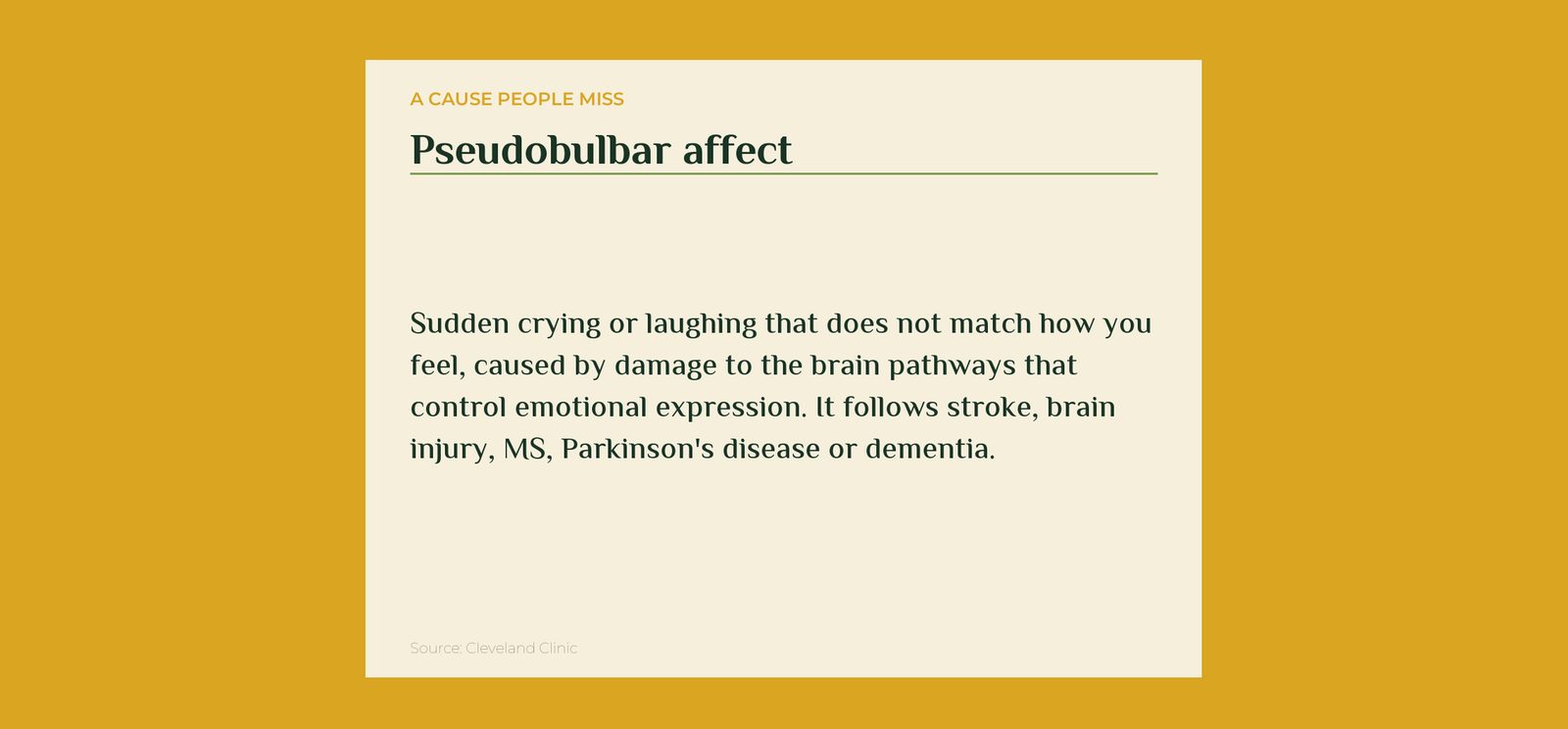
PBA means sudden crying or laughing that does not match your actual feelings. You may sob hard while feeling calm inside.
It comes from damage to brain pathways that control emotional expression (Source: Cleveland Clinic — my.clevelandclinic.org).
That damage can follow a stroke, a brain injury, multiple sclerosis, Parkinson's disease, dementia, or ALS.
It is not rare. Researchers estimate 2 million to 7 million people in the United States have PBA (Source: Cleveland Clinic — my.clevelandclinic.org).
Among people with ALS, up to 50% are affected. About 48% of people with traumatic brain injury and about 46% with multiple sclerosis experience it (Source: Cleveland Clinic — my.clevelandclinic.org).
The clue is the mismatch. The tears feel disconnected from your mood, and they switch on and off abruptly.
If that sounds like you, see a neurologist. This is a medical condition, not a mood problem.
Q: Can a physical illness cause crying for no reason?
A: Yes. Thyroid disease, anaemia, low vitamin B12, chronic pain, and some medicines all affect mood directly. Pseudobulbar affect can cause crying that does not match your feelings at all. A basic medical check should come early, not last.
Unfinished Grief, and the Numbness Behind It
Grief does not follow a calendar. It waits for a safe moment.
Many people function well through a loss. There are rituals to run and family to hold together.
The feeling gets postponed, not skipped.
Then months later, a smell or a song brings it all forward. You cry hard and cannot explain why.
That is delayed grief. It is one of the most common causes of unexplained sadness that seems to come from nowhere.
Grief is also wider than death. People grieve a marriage, a city, a career, or a body that used to work differently.
If nobody around you named it as a loss, you may never have grieved it.
Anniversaries matter more than people expect. Your body can remember a date your mind has filed away.
Now for the flip side, which worries people even more.
Sometimes you cannot cry at all. You know you are sad, but nothing comes.
This is emotional numbness. It is not the absence of feeling.
It is the mind turning the volume down because the volume got too high. A protective setting, stuck on.
Numbness shows up in depression, in burnout, and after trauma.
It can feel like watching your own life through glass. Food tastes flat. Good news does not land.
Many people ignore this because it looks like coping. From outside, you seem fine.
Inside, nothing is moving at all.
Take emotional numbness as seriously as constant tears. Both point to the same overload.
The path out is similar too. Safety, sleep, honest conversation, and often a therapist.
Q: Why do I feel emotional numbness instead of sadness?
A: Numbness is a protective response to feeling that grew too heavy to hold. The mind lowers the volume on everything, not just the pain. It is common in depression, burnout, and after trauma, and it deserves the same care as frequent crying.
When It Points to Depression or an Anxiety Disorder
Most crying spells are not an illness. Some are.
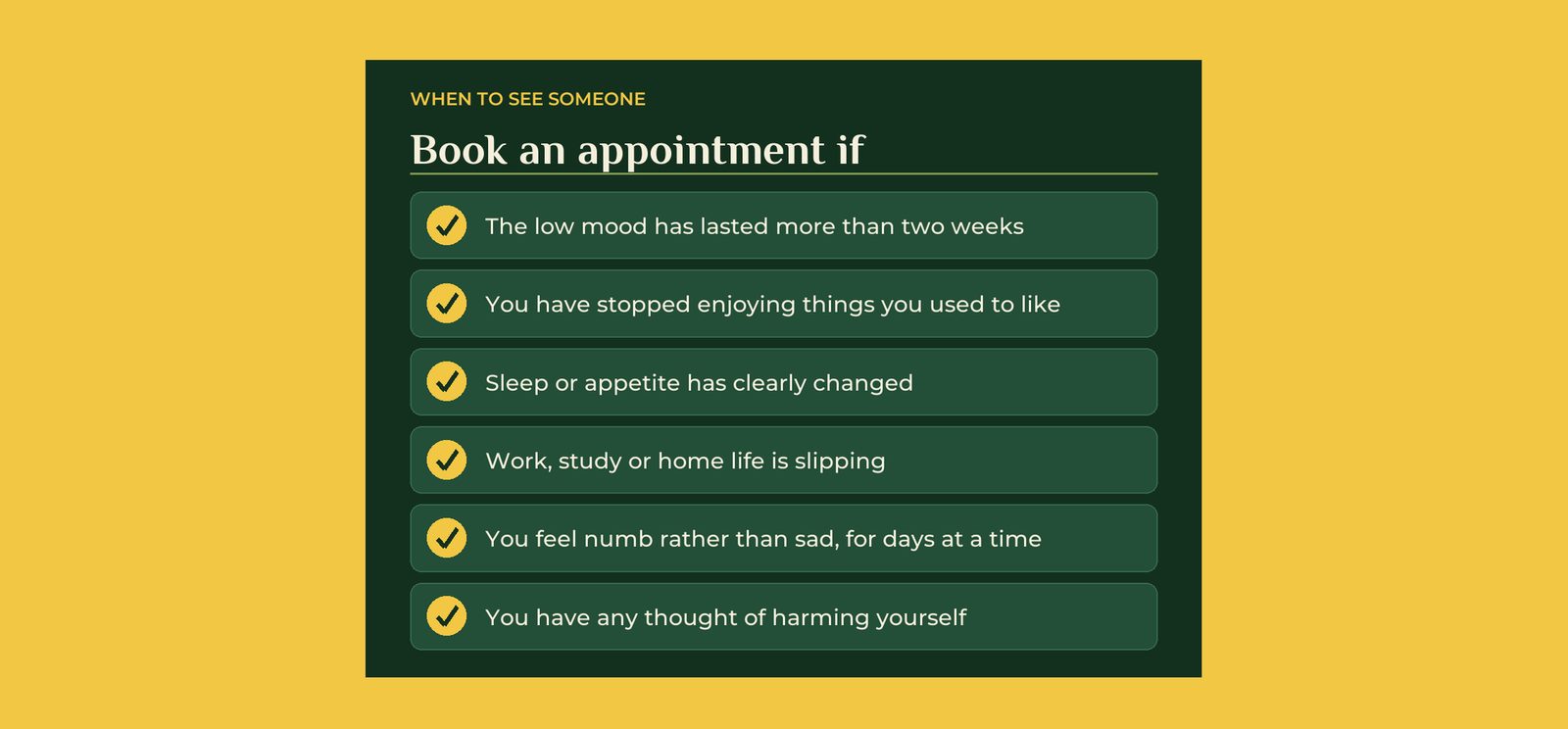
Clinicians use a simple rule of thumb. Low mood or lost interest, on most days, for at least two weeks.
That is the two-week rule. One rough weekend does not count.
Alongside mood, they look at function. Sleep, appetite, energy, focus, and whether you can still meet daily demands.
Depression is common and very treatable. Around 332 million people worldwide have depression (Source: WHO, 2025 — who.int).
Anxiety disorders are even more common. An estimated 4.4% of the world's population currently has an anxiety disorder (Source: WHO, 2025 — who.int).
With anxiety, tears often follow a long build of tension. You hold it together through the day and crack at night.
So what are the early signs of depression worth watching?
Waking very early and being unable to sleep again. Losing interest in things you used to enjoy. Withdrawing from friends without deciding to.
Add appetite change, heavy guilt, slowed thinking, and constant tiredness. Tears that come daily belong on that list too.
None of these alone confirms anything. Together, over two weeks, they earn a consultation.
Now the part that matters most.
Some signs mean you should get help immediately, not next month.
Get urgent help if you have any thought of harming yourself. The same is true if life feels not worth continuing.
Do not wait it out and do not sit with it alone. Contact a doctor, a mental health professional, or your nearest emergency service immediately.
Also act quickly if you cannot work or care for yourself. Or if you have stopped eating. Or if someone close to you is frightened for you.
India makes this harder than it should be. The treatment gap for mental morbidity here is 84.5% (Source: Int J Social Psychiatry, 2020 — pubmed.ncbi.nlm.nih.gov).
Most never reach care. Part of that is access. A large part is the habit of calling tears weakness or drama.
Name that habit, then step around it. Your tears are data, not a performance.
Q: How long is too long to feel like crying every day?
A: Two weeks is the marker clinicians use for low mood or lost interest on most days. If daily tears pass that mark, or start affecting work, sleep, and relationships, book an assessment. If you ever have thoughts of harming yourself, seek urgent help the same day.
What to Do Tonight, and What to Do This Month
Advice is useless if you cannot act on it at 1am. So here are two lists.
Start with tonight. Keep it small.
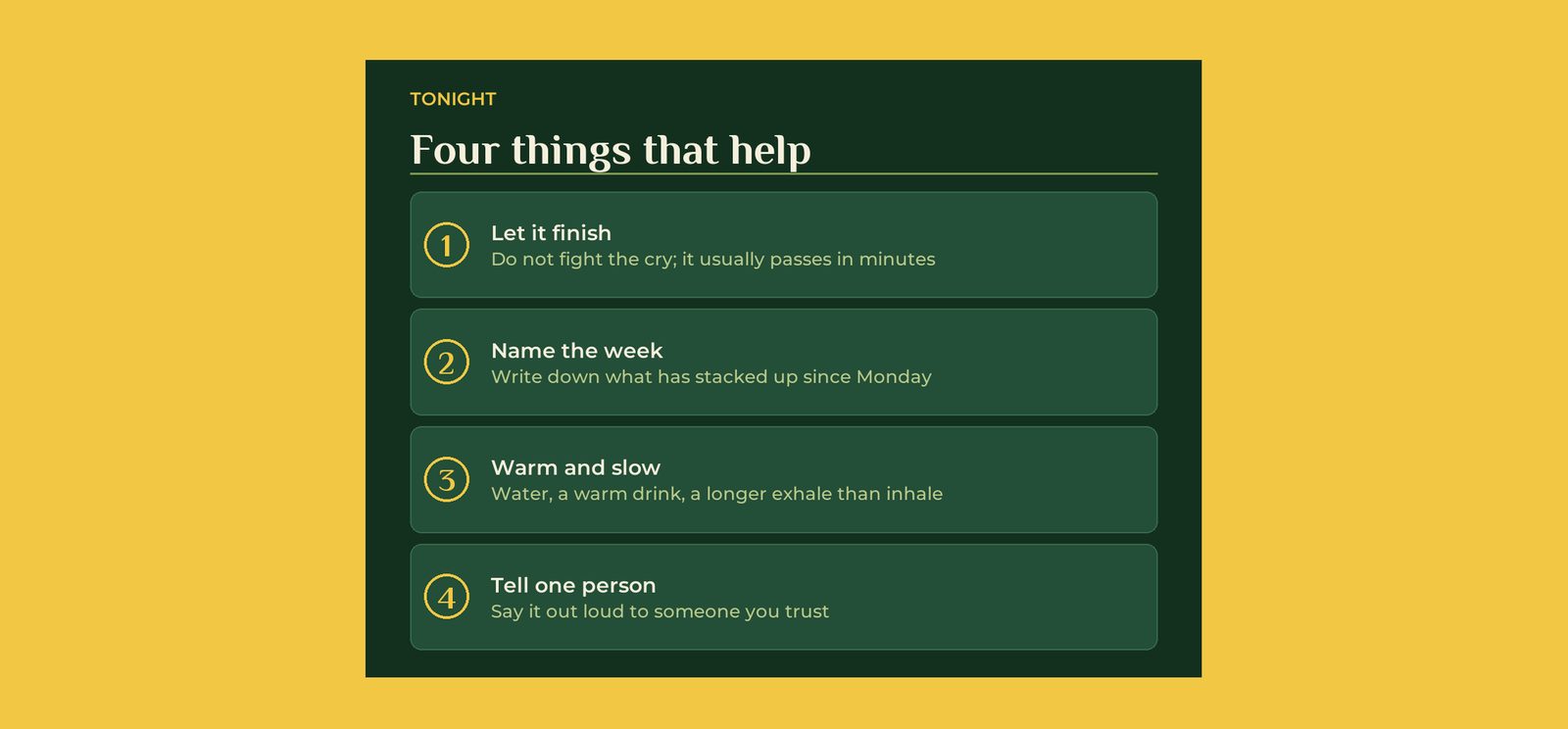
First, let the crying finish. Do not fight it or time it. Suppressing it usually makes the next wave stronger.
Second, slow your breathing once it eases. Breathe in for four counts. Breathe out for six. Repeat for two minutes.
Third, drink a glass of water and eat something plain if you have not eaten. Dehydration and low blood sugar sharpen everything.
Fourth, write three lines. What happened today. What you are carrying this week. What you are dreading tomorrow.
You are not journalling for insight. You are naming the queue.
Fifth, send one message. "Rough night, can we talk tomorrow?" That is enough.
Sixth, go to bed without your phone. Doom-scrolling after crying deepens the dip.
Now for this month. These are the changes that shift the baseline.
Fix sleep first. Same wake-up time daily, including weekends. Screens out of the bedroom.
Cut caffeine after 2pm. Cut alcohol for four weeks and watch your mood.
Move your body most days. A brisk twenty-minute walk is enough to start.
Book a basic blood panel. Ask for thyroid function, haemoglobin, vitamin B12, and vitamin D.
Take your medicine list to that appointment. Ask if any of them affect mood.
Keep a two-line mood log daily. Date, mood out of ten, hours slept. Two months of that is powerful in a consultation.
Tell one real person what is happening. Not a status update. An actual conversation.
Book a therapy session if the tears pass two weeks. You do not need a diagnosis to start therapy.
And set a review date. Mark a day four weeks out.
If nothing has shifted by then, escalate to a psychiatrist. Do not restart the same month again.
Q: What should I do when I start crying for no reason?
A: Let it finish, then slow your breathing with a long exhale for two minutes. Have water and food, write down what you are carrying, and message one person you trust. If it repeats for more than two weeks, book a medical check and a therapy session.
- Around 332 million people worldwide have depression — . - Depression affects 4.6% of men and 6.9% of women, and is about 1.5 times more common among women — . - More than 10% of pregnant women and women who have just given birth experience depression — . - An estimated 4.4% of the world's population currently has an anxiety disorder — . - India's treatment gap for mental morbidity is 84.5%, and nearly 150 million Indians live with a mental morbidity — . - Researchers estimate 2 million to 7 million people in the United States have pseudobulbar affect — .
How Ganaa Can Help When the Tears Will Not Stop
Sometimes rest and honesty are enough. Sometimes you need a clinician beside you.
Ganaa is a mental health and rehabilitation brand in India. We work with adults living with low mood, anxiety, grief, and emotional numbness.
Most people who come to us are not in crisis. They are tired of guessing.
For unexplained sadness, outpatient care is usually the right first step. It fits around your job, your studies, and your family.
We run three OPD clinics for exactly this. They are in Faridabad, Greater Kailash, and Greater Noida.
A first visit is simple. You talk. A clinician listens properly and takes a full history.
That history covers sleep, cycle, medicines, thyroid, and past losses. The physical causes get ruled out, not assumed away.
From there, care is tailored to you. Talking therapy is often the core of it.
Our psychiatrists can review whether medication would help. That decision is made with you, never rushed.
For people who need more support, Ganaa also runs five residential centres. They are Ganaa South Delhi, Ganaa Chattarpur, Ganaa Gurgaon, Ganaa Goa, and Ganaa Greater Noida.
Residential care suits people whose daily life has become unmanageable. Most people reading this will not need it.
Our approach blends modern clinical science with calmer, restful settings. Yoga, mindfulness, and steady routine sit alongside therapy.
If you have been crying for weeks and cannot say why, that is reason enough to ask for help. You do not need a label first.
Speak to a Ganaa clinician, or visit ganaa.in to learn about our programmes.
Conclusion: Your Tears Are Telling You Something
Crying for no reason almost never means no reason. It means an unnamed one.
That reframe is the most useful thing on this page. It turns a scary mystery into a checklist.
Look at sleep first. Then stress and burnout. Then hormones and the postpartum window.
Then check the physical causes. Thyroid, iron, vitamin B12, and any medicines you take.
Then ask about grief you never finished. And notice if emotional numbness has replaced the tears.
If low mood has lasted more than two weeks, stop investigating alone. Book an assessment.
If your daily life has stopped working, move faster. And if you have any thought of harming yourself, act today. Contact a doctor, a mental health professional, or your nearest emergency service immediately.
The habit of dismissing tears as weakness has cost this country a lot. You do not have to carry that idea.
Crying is not drama and it is not a flaw. It is information.
Depression and anxiety respond well to treatment. So does grief. So does burnout.
The people who recover are rarely the strongest. They are the ones who asked earlier.
Take one step this week. A blood test, a therapy call, or one honest conversation.
You deserve to feel steady again. That is closer than it feels tonight.
FAQ
Q: Why do I feel like crying for no reason?
A: Crying for no reason almost always has a reason you have not named yet. Common drivers are stacked stress, poor sleep, burnout, hormonal shifts, and grief you never finished. Tears are your body releasing pressure that built up quietly. If they keep coming for more than two weeks, speak to a doctor or a mental health professional.
Q: Is crying for no reason a sign of depression?
A: It can be, but one teary week is not a diagnosis. Doctors look for low mood or lost interest on most days for at least two weeks. They also look at sleep, appetite, energy, and how well you are coping at work or home. Depression is common and very treatable, so an early check is worth it.
Q: Can being tired make you cry more easily?
A: Yes. Short sleep weakens the brain's braking system for strong feelings. After a few bad nights, small setbacks land much harder. Burnout does the same thing over months. Fixing sleep will not cure depression, but it often lifts the tears that came from exhaustion alone.
Q: What is pseudobulbar affect?
A: Pseudobulbar affect, or PBA, means sudden crying or laughing that does not match how you actually feel. It comes from damage to brain pathways that control emotional expression. This can follow a stroke, a brain injury, or multiple sclerosis. Researchers estimate 2 million to 7 million people in the United States have PBA. It is a neurological condition and needs a doctor, not willpower.
Q: Why can I not cry even when I feel sad?
A: That is emotional numbness, and it is the flip side of the same problem. When feelings stay too heavy for too long, the mind can dial the whole volume down. Numbness often shows up in depression, in burnout, and after trauma. It deserves the same attention as constant tears.
Q: When should I see a doctor about unexplained sadness?
A: See a doctor if unexplained sadness lasts more than two weeks or affects your work, sleep, or relationships. Also go if the crying started with a new medicine, or comes with weight, hair, or energy changes. If you have any thought of harming yourself, contact a doctor, a mental health professional, or your nearest emergency service immediately.
Eating disorders in India hide behind praise for discipline and thinness. Learn the early warning signs, what to say, and how treatment actually works.
High functioning anxiety hides behind good work and a calm face. Learn the hidden signs, what the body does, and when coping turns into the problem itself.
The cost of mental health rehab in India is rarely published openly. Here is what moves the price, what insurance must cover by law, and what to ask first.