Depression Treatment Options: 7 Approaches Ranked by Effectiveness
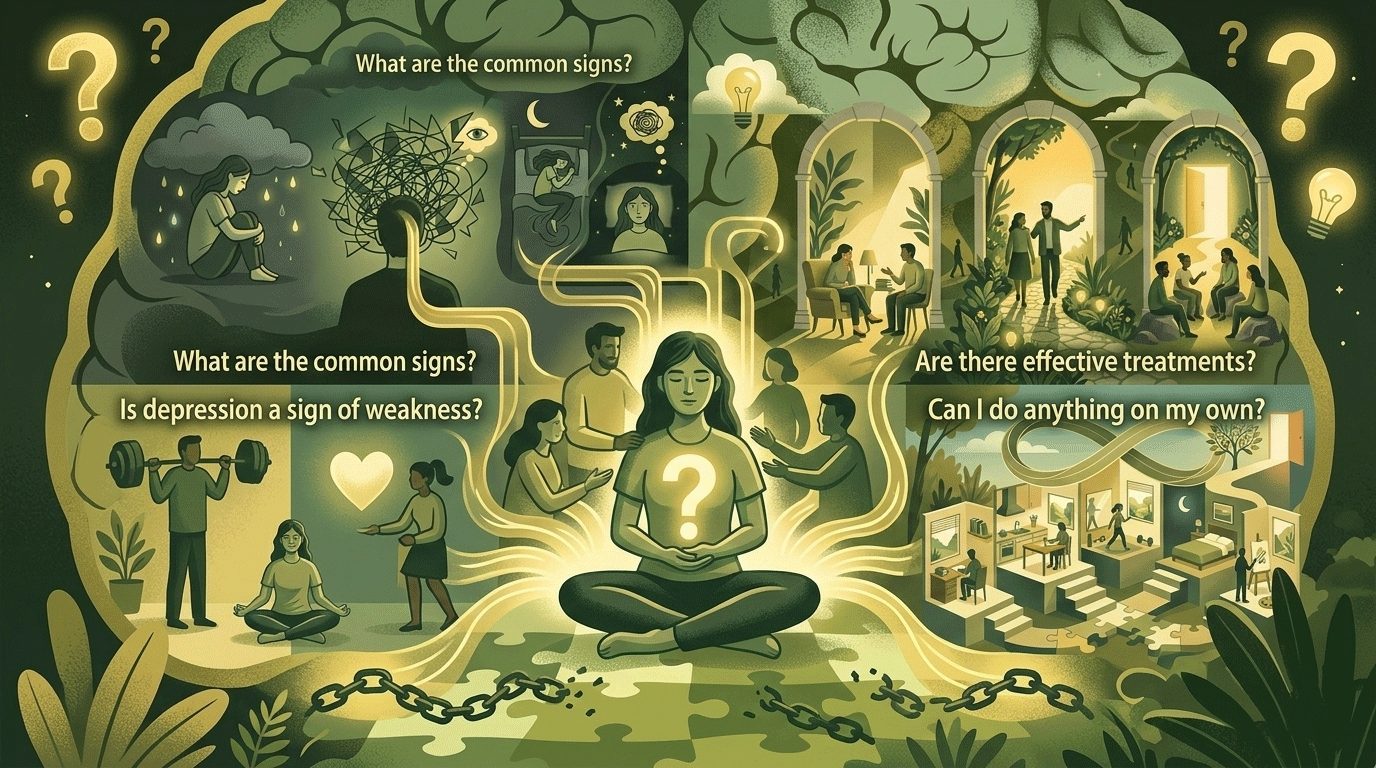
Depression treatment works best when support is personalized and evidence-based. Therapy, medication, routine, and lifestyle changes together can help individuals rebuild emotional balance and wellbeing.
Depression Treatment Options in 2026: 7 Approaches Ranked by Effectiveness
The World Health Organization says it affects around 332 million people globally — based on the most current Global Burden of Disease data. And yet, millions go years without finding a plan that works.
Part of the problem is simple. There are many depression treatment options on offer. But not all of them are equal. And what helps one person may not help another.
This guide cuts through the noise.
We have ranked 7 depression treatment options based on verified research. Each one is backed by trials, large reviews, or major health guidance. We are also clear about where the proof is strong. And where it is still growing.
Whether this is for you or for someone you love, this guide will help. It will help you ask better questions and make more informed choices.
At Ganaa, we have been supporting people through depression since 2012. Our centres in Delhi NCR and Goa offer structured, caring support. It is built on what the research actually shows.
What Makes a Depression Treatment Effective?
Before we rank the options, let us be clear about what "effective" means.
A depression treatment option works when it:
Reduces symptoms in a clear, measurable way
Helps people reach remission, not just partial relief
Depression varies a great deal in its severity and causes. A person with mild depression may do well with exercise and daily structure alone. A person with severe depression may need medicine, intensive therapy, and a structured care setting.
The rankings below reflect the weight of proof across large populations. They are not a personal prescription.
Q: What is the most effective depression treatment?
A: Research shows that mixing approaches, such as medicine and therapy together, gets better results than any single option alone. The best depression treatment is one that is tailored, consistent, and guided by a professional.
Approach 1: Combined Therapy and Medicine
Proof strength: Very strong
This is the most effective approach in the research. Hands down.
A large body of care proof shows this clearly. Using therapy and medicine together gets better results than either one used alone.
Why does mixing work so well?
Medicine addresses the body-based side of depression. It steadies brain chemistry and reduces the intensity of symptoms.
Therapy addresses the thinking side. It changes thought patterns, builds coping skills, and lowers the risk of relapse.
Neither one covers everything on its own. Together, they address more of what drives depression.
It is the first choice for moderate or severe depression. It is the foundation that structured care programmes are built on.
Q: Is medicine or therapy better for depression?
A: Research shows they are roughly equal at reducing symptoms in the short term. But combined treatment outperforms either one alone. Therapy also shows stronger results over the long term, mainly at stopping relapse.
42% of people receiving CBT responded to treatment, while only 19% in the control group responded.
The remission rate was 36% in CBT patients, compared to 15% in the control group.
That is roughly 2.5 times better odds of getting well.
These are not small numbers. They show a very real benefit.
How CBT Works
CBT is built on one core idea. Your thoughts, feelings, and actions are all linked. Changing one changes the others.
In depression, this matters a great deal. Negative thought patterns maintain and deepen low mood. They twist how you see yourself, other people, and the future. CBT helps you spot those patterns and learn to challenge them.
In practice, CBT helps with:
Spotting the thought patterns that keep you stuck
Testing whether those thoughts are actually true
Building healthier ways of thinking and reacting
Solving day-to-day problems that fuel low mood
Catching early warning signs before they grow
CBT and Stopping Relapse
One of CBT's biggest strengths over medicine alone is its effect on relapse.
The skills learned in CBT stay useful long after sessions end. This is what makes it stand out as a long-term depression treatment option.
Face-to-face CBT shows stronger results than digital CBT for depression symptoms. However, after accounting for differences between the groups, both show similar effects.
Medicine is a core part of most depression treatment plans. This is the case for moderate or severe depression.
A major Lancet review from 2018 looked at 522 trials with over 116,000 people. All 21 medicines studied were more effective than placebo. This was for the acute treatment of adults with major depressive disorder.
Most medicines take 4 to 8 weeks to show their full effect
Why Medicine Is Not Always Enough on Its Own
About 60% of people do not reach full remission from their first medicine alone. This is not a failure of medicine. It is a sign of how complex depression is.
Standard medicines fall short for up to 60% of patients. They can be slow to work and may not fully help.
When one medicine does not work, another often does. And mixing medicine with therapy consistently gets better outcomes than medicine alone.
Approach 4: Exercise
Proof strength: Strong for mild to moderate depression
This approach is often underestimated. The research is far more solid than most people expect.
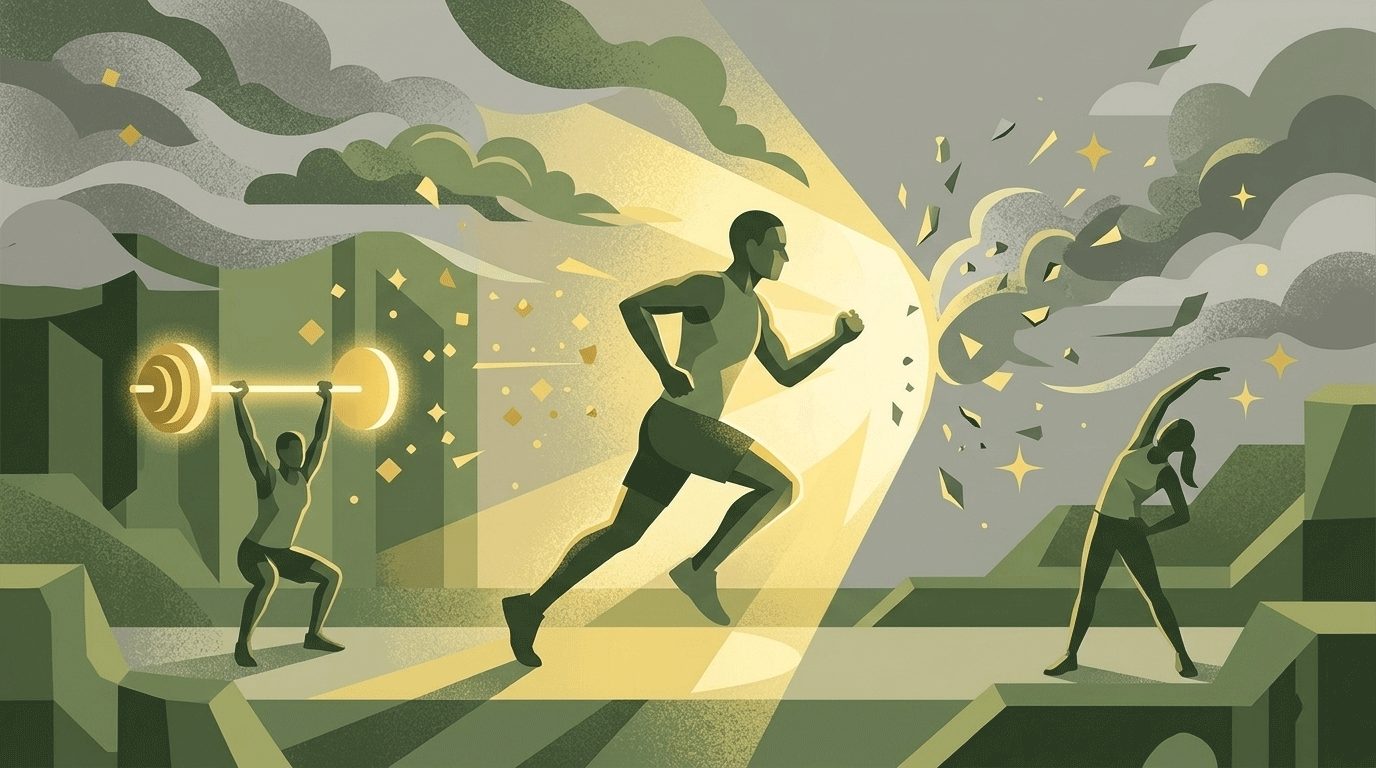
An updated Cochrane review from 2026 covered 73 randomised controlled trials including nearly 5,000 adults with depression. Exercise may reduce symptoms of depression to a similar extent as psychological therapy. When compared with medicine, exercise showed a similar effect. But the certainty of that proof was lower.
An umbrella review covering 190 experiments across 27 systematic reviews found a moderate effect size. Exercise reduced depressive symptoms with a Number Needed to Treat of 2.78. That means roughly one in every three people who exercise sees a real benefit.
Moderate reductions in depression were found for walking or jogging, yoga, and strength training. Mixed aerobic exercises and tai chi or qigong also helped. The effects of exercise were proportional to the intensity. Strength training and yoga appeared to be among the most well-liked options.
No single type of exercise was clearly better than others. Mixed exercise programmes and resistance training appeared more effective than aerobic exercise alone.
Exercise as Part of a Broader Plan
For mild depression, regular exercise alone can produce real results. For moderate or severe depression, it works best as part of a broader plan. That plan should include therapy and medicine.
Key facts:
Consistency matters more than intensity. Three to five sessions per week is the research target.
Group exercise shows stronger effects than solo exercise in many studies.
The long-term benefits of exercise are still not fully clear, as few studies have followed people after treatment ended.
Q: Can exercise replace medicines for depression?
A: For mild to moderate depression, exercise has shown effects similar to medicines in some studies. For moderate or severe depression, exercise is best used alongside medicine and therapy, not instead of them. A doctor or mental health professional should guide this decision.
It combines mindfulness practice with CBT skills. The goal is not to get rid of difficult thoughts and feelings. It is to change your connection with them. Instead of spiralling into low mood, you learn to observe thoughts. You notice them without acting on them.
What the Research Shows
A large review of six trials with 593 people found this. MBCT greatly reduced the risk of relapse. For people with three or more previous episodes, the relative risk reduction was 43%. In two studies, MBCT was at least as effective as maintenance medicine.
A further individual patient data meta-analysis of 1,258 people across nine trials found clear results. Those receiving MBCT had a reduced risk of depressive relapse over a 60-week follow-up (hazard ratio 0.69). The risk was lower compared with those who did not receive MBCT.
These are strong results for a group programme that runs for just 8 weeks.
What MBCT Involves
Key elements of MBCT include:
Formal mindfulness practices such as body scans and breathing exercises
Learning to spot the early signs of a depressive episode
Building a response plan for when those signs appear
Understanding the link between thoughts, feelings, and mood
MBCT is often run as a group over 8 weeks. It is not the first option for people currently in an acute depressive episode. It works best once some stability has been found.
Q: Who benefits most from MBCT as a depression treatment option?
A: MBCT is most useful for people who have had three or more depressive episodes. It is one of the best depression treatment options for preventing relapse, not just managing current symptoms. NICE guidance in the UK recommends it mainly for this group.
IPT is one of the most well-supported therapies for depression, after CBT.
It is built on one key insight. Depression is closely tied to how we relate to others. Difficult connections, grief, and major life changes all deepen depressive episodes. So does loneliness.
Strong care research advises two specific therapy methods for depression: CBT and IPT.
IPT focuses mainly on improving connections and communication. It targets four main problem areas:
Grief and loss: Working through the impact of bereavement
Role disputes: Conflict or tension in close connections
Role changes: Major life shifts such as job loss, divorce, or becoming a parent
Social isolation: Building connections and reducing loneliness
IPT often runs for 12 to 16 weeks. Studies show it is roughly as effective as CBT for many forms of depression. For people whose depression is tied to connection problems or life changes, IPT can be a good fit.
Unlike CBT, IPT does not focus heavily on changing thought patterns. It focuses on changing connection patterns. For some people, this feels more natural and more easy to access.
Q: How is IPT different from CBT as a depression treatment option?
A: CBT focuses on changing negative thought patterns and building coping skills. IPT focuses on improving connections and working through interpersonal conflict. Both are research-backed. The best fit depends on what is driving the depression.
Approach 7: Structured Care and Daily Routine
Proof strength: Strong as part of a full plan
This approach is less clinical than the others. But it may have the most day-to-day impact.
It does not replace therapy or medicine. But it creates the conditions where both can work better.
The Key Elements
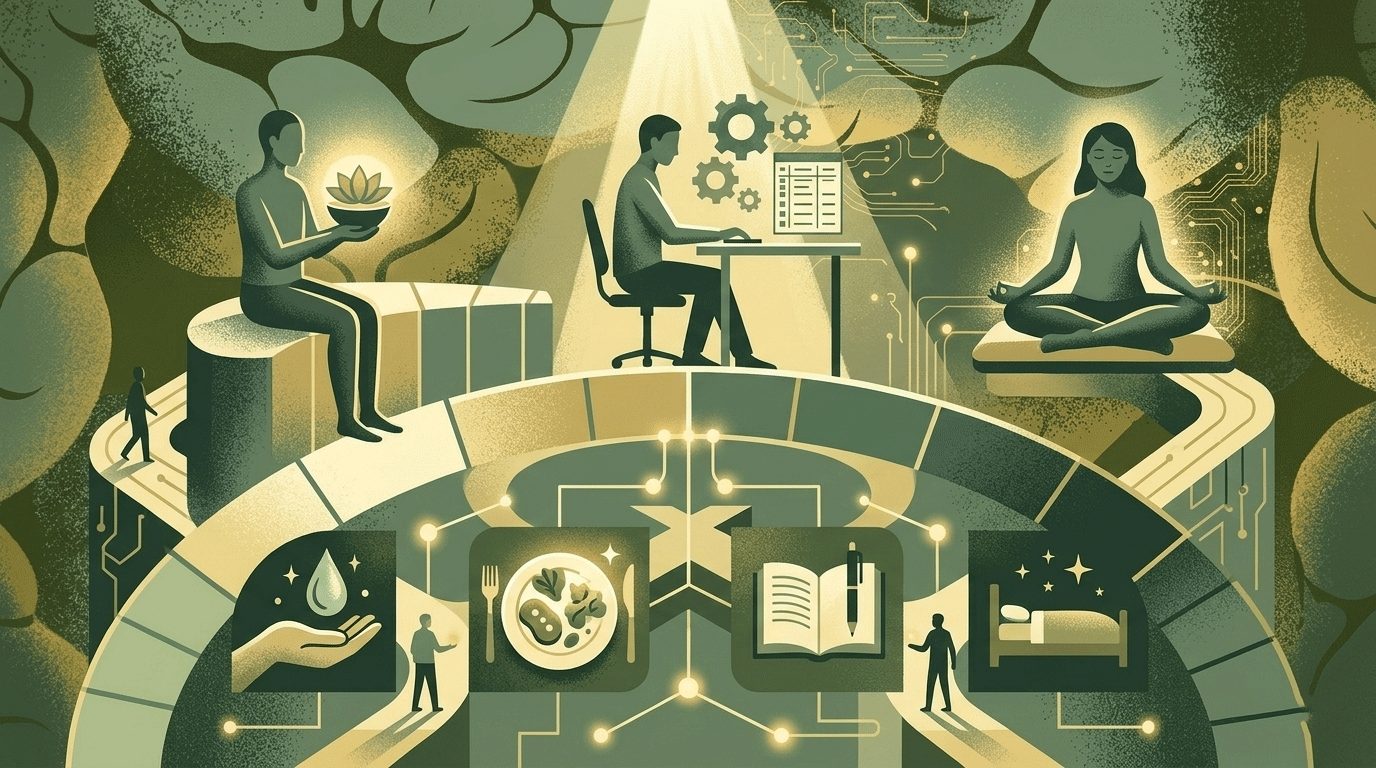
Sleep
Set wake up and bedtimes, even on weekends
A wind down routine before bed
Limiting screens and bright light in the evening
Sleep is not just a lifestyle issue in depression. It is a clinical one. Sleep loss is one of the most reliable triggers for depressive episodes.
Food and Meals
Eating at set times keeps blood sugar and mood steady
Reducing alcohol, which disrupts sleep and lowers mood
Research links gut health to mental health through the gut-brain axis
Physical Activity
Regular movement helps regulate mood and ease anxiety
Consistency matters far more than intensity
A daily walk is enough to make a real difference
Stress and Screen Use
Limiting social media reduces comparison-driven low mood
Cutting back on screens before sleep improves sleep quality
Knowing your personal stress triggers is a core life skill
Q: Can daily routine and lifestyle changes treat depression on their own?
A: For mild depression, structured lifestyle changes can produce real results on their own. For moderate or severe depression, they work best as part of a broader plan with therapy and medicine.
How to Choose the Right Approach
There is no single best depression treatment for everyone.
The right plan depends on:
How severe your depression is
How long you have been experiencing symptoms
Whether you have tried other treatments before
Whether there are co-occurring conditions such as anxiety, trauma, or substance use
Your own preferences and life situation
For mild depression:
Structured daily habits, exercise, and CBT-based self-help are often enough to produce real change.
For moderate depression:
A mix of CBT or IPT with medicine is the advised starting point.
For severe or recurring depression:
Combined medicine and intensive therapy is the most effective path. Structured, live-in care may also be needed.
Signs That More Structured Support Is Needed
Many people try to manage depression on their own or with weekly therapy alone. For some, that is enough.
Depression has not improved with outpatient treatment
Symptoms are badly affecting daily life, work, or connections
There has been a recent crisis or time in hospital
There is a co-occurring substance use issue
The current home setting is unsafe or highly triggering
Getting more structured support is not a failure. It is a sign that more support is needed. Getting it earlier almost always leads to better results.
How Ganaa Supports This Journey
We have run mental health rehab centres since 2012. We support people dealing with depression, mood disorders, and trauma. Our centres are across Delhi NCR and Goa.
Our approach to depression treatment options brings together the research-backed approaches in this guide. We treat the whole person, not just the diagnosis.
What our depression treatment programme includes:
A full assessment and personal care plan
Medicine support where clinically needed, with close monitoring
One-on-one therapy including CBT and trauma-focused approaches
Group therapy for shared experience and peer support
Mindfulness and body-based therapies
Family therapy, done with cultural sensitivity
A set daily routine covering sleep, food, activity, and screen use
A clear relapse plan built before leaving care
Aftercare and follow-up support beyond discharge
Our centres:
Delhi NCR
Ganaa Nature, Dera Mandi, New Delhi
Ganaa Door of Hope, Chhatarpur, New Delhi
Ganaa Xanadu, Sector 46, Gurugram
Ganaa Noida, Sector 27, Greater Noida
Goa
Ganaa Velim, South Goa (riverside campus)
Each centre offers 24/7 expert support in calm, nature-based settings.
Frequently Asked Questions
Q: What are the most effective depression treatment options in 2026?
A: Combined therapy and medicine is the most effective overall. CBT and medicines both have strong proof individually. Exercise and structured daily habits are first-line options for mild to moderate cases. For severe or hard-to-treat depression, live-in care, esketamine, or TMS may be most fitting.
Q: What is the best depression treatment without medication?
A: CBT has the strongest proof of any non-medicine approach to depression. Exercise also has solid research support, mainly for mild to moderate cases. MBCT is highly effective for stopping relapse. Many people reach and maintain recovery using therapy and structured habits without medicine.
Q: How long does depression treatment take?
A: It depends on the severity and the approach. A course of CBT runs 12 to 20 sessions over 3 to 5 months. Medicines are usually continued for 6 to 12 months after improvement. Live-in care often lasts 1 to 3 months, with ongoing support beyond that.
Q: Can depression come back after treatment?
A: Yes. Depression has a high rate of return. After one episode, the risk of a second is around 50%. After three episodes, the risk rises to around 90%. This is why relapse prevention is such a key part of any treatment plan. CBT skills, mindfulness, and ongoing support all reduce this risk.
Q: Is depression treatment different for mild versus severe cases?
A: Yes. Mild depression often responds to structured habits, exercise, and brief therapy. Moderate to severe depression usually needs a mix of medicine and therapy. Severe depression may need intensive or live-in support, mainly when daily functioning has broken down.
Q: When should someone consider live-in depression treatment?
A: Consider live-in care when outpatient treatment has not been enough, when symptoms are badly affecting daily life, when there is a co-occurring substance use issue, or when the current home setting is unsafe or highly triggering. Getting structured support earlier leads to better outcomes.
Q: Do depression treatment options work for everyone?
A: No single approach works for everyone. Around 60% of people do not reach full remission from their first medicine alone. But with the right mix of approaches and professional guidance, most people with depression can reach real and lasting improvement.
Take the First Step
Depression is treatable.
With the right mix of depression treatment options, people recover and rebuild — often through a layered recovery plan that includes therapy, routine, and professional support, similar to the approach described in why mental health recovery needs more than just therapy.
They live full and connected lives. The key is not waiting until things become unbearable. Getting support earlier almost always leads to faster and more lasting recovery.
If you or someone you love has depression, caring support can make a real difference.
Ganaa's centres across Delhi NCR and Goa offer personal, caring support. We help people navigating depression and related conditions. Reach out to us today. Find out how we can support your path to lasting wellbeing.
Bipolar misdiagnosed as depression is common, and the delay runs close to nine years. Learn the clues, why hypomania is missed, and how to get a better review.
Adolescent mental health in India is under-treated. Learn 11 warning signs parents miss, what the data shows, how to start the talk, and when to seek help.
Gaming disorder in teens is a real diagnosis, not a phase. Learn the WHO criteria, how common it is, the signs parents miss, and what actually works at home.